ChipApex | Global Electronic Components Supplier

SEARCH
Search Product
Search Post
— IC芯片 | 连接器 | 传感器 | 被动器件 —
Search productSearch post
— IC芯片 | 连接器 | 传感器 | 被动器件 —
Consult the customer manager about the wholesale price.
consultation hotline:86-132-6715-2157
email:[email protected]
Contact the product manager for consultation. One-stop consultation is available.
Do you want a lower wholesale price? Please send us your inquiry and we will reply immediately.
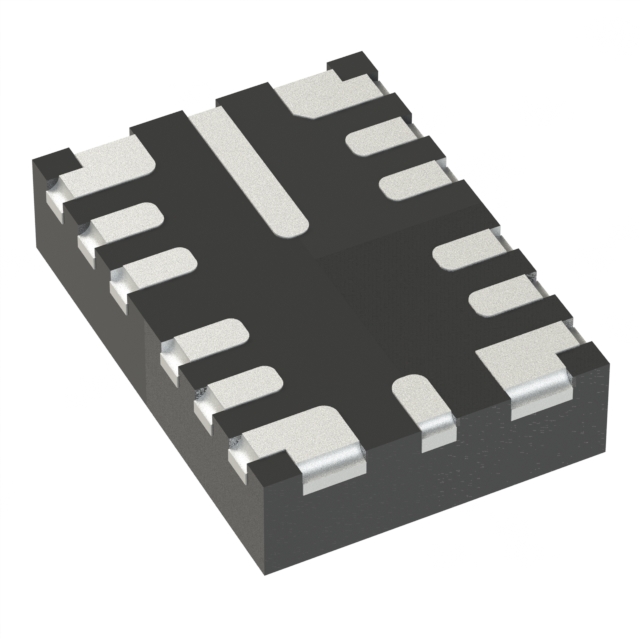
LMQ61460AASRJRR is listed in the Voltage Regulators - DC DC Switching Regulators range at ChipApex. The manufacturer field lists Texas Instruments. Its product description is IC REG BUCK ADJ 6A 14VQFN. Review the specifications below when checking this part for your BOM.
The LMQ61460AASRJRR is a synchronous step-down DC-DC converter from Texas Instruments, designed for industrial applications. It supports an input voltage range of 3 V to 36 V and delivers up to 6 A of output current. The device features low-noise operation and low EMI characteristics. It operates within a temperature range of -40°C to +150°C. The output voltage is adjustable, and the switching frequency is also configurable. The component utilizes a VQFN-HR-14 package and includes shutdown functionality.
Verify the specific suffix 'AASRJRR' against the official datasheet to confirm industrial grade classification and pinout compatibility. Ensure the ordering quantity matches the manufacturer's standard reel specifications. Confirm that the VQFN-HR-14 package dimensions align with your PCB footprint requirements before finalizing procurement.
Select this component when industrial temperature stability and low noise are critical. It is suitable for applications requiring high efficiency across a wide input voltage range. Consider the adjustable switching frequency for optimizing external component size. Evaluate thermal management needs given the 6 A output capability in the specified package.
This part belongs to the LM61460 family of synchronous step-down converters. The LMQ prefix indicates automotive or industrial qualification variants within the broader portfolio. These devices share common architectural features but differ in specific grading and reliability standards. The family targets high-performance power management solutions.
No, the LMQ61460AASRJRR is designated for industrial use. Automotive versions typically carry different suffixes such as Q1.
The maximum operating temperature is +150°C, supporting demanding industrial environments.
Explore related parts through Power Management (PMIC), Integrated Circuits (ICs), all product categories, ChipApex homepage.
 LMQ61460AASRJRR

Compare Pt100 and Pt1000 RTDs, two-, three- and four-wire connections, excitation and self-heating. Build an error budget from element to reported temperature.
Read More
Choose logic inverter ICs by thresholds, supply, output drive and delay. Compare standard and Schmitt-trigger inputs, power sequencing and replacement checks.
Read More
LMQ61460AASRJRR is listed in the Voltage Regulators - DC DC Switching Regulators range at ChipApex. The manufacturer field lists Texas Instruments. Its product description…
Read More
Learn what an integrated circuit is, how ICs work, the main types and the specs to check before choosing a part for your design…
Read More
Choose a DIP switch by contact type, coded positions, footprint and signal ratings. Check logic polarity, assembly conditions and PCB configuration behavior.
Read More
LMQ61460AASRJRR is listed in the Voltage Regulators - DC DC Switching Regulators range at ChipApex. The manufacturer field lists Texas Instruments. Its product description…
Read More
Understand voltage controlled oscillator tuning, phase noise and PLL operation. Check supply noise, output loading and requirements before selection.
Read More
LMQ61460AASRJRR is listed in the Voltage Regulators - DC DC Switching Regulators range at ChipApex. The manufacturer field lists Texas Instruments. Its product description…
Read More
LMQ61460AASRJRR is listed in the Voltage Regulators - DC DC Switching Regulators range at ChipApex. The manufacturer field lists Texas Instruments. Its product description…
Read More
LMQ61460AASRJRR is listed in the Voltage Regulators - DC DC Switching Regulators range at ChipApex. The manufacturer field lists Texas Instruments. Its product description…
Read More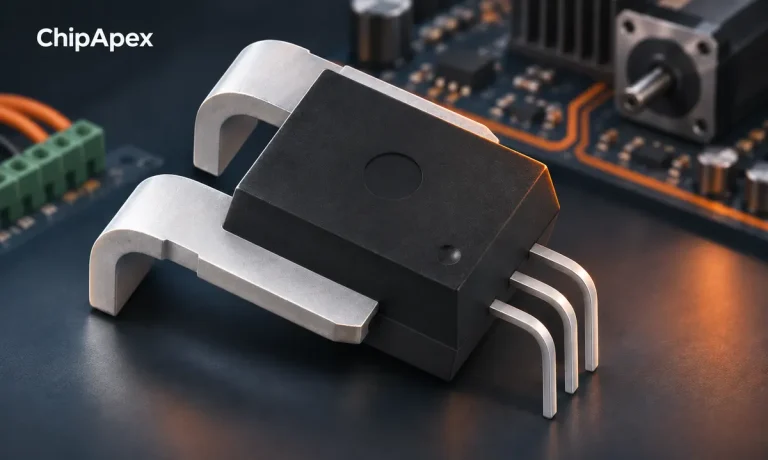
Compare Hall, shunt, current transformer and Rogowski sensing. Check AC/DC capability, accuracy, isolation, heat and response before selecting a sensor.
Read More
Learn why PTC resistance rises with temperature, how it differs from NTC, and which ratings matter for sensing and protection.
Read More
The activity of extra discounts on wholesale prices is in full swing…
Please fill in your contact information and we will send you the latest wholesale price list.