 ChipApex | Global Electronic Components Supplier

SEARCH
Search Product
Search Post
— IC芯片 | 连接器 | 传感器 | 被动器件 —
Search productSearch post
— IC芯片 | 连接器 | 传感器 | 被动器件 —
Consult the customer manager about the wholesale price.
consultation hotline:86-132-6715-2157
email:[email protected]
Contact the product manager for consultation. One-stop consultation is available.
Do you want a lower wholesale price? Please send us your inquiry and we will reply immediately.
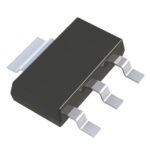
LT3088IST#TRPBF is listed in the Voltage Regulators - Linear, Low Drop Out (LDO) Regulators range at ChipApex. The manufacturer field lists Analog Devices Inc.. Its product description is IC REG LIN POS ADJ 800MA SOT223. Review the specifications below when checking this part for your BOM.
The LT3088IST#TRPBF is an 800mA low dropout linear regulator designed for rugged industrial applications. It features an extended safe operating area and withstands reverse input and output-to-input voltages without reverse current flow. The device utilizes a precision 50µA reference current source, allowing output voltage programming from 0V to 34.5V with a single resistor. It operates within a junction temperature range of –40°C to 125°C and is housed in a 3-lead plastic SOT-223 package.
Verify the specific suffix #TRPBF indicates tape and reel packaging when sourcing components. Confirm the I-grade designation corresponds to the required –40°C to 125°C operating temperature range for your application environment. Ensure compatibility with the 3-lead SOT-223 surface mount footprint during PCB layout verification.
Select this component for designs requiring high durability against voltage spikes and harsh conditions. The architecture supports parallel operation for increased current or thermal management. Consider the 2mA minimum load requirement for proper regulation and utilize guard rings to minimize SET pin leakage errors in sensitive circuits.
This part belongs to the LT3088 family of 800mA rugged linear regulators. It serves as a pin-compatible upgrade to the LT1117, offering superior performance including wider input voltage ranges and enhanced protection features. The family includes various packages such as DFN and DD-Pak, with different temperature grades available.
LT3088EST#TRPBF
No, the LT3088 is stable with or without input and output capacitors.
The output voltage is set by connecting a single external resistor between the SET pin and ground, utilizing the internal 50µA reference current source.
Explore related parts through Power Management (PMIC), Integrated Circuits (ICs), all product categories, ChipApex homepage.
 LT3088IST#TRPBF

Learn how a diode conducts, how to identify anode and cathode, and when to choose rectifier, TVS, Zener or photodiode types for a circuit.
Read More
LT3088IST#TRPBF is listed in the Voltage Regulators - Linear, Low Drop Out (LDO) Regulators range at ChipApex. The manufacturer field lists Analog Devices Inc..…
Read More
LT3088IST#TRPBF is listed in the Voltage Regulators - Linear, Low Drop Out (LDO) Regulators range at ChipApex. The manufacturer field lists Analog Devices Inc..…
Read More
LT3088IST#TRPBF is listed in the Voltage Regulators - Linear, Low Drop Out (LDO) Regulators range at ChipApex. The manufacturer field lists Analog Devices Inc..…
Read More
LT3088IST#TRPBF is listed in the Voltage Regulators - Linear, Low Drop Out (LDO) Regulators range at ChipApex. The manufacturer field lists Analog Devices Inc..…
Read More
LT3088IST#TRPBF is listed in the Voltage Regulators - Linear, Low Drop Out (LDO) Regulators range at ChipApex. The manufacturer field lists Analog Devices Inc..…
Read More
Understand RF attenuator dB values, fixed and programmable types, impedance, power limits and noise tradeoffs before choosing parts for an RF signal path.
Read More
LT3088IST#TRPBF is listed in the Voltage Regulators - Linear, Low Drop Out (LDO) Regulators range at ChipApex. The manufacturer field lists Analog Devices Inc..…
Read More
LT3088IST#TRPBF is listed in the Voltage Regulators - Linear, Low Drop Out (LDO) Regulators range at ChipApex. The manufacturer field lists Analog Devices Inc..…
Read More
Choose a DIP switch by contact type, coded positions, footprint and signal ratings. Check logic polarity, assembly conditions and PCB configuration behavior.
Read More
Choose an AC to DC converter by input range, output demand, isolation, efficiency and thermal derating. Compare architectures and check installation needs.
Read More
See when an inductor behaves linearly, how DC bias and saturation reduce inductance, and which current and temperature curves to check.
Read More
The activity of extra discounts on wholesale prices is in full swing…
Please fill in your contact information and we will send you the latest wholesale price list.




