 ChipApex | Global Electronic Components Supplier

SEARCH
Search Product
Search Post
— IC芯片 | 连接器 | 传感器 | 被动器件 —
Search productSearch post
— IC芯片 | 连接器 | 传感器 | 被动器件 —
Consult the customer manager about the wholesale price.
consultation hotline:86-132-6715-2157
email:[email protected]
Contact the product manager for consultation. One-stop consultation is available.
Do you want a lower wholesale price? Please send us your inquiry and we will reply immediately.
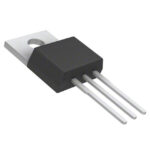
MBR2550CT is listed in the Diode Arrays range at ChipApex. The manufacturer field lists onsemi. Its product description is DIODE ARR SCHOT 50V 12.5A TO2203. Review the specifications below when checking this part for your BOM.
The onsemi MBR2550CT is a silicon Schottky barrier rectifier featuring a dual common cathode configuration housed in a TO-220-3 through-hole package. It supports a continuous forward current of 25 A and a repetitive peak reverse voltage of 50 V. The device exhibits a maximum forward voltage drop of 820 mV and handles a non-repetitive peak forward surge current of 200 A. Reverse leakage current is limited to 200 uA, with an operating temperature range spanning from -65 °C to +150 °C.
Verify the specific ordering suffix against the manufacturer's official datasheet to confirm pinout compatibility and terminal plating specifications. Ensure the procurement source provides valid RoHS compliance documentation. Cross-reference the part number with the latest product change notices to confirm manufacturing status and material composition updates before finalizing orders.
Select this component for designs requiring high current handling capabilities at low voltage drops. The TO-220-3 package facilitates effective thermal management for high-power dissipation scenarios. Evaluate the 50 V reverse voltage rating against circuit peak inverse voltages to ensure adequate safety margins during operation.
This device belongs to the MBR series of Schottky barrier rectifiers manufactured by onsemi. The series is characterized by high current capability and low forward voltage characteristics suitable for efficient power conversion. The MBR2550CT specifically addresses applications demanding robust performance in compact through-hole form factors.
Publicly confirmed substitute part numbers are not available in the provided documentation. Verify electrical parameter equivalence with alternative manufacturers before considering cross-brand substitution.
The maximum operating junction temperature is +150 °C.
Yes, the device incorporates a guardring structure for overvoltage protection.
The device features a dual common cathode configuration.
Explore related parts through Rectifiers, Diodes, Discrete Semiconductor Products, all product categories.
 MBR2550CT
MBR2550CT is listed in the Diode Arrays range at ChipApex. The manufacturer field lists onsemi. Its product description is DIODE ARR SCHOT 50V 12.5A…
Read More
MBR2550CT is listed in the Diode Arrays range at ChipApex. The manufacturer field lists onsemi. Its product description is DIODE ARR SCHOT 50V 12.5A…
Read More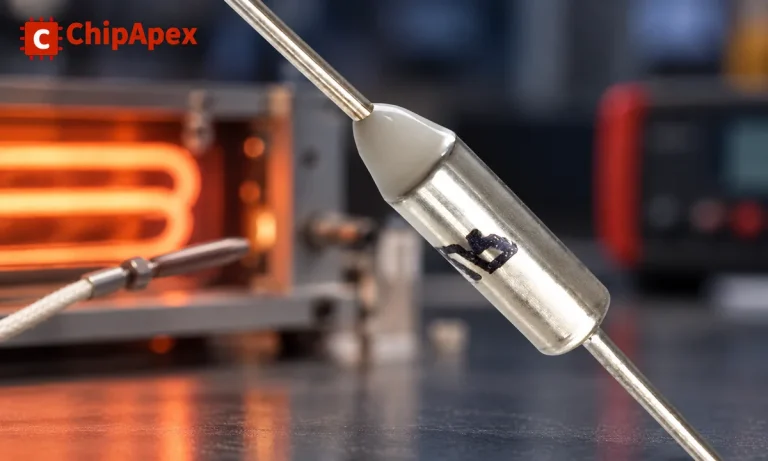
Understand thermal fuse operation, Tf, Th and Tm, electrical ratings and mounting. Check temperature limits and replacement requirements for your design.
Read More
MBR2550CT is listed in the Diode Arrays range at ChipApex. The manufacturer field lists onsemi. Its product description is DIODE ARR SCHOT 50V 12.5A…
Read More
MBR2550CT is listed in the Diode Arrays range at ChipApex. The manufacturer field lists onsemi. Its product description is DIODE ARR SCHOT 50V 12.5A…
Read More
Understand how a comparator switches at a voltage threshold, why hysteresis prevents chatter, and which output and input specs matter.
Read More
MBR2550CT is listed in the Diode Arrays range at ChipApex. The manufacturer field lists onsemi. Its product description is DIODE ARR SCHOT 50V 12.5A…
Read More
Compare RC, crystal and MEMS oscillator circuits. Check ppm, jitter, load capacitance, startup margin and output compatibility before choosing a clock source.
Read More
Compare Pt100 and Pt1000 RTDs, two-, three- and four-wire connections, excitation and self-heating. Build an error budget from element to reported temperature.
Read More
MBR2550CT is listed in the Diode Arrays range at ChipApex. The manufacturer field lists onsemi. Its product description is DIODE ARR SCHOT 50V 12.5A…
Read More
MBR2550CT is listed in the Diode Arrays range at ChipApex. The manufacturer field lists onsemi. Its product description is DIODE ARR SCHOT 50V 12.5A…
Read More
Learn why PTC resistance rises with temperature, how it differs from NTC, and which ratings matter for sensing and protection.
Read More
The activity of extra discounts on wholesale prices is in full swing…
Please fill in your contact information and we will send you the latest wholesale price list.





