 ChipApex | Global Electronic Components Supplier

SEARCH
Search Product
Search Post
— IC芯片 | 连接器 | 传感器 | 被动器件 —
Search productSearch post
— IC芯片 | 连接器 | 传感器 | 被动器件 —
Consult the customer manager about the wholesale price.
consultation hotline:86-132-6715-2157
email:[email protected]
Contact the product manager for consultation. One-stop consultation is available.
Do you want a lower wholesale price? Please send us your inquiry and we will reply immediately.
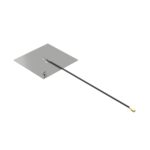
MEA-1176-AM/100-00199-01 is listed in the Antennas RF range at ChipApex. The manufacturer field lists Maxtena Inc. Its product description is GNSS L1/L2/L5/L6 ADHESIVE MOUN. Review the specifications below when checking this part for your BOM.
The MEA-1176-AM/100-00199-01 is a passive GNSS antenna designed for high-precision applications. It supports four frequency bands: L1, L2, L5, and L6. The unit features an adhesive mounting style for embedded integration. Electrical specifications include a Voltage Standing Wave Ratio (VSWR) ranging from 1.2 to 2.1 across bands. Gain values vary between 2.9 dBi and 4.9 dBi. Return loss data indicates performance levels of -21.8 dB, -16.6 dB, -9.3 dB, and 12.8 dB depending on the specific band configuration.
Verify the exact suffix and part number against official Maxtena documentation to ensure correct band configuration and mechanical interface. Confirm adhesive mounting requirements match the target application surface. Request current datasheets for precise VSWR and gain metrics per band before finalizing procurement decisions.
Select this model when multi-band GNSS precision is required in space-constrained embedded designs. The adhesive form factor eliminates the need for panel mounting hardware. Ensure the host system supports L1 through L6 signal processing. Validate environmental ratings if outdoor exposure is anticipated.
This component belongs to the Maxtena MEA-1176 series of passive GNSS antennas. The series is engineered for applications demanding high positional accuracy. The specific variant includes adhesive mounting capabilities, distinguishing it from panel-mount alternatives within the same product family.
Consult Maxtena technical documentation for direct cross-references. Verify mechanical footprint and connector compatibility with existing assemblies. Ensure replacement units maintain identical multi-band support and adhesive mounting characteristics.
Explore related parts through RF and Wireless, all product categories, ChipApex homepage.
 MEA-1176-AM/100-00199-01

MEA-1176-AM/100-00199-01 is listed in the Antennas RF range at ChipApex. The manufacturer field lists Maxtena Inc. Its product description is GNSS L1/L2/L5/L6 ADHESIVE MOUN.…
Read More
MEA-1176-AM/100-00199-01 is listed in the Antennas RF range at ChipApex. The manufacturer field lists Maxtena Inc. Its product description is GNSS L1/L2/L5/L6 ADHESIVE MOUN.…
Read More
MEA-1176-AM/100-00199-01 is listed in the Antennas RF range at ChipApex. The manufacturer field lists Maxtena Inc. Its product description is GNSS L1/L2/L5/L6 ADHESIVE MOUN.…
Read More
MEA-1176-AM/100-00199-01 is listed in the Antennas RF range at ChipApex. The manufacturer field lists Maxtena Inc. Its product description is GNSS L1/L2/L5/L6 ADHESIVE MOUN.…
Read More
Compare RC, crystal and MEMS oscillator circuits. Check ppm, jitter, load capacitance, startup margin and output compatibility before choosing a clock source.
Read More
Compare Pt100 and Pt1000 RTDs, two-, three- and four-wire connections, excitation and self-heating. Build an error budget from element to reported temperature.
Read More
MEA-1176-AM/100-00199-01 is listed in the Antennas RF range at ChipApex. The manufacturer field lists Maxtena Inc. Its product description is GNSS L1/L2/L5/L6 ADHESIVE MOUN.…
Read More
MEA-1176-AM/100-00199-01 is listed in the Antennas RF range at ChipApex. The manufacturer field lists Maxtena Inc. Its product description is GNSS L1/L2/L5/L6 ADHESIVE MOUN.…
Read More
MEA-1176-AM/100-00199-01 is listed in the Antennas RF range at ChipApex. The manufacturer field lists Maxtena Inc. Its product description is GNSS L1/L2/L5/L6 ADHESIVE MOUN.…
Read More
MEA-1176-AM/100-00199-01 is listed in the Antennas RF range at ChipApex. The manufacturer field lists Maxtena Inc. Its product description is GNSS L1/L2/L5/L6 ADHESIVE MOUN.…
Read More
MEA-1176-AM/100-00199-01 is listed in the Antennas RF range at ChipApex. The manufacturer field lists Maxtena Inc. Its product description is GNSS L1/L2/L5/L6 ADHESIVE MOUN.…
Read More
See when an inductor behaves linearly, how DC bias and saturation reduce inductance, and which current and temperature curves to check.
Read More
The activity of extra discounts on wholesale prices is in full swing…
Please fill in your contact information and we will send you the latest wholesale price list.






