 ChipApex | Global Electronic Components Supplier

SEARCH
Search Product
Search Post
— IC芯片 | 连接器 | 传感器 | 被动器件 —
Search productSearch post
— IC芯片 | 连接器 | 传感器 | 被动器件 —
Consult the customer manager about the wholesale price.
consultation hotline:86-132-6715-2157
email:[email protected]
Contact the product manager for consultation. One-stop consultation is available.
Do you want a lower wholesale price? Please send us your inquiry and we will reply immediately.
MOC3073M is listed in the Triac, SCR Output Optoisolators range at ChipApex. The manufacturer field lists onsemi. Its product description is OPTOISO 4.17KV TRIAC 1CH 6-PDIP. Review the specifications below when checking this part for your BOM.
The MOC3073M is a 6-pin DIP random-phase Triac driver optocoupler from onsemi. It features a PhotoTriac output capable of switching up to 800 V peak voltage. The device operates within a temperature range of -40°C to +85°C and has a maximum trigger current of 6 mA. Key electrical parameters include a forward voltage of 1.18 V, power dissipation of 330 mW, and an insulation voltage of 4170 Vrms. It provides single-channel isolation for AC load control applications.
Verify the specific package variant required, as the MOC3073 series includes both surface-mount (SVM) and through-hole (M) options. Confirm that the random-phase characteristic aligns with the application's noise immunity requirements compared to zero-crossing variants. Ensure compliance with DIN EN/IEC60747-5-5 standards if applicable to the target market regulations.
Select this component when random-phase firing is necessary for applications like light dimming or motor control where zero-crossing switching would cause audible noise or performance issues. Consider the 6 mA max trigger current against the gate sensitivity of the driven Triac. Evaluate the PDIP-6 package for through-hole assembly needs versus SMT alternatives if space constraints differ.
The MOC3073M belongs to the MOC series of Triac & SCR Output Optocouplers by onsemi. This family is engineered for industrial and consumer AC power switching applications. The MOC3073M specifically addresses scenarios requiring non-synchronized phase control, distinguishing it from zero-crossing counterparts like the MOC306x series within the same product line.
Direct substitutes may include other random-phase Triac drivers such as the MOC3021 or MOC3041, provided they match the 800 V output rating and 6 mA trigger current specifications. Verify pinout compatibility and insulation voltage ratings before substitution.
Explore related parts through Optocouplers, Optoisolators, Isolators, all product categories, ChipApex homepage.
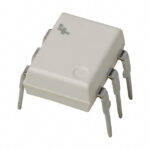 MOC3073M

Understand RF attenuator dB values, fixed and programmable types, impedance, power limits and noise tradeoffs before choosing parts for an RF signal path.
Read More
Choose a DIP switch by contact type, coded positions, footprint and signal ratings. Check logic polarity, assembly conditions and PCB configuration behavior.
Read More
Learn what an integrated circuit is, how ICs work, the main types and the specs to check before choosing a part for your design…
Read More
Understand thermal fuse operation, Tf, Th and Tm, electrical ratings and mounting. Check temperature limits and replacement requirements for your design.
Read More
MOC3073M is listed in the Triac, SCR Output Optoisolators range at ChipApex. The manufacturer field lists onsemi. Its product description is OPTOISO 4.17KV TRIAC…
Read More
MOC3073M is listed in the Triac, SCR Output Optoisolators range at ChipApex. The manufacturer field lists onsemi. Its product description is OPTOISO 4.17KV TRIAC…
Read More
MOC3073M is listed in the Triac, SCR Output Optoisolators range at ChipApex. The manufacturer field lists onsemi. Its product description is OPTOISO 4.17KV TRIAC…
Read More
MOC3073M is listed in the Triac, SCR Output Optoisolators range at ChipApex. The manufacturer field lists onsemi. Its product description is OPTOISO 4.17KV TRIAC…
Read More
MOC3073M is listed in the Triac, SCR Output Optoisolators range at ChipApex. The manufacturer field lists onsemi. Its product description is OPTOISO 4.17KV TRIAC…
Read More
Learn what an IMU measures, how accelerometers and gyroscopes work together, why orientation estimates drift, and what to compare.
Read More
Learn why PTC resistance rises with temperature, how it differs from NTC, and which ratings matter for sensing and protection.
Read More
Understand how a comparator switches at a voltage threshold, why hysteresis prevents chatter, and which output and input specs matter.
Read More
The activity of extra discounts on wholesale prices is in full swing…
Please fill in your contact information and we will send you the latest wholesale price list.






