 ChipApex | Global Electronic Components Supplier

SEARCH
Search Product
Search Post
— IC芯片 | 连接器 | 传感器 | 被动器件 —
Search productSearch post
— IC芯片 | 连接器 | 传感器 | 被动器件 —
Consult the customer manager about the wholesale price.
consultation hotline:86-132-6715-2157
email:[email protected]
Contact the product manager for consultation. One-stop consultation is available.
Do you want a lower wholesale price? Please send us your inquiry and we will reply immediately.
RS5C348A-E2-F is listed in the Real Time Clock range at ChipApex. The manufacturer field lists Nisshinbo Micro Devices Inc.. Its product description is IC RTC CLK/CALENDAR SER 10SSOP. Review the specifications below when checking this part for your BOM.
The RS5C348A-E2-F is a CMOS real-time clock IC featuring a 4-wire serial interface (CE, SCLK, SI, SO) for CPU communication. It provides timekeeping and calendar functions in BCD format with automatic leap year identification up to 2099. The device operates within a supply voltage range of 1.45V to 5.5V, consuming typical current of 0.35µA at 3V. Key features include two alarm interrupt circuits, a periodic interrupt circuit with selectable frequencies from 0.5 seconds to monthly, and a controllable 32kHz clock output. It incorporates built-in oscillation stabilization capacitors, an oscillation halt sensing circuit, and a supply voltage monitoring function with selectable thresholds.
Verify component authenticity against official Nisshinbo Micro Devices documentation. Confirm package type matches SSOP10 specifications. Check for discontinuation notices as the RS5C348 series may be subject to end-of-life status. Ensure ordering suffixes align with lead plating and taping requirements specified in the datasheet.
Select RS5C348A if control over the 32kHz clock output is required, as it can be disabled via command. Choose RS5C348B if the 32kHz output must remain permanently enabled. Verify that the 4-wire serial interface compatibility exists with the target CPU. Ensure operating temperature range of -40°C to +85°C meets system environmental requirements.
The RS5C348A-E2-F belongs to the Rx5C348A/B family of CMOS real-time clocks. It is packaged in an ultra-compact SSOP10 format with a pin pitch of 0.5mm. The 'E2' suffix indicates the taping type, while 'F' denotes lead-free plating. This model integrates internal capacitors and oscillation correction capabilities distinct from earlier serial RTC generations.
Publicly confirmed substitute part numbers are not available in the provided source material. Discontinued variants include RV5C348A-E2-FB and RT5C348B series. Consult manufacturer guidelines for cross-referencing compatible devices.
Explore related parts through Clock/Timing, Integrated Circuits (ICs), all product categories, ChipApex homepage.
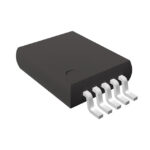 RS5C348A-E2-F
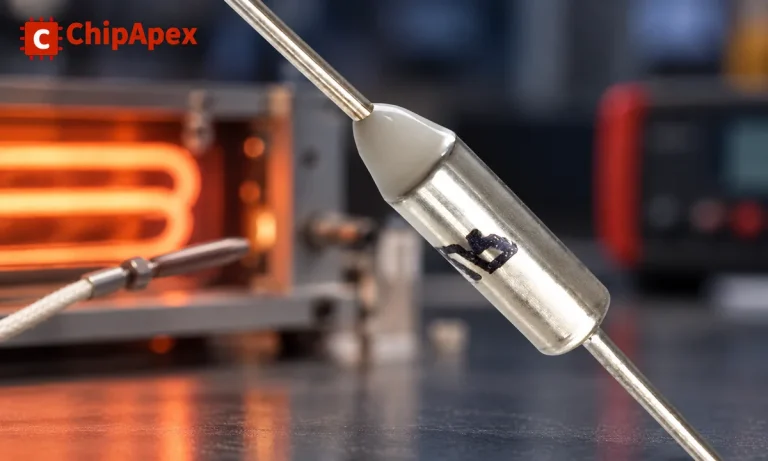
Understand thermal fuse operation, Tf, Th and Tm, electrical ratings and mounting. Check temperature limits and replacement requirements for your design.
Read More
RS5C348A-E2-F is listed in the Real Time Clock range at ChipApex. The manufacturer field lists Nisshinbo Micro Devices Inc.. Its product description is IC…
Read More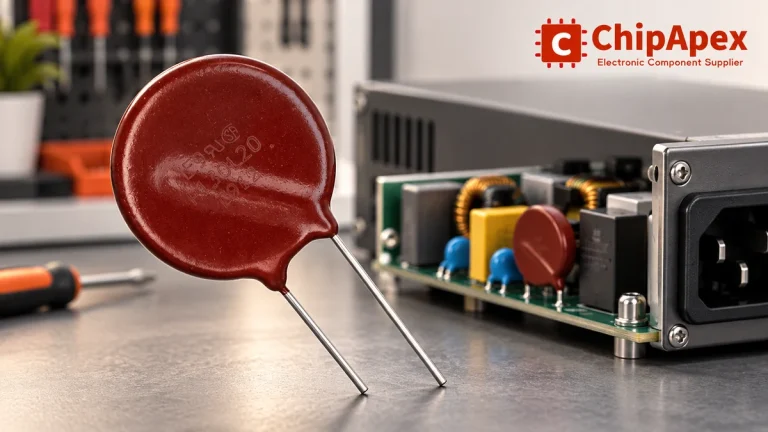
Select MOV varistors by continuous voltage, clamping behavior, surge waveform and repetition. Check thermal disconnection, fuse coordination and replacements.
Read More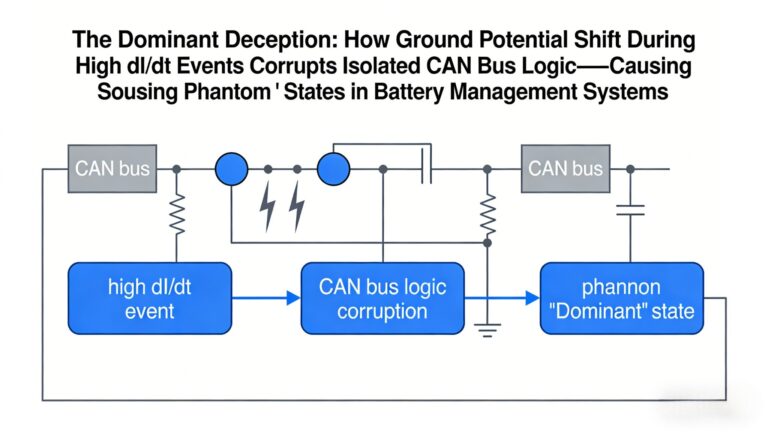
RS5C348A-E2-F is listed in the Real Time Clock range at ChipApex. The manufacturer field lists Nisshinbo Micro Devices Inc.. Its product description is IC…
Read More
RS5C348A-E2-F is listed in the Real Time Clock range at ChipApex. The manufacturer field lists Nisshinbo Micro Devices Inc.. Its product description is IC…
Read More
RS5C348A-E2-F is listed in the Real Time Clock range at ChipApex. The manufacturer field lists Nisshinbo Micro Devices Inc.. Its product description is IC…
Read More
RS5C348A-E2-F is listed in the Real Time Clock range at ChipApex. The manufacturer field lists Nisshinbo Micro Devices Inc.. Its product description is IC…
Read More
Learn how rectifiers convert AC to DC, compare half-wave and bridge circuits, and select voltage, current, recovery and thermal ratings for your design.
Read More
Understand how oscillators generate timing signals, how they differ from crystals, and which frequency, output and stability specs matter when choosing one.
Read More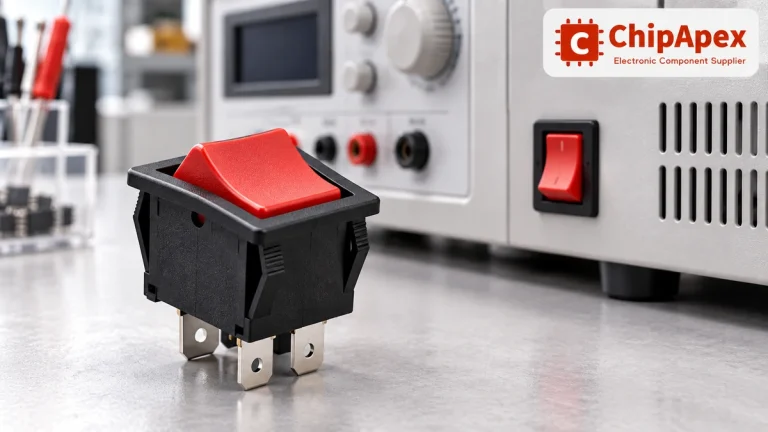
Choose a rocker switch by AC/DC ratings, contact arrangement, illumination, panel fit and sealing. Get practical checks for engineering and component sourcing.
Read More
See how a MEMS gyroscope measures angular rate, why its angle estimate drifts, and which range, noise, interface and temperature specs to compare.
Read More
Learn why PTC resistance rises with temperature, how it differs from NTC, and which ratings matter for sensing and protection.
Read More
The activity of extra discounts on wholesale prices is in full swing…
Please fill in your contact information and we will send you the latest wholesale price list.





