 ChipApex | Global Electronic Components Supplier

SEARCH
Search Product
Search Post
— IC芯片 | 连接器 | 传感器 | 被动器件 —
Search productSearch post
— IC芯片 | 连接器 | 传感器 | 被动器件 —
Consult the customer manager about the wholesale price.
consultation hotline:86-132-6715-2157
email:[email protected]
Contact the product manager for consultation. One-stop consultation is available.
Do you want a lower wholesale price? Please send us your inquiry and we will reply immediately.
SN74ALS541NSRG4 is listed in the Buffers, Drivers, Receivers, Transceivers range at ChipApex. The manufacturer field lists Texas Instruments. Its product description is IC BUFFER NON-INVERT 5.5V 20SO. Review the specifications below when checking this part for your BOM.
The SN74ALS541NSRG4 is an octal buffer and line driver from the Texas Instruments ALS logic family. It features eight non-inverting outputs with three-state capability, housed in a 20-pin SOIC package. The device operates within a supply voltage range of 4.75 V to 5.25 V. Key electrical parameters include a high-level output current of -15 mA and a low-level output current of 48 mA. Propagation delay is specified at 14 ns, with a maximum static current of 6 mA. The component supports surface-mount installation and functions within an operating temperature range of 0°C to +70°C.
Verify the specific suffix 'G4' indicates lead-free compliance and RoHS status as per manufacturer documentation. Confirm the package variant matches the required SOIC-20 footprint dimensions. Ensure the ordering part number aligns with the desired tape-and-reel quantity specifications. Cross-reference the datasheet revision to confirm pinout consistency with existing designs.
Select this component when high-speed ALS performance is required alongside robust drive currents. Compare against standard LS series for improved speed and power characteristics. Consider the three-state feature for multiplexed bus applications. Verify thermal requirements for the SOIC package under continuous operation conditions.
This part belongs to the SN74ALS541 series of octal buffers. It shares functional compatibility with other variants like SN74ALS541NSR but includes specific manufacturing revisions indicated by the suffix. The ALS technology offers a balance between speed and power consumption compared to earlier bipolar logic families.
SN74ALS541NSR is a verified equivalent part number within the same product family offering identical logical functionality and pin configuration.
Explore related parts through Logic, Integrated Circuits (ICs), all product categories, ChipApex homepage.
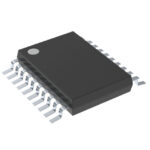 SN74ALS541NSRG4

Select a bridge rectifier by reverse voltage, capacitor charging current, startup surge and cooling. Work through a stated DC voltage and ripple example.
Read More
Learn why PTC resistance rises with temperature, how it differs from NTC, and which ratings matter for sensing and protection.
Read More
SN74ALS541NSRG4 is listed in the Buffers, Drivers, Receivers, Transceivers range at ChipApex. The manufacturer field lists Texas Instruments. Its product description is IC BUFFER…
Read More
SN74ALS541NSRG4 is listed in the Buffers, Drivers, Receivers, Transceivers range at ChipApex. The manufacturer field lists Texas Instruments. Its product description is IC BUFFER…
Read More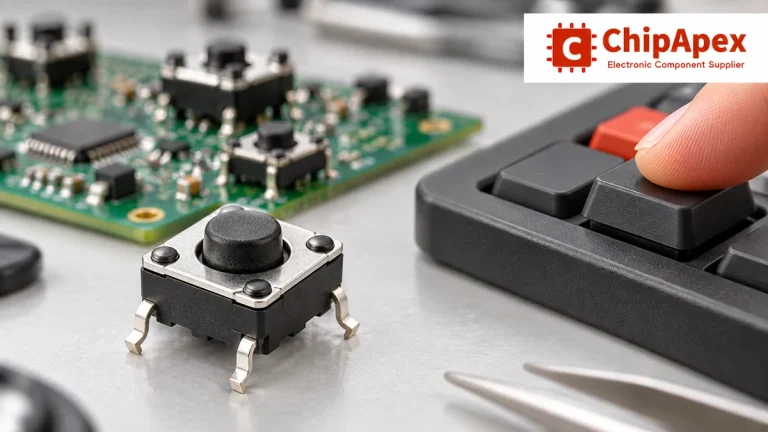
Understand tactile switches, PCB and keyboard differences, four-pin wiring, debounce, force, travel and replacement checks for reliable control inputs.
Read More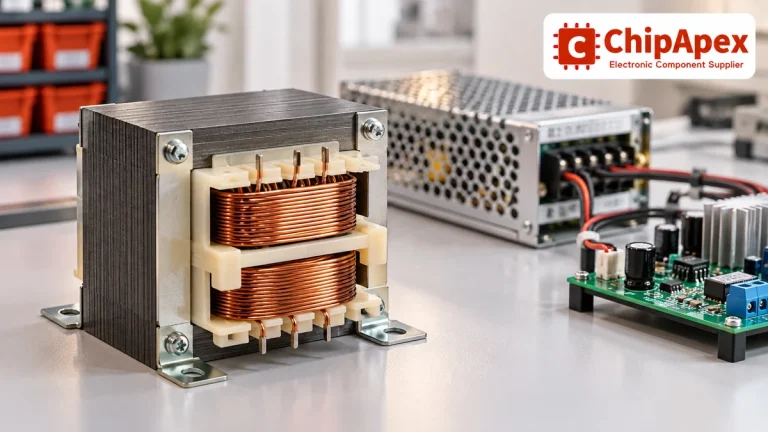
Select power transformers by input frequency, secondary VA, rectifier load, isolation, regulation and inrush. Build a clearer specification for your next RFQ.
Read More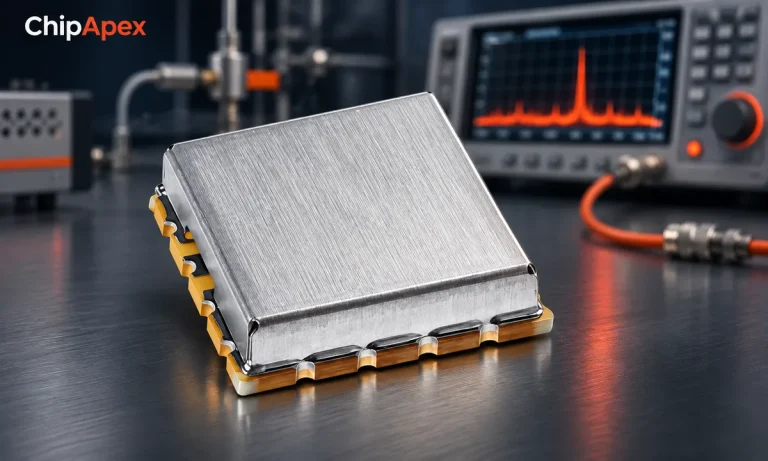
Understand voltage controlled oscillator tuning, phase noise and PLL operation. Check supply noise, output loading and requirements before selection.
Read More
SN74ALS541NSRG4 is listed in the Buffers, Drivers, Receivers, Transceivers range at ChipApex. The manufacturer field lists Texas Instruments. Its product description is IC BUFFER…
Read More
SN74ALS541NSRG4 is listed in the Buffers, Drivers, Receivers, Transceivers range at ChipApex. The manufacturer field lists Texas Instruments. Its product description is IC BUFFER…
Read More
Compare Pt100 and Pt1000 RTDs, two-, three- and four-wire connections, excitation and self-heating. Build an error budget from element to reported temperature.
Read More
Learn how rectifiers convert AC to DC, compare half-wave and bridge circuits, and select voltage, current, recovery and thermal ratings for your design.
Read More
Compare gas sensor technologies, cross-sensitivity and calibration needs. Define the gas, range and environment before choosing a sensing component.
Read More
The activity of extra discounts on wholesale prices is in full swing…
Please fill in your contact information and we will send you the latest wholesale price list.





