 ChipApex | Global Electronic Components Supplier

SEARCH
Search Product
Search Post
— IC芯片 | 连接器 | 传感器 | 被动器件 —
Search productSearch post
— IC芯片 | 连接器 | 传感器 | 被动器件 —
Consult the customer manager about the wholesale price.
consultation hotline:86-132-6715-2157
email:[email protected]
Contact the product manager for consultation. One-stop consultation is available.
Do you want a lower wholesale price? Please send us your inquiry and we will reply immediately.
SN74ALS568AN is listed in the Counter Dividers range at ChipApex. The manufacturer field lists Texas Instruments. Its product description is DECADE COUNTER, ALS SERIES. Review the specifications below when checking this part for your BOM.
The SN74ALS568AN is a synchronous 4-bit up/down decade and binary counter manufactured by Texas Instruments. It features three-state outputs for bus-driven operation. The device operates within a supply voltage range of 4.5 V to 5.5 V. It supports both decade (BCD) and binary counting modes. The component is housed in a PDIP-16 package and is rated for an operating temperature range from 0°C to +70°C.
Verify the specific suffix 'AN' corresponds to the through-hole PDIP-16 package variant. Confirm RoHS compliance status via the official datasheet, as historical ALS series parts may have varying environmental declarations. Ensure the supplier provides the manufacturer's original datasheet for electrical parameter validation before finalizing procurement.
Select this component when synchronous counting with high-impedance bus interfacing is required. The ALS series offers faster switching speeds compared to standard LS logic. Verify that the application requires a single 4-bit stage rather than cascaded multi-byte counters. Check pin compatibility if replacing older TTL variants in existing designs.
This part belongs to the Texas Instruments SN74ALS logic family, which utilizes Advanced Low-power Schottky technology. The SN74ALS568A series specifically addresses applications needing precise synchronous counting with bus isolation capabilities. It serves as a fundamental building block for digital state machines and timing controllers.
Yes, the device mode is selectable, allowing it to operate as either a modulo-10 decade counter or a modulo-16 binary counter.
The three-state outputs allow the counter to be directly connected to a microprocessor data bus without external buffering, isolating the counter when not selected.
Explore related parts through Logic, Integrated Circuits (ICs), all product categories, ChipApex homepage.
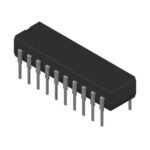 SN74ALS568AN
SN74ALS568AN is listed in the Counter Dividers range at ChipApex. The manufacturer field lists Texas Instruments. Its product description is DECADE COUNTER, ALS SERIES.…
Read More
SN74ALS568AN is listed in the Counter Dividers range at ChipApex. The manufacturer field lists Texas Instruments. Its product description is DECADE COUNTER, ALS SERIES.…
Read More
SN74ALS568AN is listed in the Counter Dividers range at ChipApex. The manufacturer field lists Texas Instruments. Its product description is DECADE COUNTER, ALS SERIES.…
Read More
Choose a DIP switch by contact type, coded positions, footprint and signal ratings. Check logic polarity, assembly conditions and PCB configuration behavior.
Read More
SN74ALS568AN is listed in the Counter Dividers range at ChipApex. The manufacturer field lists Texas Instruments. Its product description is DECADE COUNTER, ALS SERIES.…
Read More
SN74ALS568AN is listed in the Counter Dividers range at ChipApex. The manufacturer field lists Texas Instruments. Its product description is DECADE COUNTER, ALS SERIES.…
Read More
Compare thermistors, RTDs, thermocouples and temperature ICs. Learn how range, accuracy, response, interfaces and mounting affect component selection.
Read More
SN74ALS568AN is listed in the Counter Dividers range at ChipApex. The manufacturer field lists Texas Instruments. Its product description is DECADE COUNTER, ALS SERIES.…
Read More
Compare Pt100 and Pt1000 RTDs, two-, three- and four-wire connections, excitation and self-heating. Build an error budget from element to reported temperature.
Read More
SN74ALS568AN is listed in the Counter Dividers range at ChipApex. The manufacturer field lists Texas Instruments. Its product description is DECADE COUNTER, ALS SERIES.…
Read More
SN74ALS568AN is listed in the Counter Dividers range at ChipApex. The manufacturer field lists Texas Instruments. Its product description is DECADE COUNTER, ALS SERIES.…
Read More
See how a MEMS gyroscope measures angular rate, why its angle estimate drifts, and which range, noise, interface and temperature specs to compare.
Read More
The activity of extra discounts on wholesale prices is in full swing…
Please fill in your contact information and we will send you the latest wholesale price list.





