 ChipApex | Global Electronic Components Supplier

SEARCH
Search Product
Search Post
— IC芯片 | 连接器 | 传感器 | 被动器件 —
Search productSearch post
— IC芯片 | 连接器 | 传感器 | 被动器件 —
Consult the customer manager about the wholesale price.
consultation hotline:86-132-6715-2157
email:[email protected]
Contact the product manager for consultation. One-stop consultation is available.
Do you want a lower wholesale price? Please send us your inquiry and we will reply immediately.
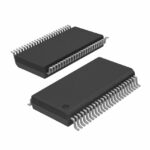
SN74ALVTH162244LR is listed in the Buffers, Drivers, Receivers, Transceivers range at ChipApex. The manufacturer field lists Texas Instruments. Its product description is IC BUFFER NON-INVERT 3.6V 48SSOP. Review the specifications below when checking this part for your BOM.
The SN74ALVTH162244LR is a 16-bit buffer and line driver from Texas Instruments, designed for low-voltage 2.5-V or 3.3-V VCC operation. It features TTL-compatible inputs and 3-state outputs. The device operates within a supply voltage range of 2.7 V to 3.6 V. It supports an operating temperature range from -40°C to +85°C. The component utilizes a 48-pin SSOP package with tape-and-reel packaging.
Verify the specific ordering suffix against the manufacturer's current datasheet to confirm package type and reel specifications. Ensure the selected variant matches the required operating temperature range and voltage levels for your specific design implementation before finalizing procurement orders.
Select this component when designing systems that require 16-bit parallel data transfer with TTL input compatibility. It is suitable for applications needing low power consumption and high-speed performance within the 2.5-V to 3.3-V supply domain. Consider the 48-pin SSOP footprint for PCB layout constraints.
This part belongs to the ALVTH logic family, which combines advanced CMOS technology with TTL-compatible inputs. It is engineered for low-voltage applications, offering improved speed and power efficiency compared to older logic families. The device is widely used in portable and battery-operated equipment due to its low static power consumption.
Consult official substitution guides for compatible alternatives. Verify pinout compatibility and electrical characteristics such as output drive strength and propagation delay when considering cross-family replacements.
Explore related parts through Logic, Integrated Circuits (ICs), all product categories, ChipApex homepage.
 SN74ALVTH162244LR
SN74ALVTH162244LR is listed in the Buffers, Drivers, Receivers, Transceivers range at ChipApex. The manufacturer field lists Texas Instruments. Its product description is IC BUFFER…
Read More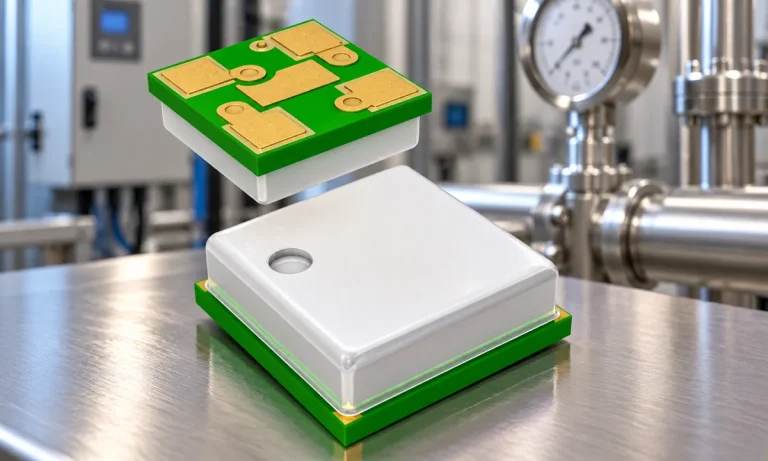
Learn how a pressure transducer converts pressure into voltage, current, or digital output, and compare pressure references and key selection specs.
Read More
SN74ALVTH162244LR is listed in the Buffers, Drivers, Receivers, Transceivers range at ChipApex. The manufacturer field lists Texas Instruments. Its product description is IC BUFFER…
Read More
SN74ALVTH162244LR is listed in the Buffers, Drivers, Receivers, Transceivers range at ChipApex. The manufacturer field lists Texas Instruments. Its product description is IC BUFFER…
Read More
Learn the relay definition, coil and contact operation, NO and NC forms, load ratings and suppression choices. Compare mechanical, reed and solid-state types.
Read More
Learn how a diode conducts, how to identify anode and cathode, and when to choose rectifier, TVS, Zener or photodiode types for a circuit.
Read More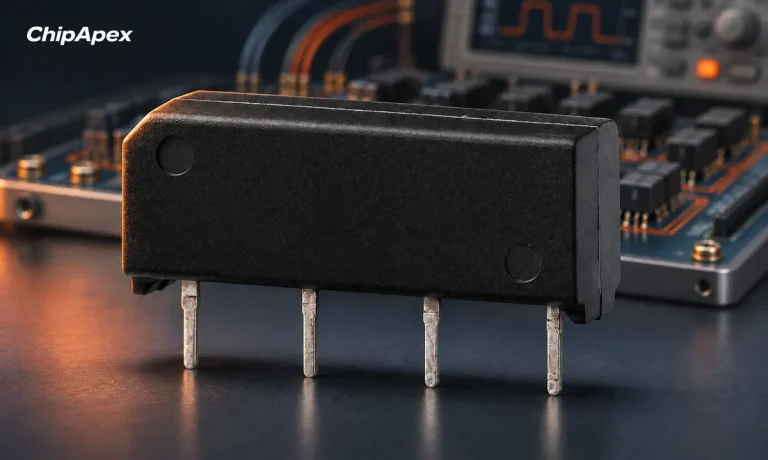
Choose a reed relay for signal switching. Understand hot and cold switching, leakage, contact resistance, isolation and measurement settling requirements.
Read More
Choose logic inverter ICs by thresholds, supply, output drive and delay. Compare standard and Schmitt-trigger inputs, power sequencing and replacement checks.
Read More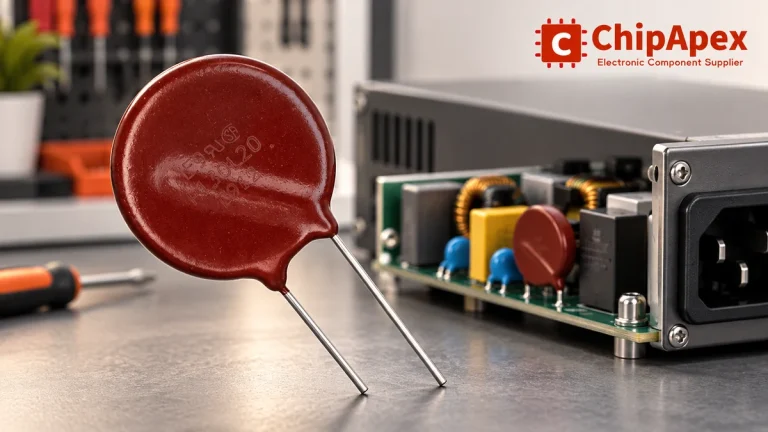
Select MOV varistors by continuous voltage, clamping behavior, surge waveform and repetition. Check thermal disconnection, fuse coordination and replacements.
Read More
SN74ALVTH162244LR is listed in the Buffers, Drivers, Receivers, Transceivers range at ChipApex. The manufacturer field lists Texas Instruments. Its product description is IC BUFFER…
Read More
SN74ALVTH162244LR is listed in the Buffers, Drivers, Receivers, Transceivers range at ChipApex. The manufacturer field lists Texas Instruments. Its product description is IC BUFFER…
Read More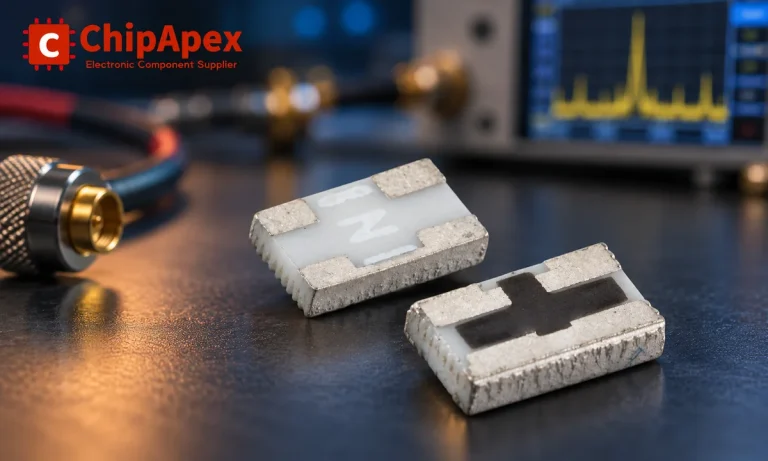
Understand RF attenuator dB values, fixed and programmable types, impedance, power limits and noise tradeoffs before choosing parts for an RF signal path.
Read More
The activity of extra discounts on wholesale prices is in full swing…
Please fill in your contact information and we will send you the latest wholesale price list.





