 ChipApex | Global Electronic Components Supplier

SEARCH
Search Product
Search Post
— IC芯片 | 连接器 | 传感器 | 被动器件 —
Search productSearch post
— IC芯片 | 连接器 | 传感器 | 被动器件 —
Consult the customer manager about the wholesale price.
consultation hotline:86-132-6715-2157
email:[email protected]
Contact the product manager for consultation. One-stop consultation is available.
Do you want a lower wholesale price? Please send us your inquiry and we will reply immediately.
SN74HC132N is listed in the Inverter Gates range at ChipApex. The manufacturer field lists Texas Instruments. Its product description is IC GATE NAND 4CH 2-INP 14DIP. Review the specifications below when checking this part for your BOM.
The SN74HC132N is a quad Schmitt-trigger NAND gate manufactured by Texas Instruments. It operates within a supply voltage range of 2 V to 6 V and features a propagation delay of 14 ns. The device provides low-level output current of 5.2 mA and high-level output current of -5.2 mA. It functions reliably across an operating temperature range from -40 °C to +85 °C. The component utilizes a PDIP-14 through-hole package.
Verify the specific ordering suffix and package type against the required datasheet specifications before procurement. Confirm that the PDIP-14 through-hole format matches the target PCB footprint. Ensure the industrial temperature rating aligns with the operational environment requirements. Cross-reference the manufacturer part number to avoid confusion with surface-mount variants or different logic families.
Select this component when Schmitt-trigger action is required to clean noisy digital signals. The HC series offers compatibility with standard TTL logic levels while maintaining CMOS power efficiency. Consider the PDIP-14 package only if through-hole assembly is mandated by the design constraints. Evaluate the 2 V to 6 V supply range to ensure it meets the system voltage requirements.
This part belongs to the SN74HC132 family of quad positive-NAND gates with Schmitt-trigger inputs. It is distinct from surface-mount versions like the SN74HC132DR which use SOIC packages. The N suffix specifically denotes the plastic dual-in-line package configuration. It serves as a fundamental building block for digital logic designs requiring hysteresis.
The CD74HC132ME4 is a related variant but uses an SOIC-14 surface-mount package and has a wider temperature range. Direct pin-to-pin replacement requires verifying the package type difference. Other HC-series NAND gates lack the Schmitt-trigger feature and are not functionally equivalent.
Explore related parts through Logic, Integrated Circuits (ICs), all product categories, ChipApex homepage.
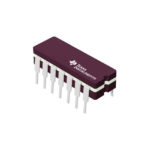 SN74HC132N
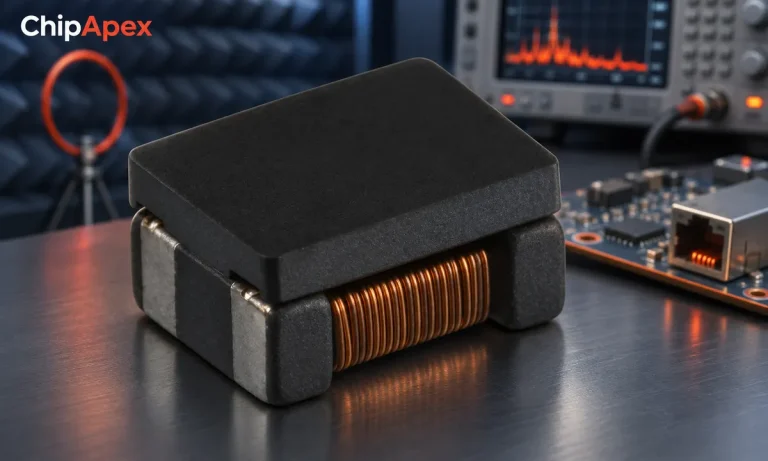
Select a common mode choke using noise frequency, current, insulation and signal integrity. Understand impedance curves, layout and filter limitations.
Read More
Learn how an analog front end conditions sensor signals. Compare gain, noise, filtering, ADC settling and integration options before selecting components.
Read More
SN74HC132N is listed in the Inverter Gates range at ChipApex. The manufacturer field lists Texas Instruments. Its product description is IC GATE NAND 4CH…
Read More
SN74HC132N is listed in the Inverter Gates range at ChipApex. The manufacturer field lists Texas Instruments. Its product description is IC GATE NAND 4CH…
Read More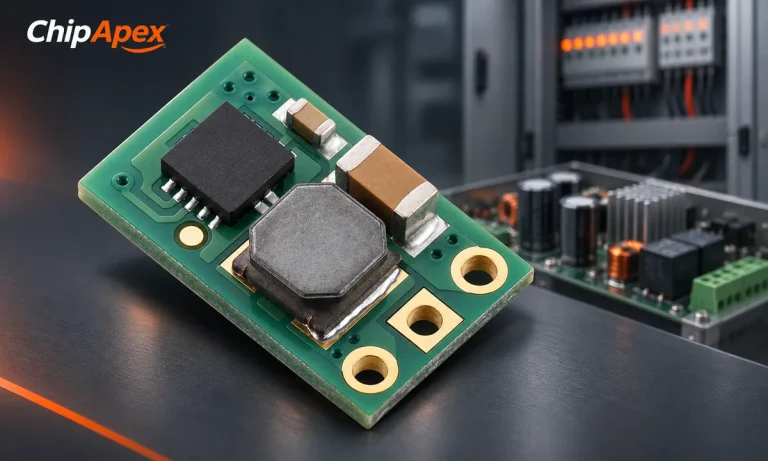
Select a DC-DC converter by input range, topology, isolation and temperature. Compare ripple, efficiency and load limits before choosing a component.
Read More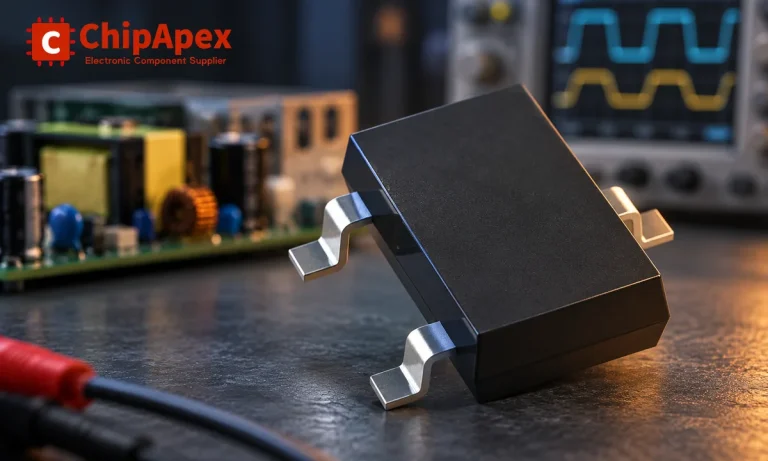
Learn how rectifiers convert AC to DC, compare half-wave and bridge circuits, and select voltage, current, recovery and thermal ratings for your design.
Read More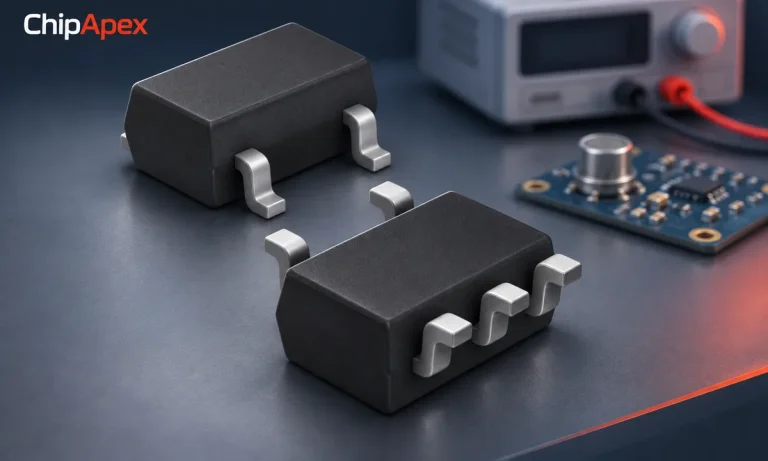
Understand how an LDO regulates voltage. Check dropout, noise, PSRR, output capacitors and heat before selecting a low-dropout regulator for your circuit.
Read More
SN74HC132N is listed in the Inverter Gates range at ChipApex. The manufacturer field lists Texas Instruments. Its product description is IC GATE NAND 4CH…
Read More
SN74HC132N is listed in the Inverter Gates range at ChipApex. The manufacturer field lists Texas Instruments. Its product description is IC GATE NAND 4CH…
Read More
SN74HC132N is listed in the Inverter Gates range at ChipApex. The manufacturer field lists Texas Instruments. Its product description is IC GATE NAND 4CH…
Read More
Understand tactile switches, PCB and keyboard differences, four-pin wiring, debounce, force, travel and replacement checks for reliable control inputs.
Read More
See how a MEMS gyroscope measures angular rate, why its angle estimate drifts, and which range, noise, interface and temperature specs to compare.
Read More
The activity of extra discounts on wholesale prices is in full swing…
Please fill in your contact information and we will send you the latest wholesale price list.




