 ChipApex | Global Electronic Components Supplier

SEARCH
Search Product
Search Post
— IC芯片 | 连接器 | 传感器 | 被动器件 —
Search productSearch post
— IC芯片 | 连接器 | 传感器 | 被动器件 —
Consult the customer manager about the wholesale price.
consultation hotline:86-132-6715-2157
email:[email protected]
Contact the product manager for consultation. One-stop consultation is available.
Do you want a lower wholesale price? Please send us your inquiry and we will reply immediately.
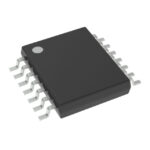
SN74HCS164QPWRQ1 is listed in the Shift Registers range at ChipApex. The manufacturer field lists Texas Instruments. Its product description is AUTOMOTIVE 8-BIT SERIAL-IN/PARAL. Review the specifications below when checking this part for your BOM.
The SN74HCS164QPWRQ1 is an automotive-grade, 8-bit serial-in/parallel-out shift register from Texas Instruments. It operates within a supply voltage range of 2 V to 6 V and supports temperatures from -40°C to +125°C. The device features Schmitt-trigger inputs for noise rejection and provides balanced CMOS push-pull outputs with ±7.8 mA drive capability at 6 V. Propagation delay ranges from 7 ns to 25 ns depending on voltage and temperature.
Verify the specific package variant (PW, D, BQA, or DYY) against the design requirements, as thermal characteristics vary significantly between TSSOP, SOIC, WQFN, and SOT-23-THIN options. Confirm that the system power supply remains strictly within the 2 V to 6 V operating range to ensure electrical parameters meet datasheet specifications.
Select this component when robust noise immunity is required due to its Schmitt-trigger architecture. It is suitable for designs needing simple GPIO control without complex communication interfaces. Ensure output loading does not exceed the specified capacitive limits to maintain timing performance.
This part belongs to the SN74HCS164-Q1 family of automotive logic devices. It shares functional similarities with standard industrial shift registers but includes enhanced ESD protection and extended temperature ratings specifically validated for automotive environments.
SN74HCS164PW-Q1
Data enters the first flip-flop only when both Serial Input A and Serial Input B are high. If either input is low, the first stage resets to low upon the next clock pulse.
Unused inputs must be tied to either VCC or GND to prevent undefined operational states. Floating inputs are not permitted.
Explore related parts through Logic, Integrated Circuits (ICs), all product categories, ChipApex homepage.
 SN74HCS164QPWRQ1
SN74HCS164QPWRQ1 is listed in the Shift Registers range at ChipApex. The manufacturer field lists Texas Instruments. Its product description is AUTOMOTIVE 8-BIT SERIAL-IN/PARAL. Review…
Read More
SN74HCS164QPWRQ1 is listed in the Shift Registers range at ChipApex. The manufacturer field lists Texas Instruments. Its product description is AUTOMOTIVE 8-BIT SERIAL-IN/PARAL. Review…
Read More
SN74HCS164QPWRQ1 is listed in the Shift Registers range at ChipApex. The manufacturer field lists Texas Instruments. Its product description is AUTOMOTIVE 8-BIT SERIAL-IN/PARAL. Review…
Read More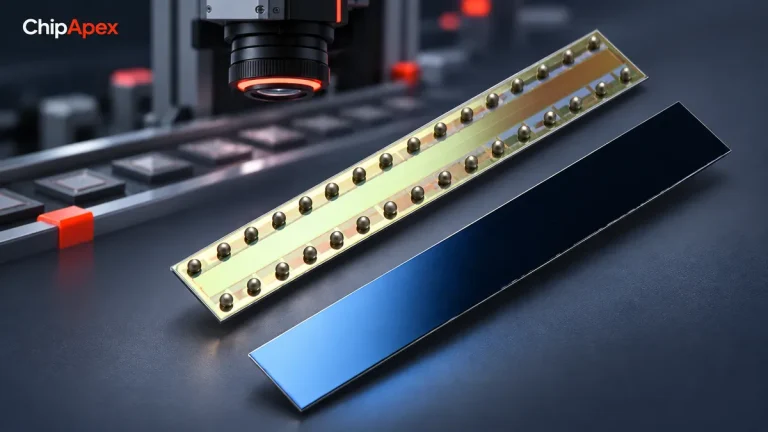
Learn how optical sensing works, compare detection methods, and select sensors by target surface, ambient light, response time and electrical interface.
Read More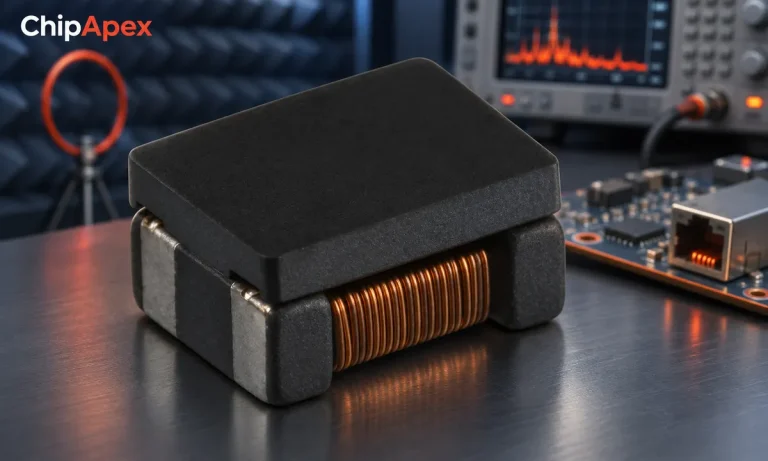
Select a common mode choke using noise frequency, current, insulation and signal integrity. Understand impedance curves, layout and filter limitations.
Read More
Learn the relay definition, coil and contact operation, NO and NC forms, load ratings and suppression choices. Compare mechanical, reed and solid-state types.
Read More
SN74HCS164QPWRQ1 is listed in the Shift Registers range at ChipApex. The manufacturer field lists Texas Instruments. Its product description is AUTOMOTIVE 8-BIT SERIAL-IN/PARAL. Review…
Read More
SN74HCS164QPWRQ1 is listed in the Shift Registers range at ChipApex. The manufacturer field lists Texas Instruments. Its product description is AUTOMOTIVE 8-BIT SERIAL-IN/PARAL. Review…
Read More
SN74HCS164QPWRQ1 is listed in the Shift Registers range at ChipApex. The manufacturer field lists Texas Instruments. Its product description is AUTOMOTIVE 8-BIT SERIAL-IN/PARAL. Review…
Read More
Learn what a battery BMS does, how protection differs from charging, and which pack specifications to check when sourcing BMS components through ChipApex.
Read More
Learn what an IMU measures, how accelerometers and gyroscopes work together, why orientation estimates drift, and what to compare.
Read More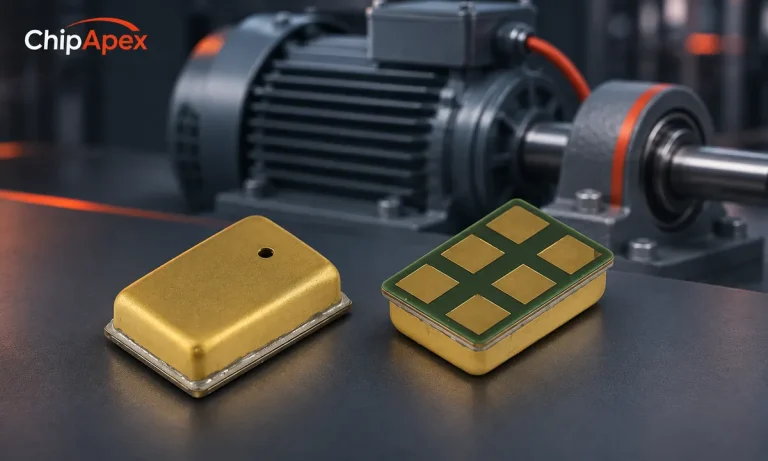
Choose a vibration sensor for machine monitoring. Compare sensing methods, bandwidth, noise and mounting, then define the signal-chain requirements.
Read More
The activity of extra discounts on wholesale prices is in full swing…
Please fill in your contact information and we will send you the latest wholesale price list.





