 ChipApex | Global Electronic Components Supplier

SEARCH
Search Product
Search Post
— IC芯片 | 连接器 | 传感器 | 被动器件 —
Search productSearch post
— IC芯片 | 连接器 | 传感器 | 被动器件 —
Consult the customer manager about the wholesale price.
consultation hotline:86-132-6715-2157
email:[email protected]
Contact the product manager for consultation. One-stop consultation is available.
Do you want a lower wholesale price? Please send us your inquiry and we will reply immediately.
SN74LVC1G32QDRYRQ1 is listed in the Inverter Gates range at ChipApex. The manufacturer field lists Texas Instruments. Its product description is IC GATE OR 1CH 2-INP 6SON. Review the specifications below when checking this part for your BOM.
The SN74LVC1G32QDRYRQ1 is a single 2-input positive-OR gate from Texas Instruments, designed for automotive applications. It operates within a supply voltage range of 1.65 V to 5.5 V and supports an operating temperature range of -40°C to +125°C. The device features low static power consumption and is qualified under AEC-Q100 standards. It utilizes a 6-pin SON package with a pitch of 0.5 mm, ensuring compact footprint suitability for space-constrained designs.
Verify the complete part number including suffixes against official Texas Instruments documentation to ensure correct packaging and tape-and-reel specifications. Confirm that the specific revision matches project requirements. Cross-reference with authorized distributors to validate authenticity and traceability. Ensure compliance with RoHS directives if required by the target market regulations.
Select this component when automotive reliability and wide voltage compatibility are required. Compare propagation delay characteristics against other LVC series devices if timing constraints are critical. Evaluate package dimensions against PCB layout restrictions. Consider alternative packages such as DCK or DBV if different mounting styles are preferred while maintaining the same logical function.
This device belongs to the SN74LVC1G32-Q1 family of single 2-input OR gates. It shares functional similarities with non-automotive variants but includes enhanced testing for automotive durability. The QDRYRQ1 suffix indicates specific manufacturing and packaging details distinct from standard commercial grades.
Yes, the device supports a supply voltage range up to 5.5 V, allowing it to interface with 5 V logic systems.
The maximum operating temperature is +125°C, suitable for harsh automotive environments.
Explore related parts through Logic, Integrated Circuits (ICs), all product categories, ChipApex homepage.
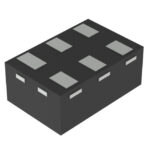 SN74LVC1G32QDRYRQ1
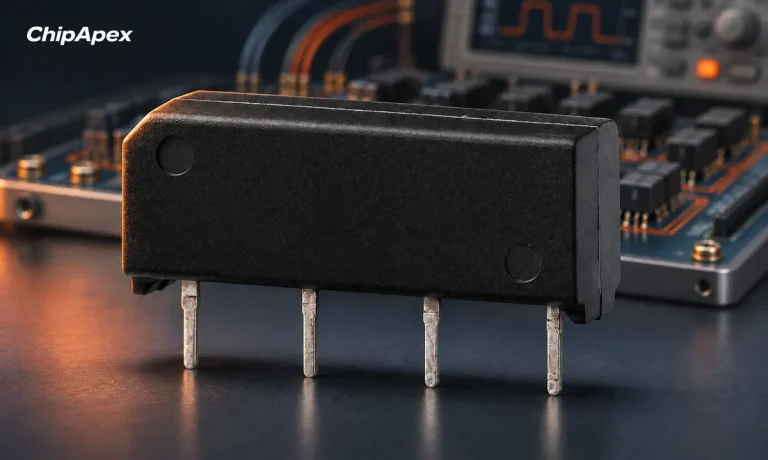
Choose a reed relay for signal switching. Understand hot and cold switching, leakage, contact resistance, isolation and measurement settling requirements.
Read More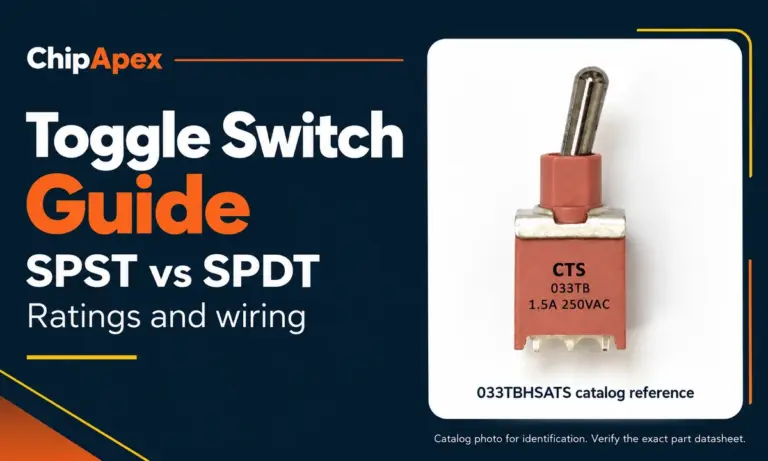
Compare SPST and SPDT toggle switches, understand AC/DC ratings, and follow wiring examples. Check contact action, mounting and parts in the ChipApex catalog.
Read More
SN74LVC1G32QDRYRQ1 is listed in the Inverter Gates range at ChipApex. The manufacturer field lists Texas Instruments. Its product description is IC GATE OR 1CH…
Read More
SN74LVC1G32QDRYRQ1 is listed in the Inverter Gates range at ChipApex. The manufacturer field lists Texas Instruments. Its product description is IC GATE OR 1CH…
Read More
Learn what data acquisition means, from sensors and conditioning to sampling and storage. Review channel timing, wiring, calibration and data quality.
Read More
SN74LVC1G32QDRYRQ1 is listed in the Inverter Gates range at ChipApex. The manufacturer field lists Texas Instruments. Its product description is IC GATE OR 1CH…
Read More
Choose logic inverter ICs by thresholds, supply, output drive and delay. Compare standard and Schmitt-trigger inputs, power sequencing and replacement checks.
Read More
Select a bridge rectifier by reverse voltage, capacitor charging current, startup surge and cooling. Work through a stated DC voltage and ripple example.
Read More
Learn how a Zener diode regulates voltage. Calculate resistor current and power, check tolerance and temperature, and distinguish Zener and TVS applications.
Read More
Understand how an LDO regulates voltage. Check dropout, noise, PSRR, output capacitors and heat before selecting a low-dropout regulator for your circuit.
Read More
SN74LVC1G32QDRYRQ1 is listed in the Inverter Gates range at ChipApex. The manufacturer field lists Texas Instruments. Its product description is IC GATE OR 1CH…
Read More
Learn how a TRIAC switches AC loads. Understand triggering, latching, holding current, phase control and thermal limits before choosing a component.
Read More
The activity of extra discounts on wholesale prices is in full swing…
Please fill in your contact information and we will send you the latest wholesale price list.





