 ChipApex | Global Electronic Components Supplier

SEARCH
Search Product
Search Post
— IC芯片 | 连接器 | 传感器 | 被动器件 —
Search productSearch post
— IC芯片 | 连接器 | 传感器 | 被动器件 —
Consult the customer manager about the wholesale price.
consultation hotline:86-132-6715-2157
email:[email protected]
Contact the product manager for consultation. One-stop consultation is available.
Do you want a lower wholesale price? Please send us your inquiry and we will reply immediately.
SN74LVC2244APWG4 is listed in the Buffers, Drivers, Receivers, Transceivers range at ChipApex. The manufacturer field lists Texas Instruments. Its product description is IC BUF NON-INVERT 3.6V 20TSSOP. Review the specifications below when checking this part for your BOM.
The SN74LVC2244APWG4 is an octal buffer and line driver manufactured by Texas Instruments. It operates within a supply voltage range of 1.65V to 3.6V, supporting low-voltage digital systems. The device features eight non-inverting channels with three-state outputs, housed in a 20-TSSOP package. It provides symmetric output drive capabilities and is designed for high-speed data transmission applications requiring reliable signal buffering.
Verify the specific suffix 'G4' indicates RoHS compliance and green material status as per Texas Instruments standards. Confirm the package type matches the required PCB footprint. Ensure the operating temperature range aligns with system requirements. Check for any recent product lifecycle notices or obsolescence warnings from the manufacturer before finalizing procurement plans.
Select this component when designing systems requiring octal buffering with three-state control. It is suitable for applications needing operation across a wide voltage range from 1.65V to 3.6V. Consider its pinout compatibility if replacing legacy parts. Evaluate power consumption and propagation delay specifications against system timing constraints to ensure optimal performance.
This part belongs to the SN74LVC2244A family of octal buffers and line drivers. It is part of Texas Instruments' broader LVC logic series, which focuses on low-voltage, high-speed CMOS technology. The device shares functional similarities with other octal buffers but offers specific voltage tolerance and drive characteristics defined by the LVC architecture.
Explore related parts through Logic, Integrated Circuits (ICs), all product categories, ChipApex homepage.
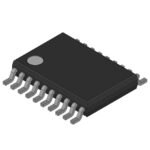 SN74LVC2244APWG4
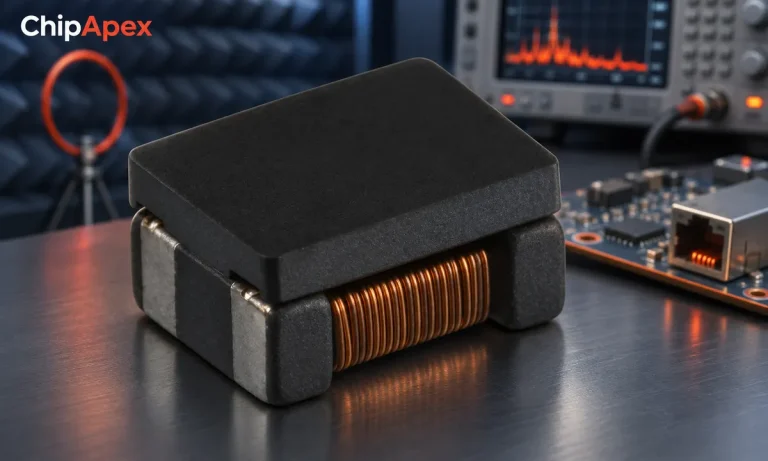
Select a common mode choke using noise frequency, current, insulation and signal integrity. Understand impedance curves, layout and filter limitations.
Read More
SN74LVC2244APWG4 is listed in the Buffers, Drivers, Receivers, Transceivers range at ChipApex. The manufacturer field lists Texas Instruments. Its product description is IC BUF…
Read More
SN74LVC2244APWG4 is listed in the Buffers, Drivers, Receivers, Transceivers range at ChipApex. The manufacturer field lists Texas Instruments. Its product description is IC BUF…
Read More
Learn how a JFET works and how to compare bias, leakage, noise and pinout. Review practical selection questions for high-impedance analog circuits.
Read More
SN74LVC2244APWG4 is listed in the Buffers, Drivers, Receivers, Transceivers range at ChipApex. The manufacturer field lists Texas Instruments. Its product description is IC BUF…
Read More
SN74LVC2244APWG4 is listed in the Buffers, Drivers, Receivers, Transceivers range at ChipApex. The manufacturer field lists Texas Instruments. Its product description is IC BUF…
Read More
See how a MEMS gyroscope measures angular rate, why its angle estimate drifts, and which range, noise, interface and temperature specs to compare.
Read More
SN74LVC2244APWG4 is listed in the Buffers, Drivers, Receivers, Transceivers range at ChipApex. The manufacturer field lists Texas Instruments. Its product description is IC BUF…
Read More
SN74LVC2244APWG4 is listed in the Buffers, Drivers, Receivers, Transceivers range at ChipApex. The manufacturer field lists Texas Instruments. Its product description is IC BUF…
Read More
SN74LVC2244APWG4 is listed in the Buffers, Drivers, Receivers, Transceivers range at ChipApex. The manufacturer field lists Texas Instruments. Its product description is IC BUF…
Read More
SN74LVC2244APWG4 is listed in the Buffers, Drivers, Receivers, Transceivers range at ChipApex. The manufacturer field lists Texas Instruments. Its product description is IC BUF…
Read More
Learn what an integrated circuit is, how ICs work, the main types and the specs to check before choosing a part for your design…
Read More
The activity of extra discounts on wholesale prices is in full swing…
Please fill in your contact information and we will send you the latest wholesale price list.





