 ChipApex | Global Electronic Components Supplier

SEARCH
Search Product
Search Post
— IC芯片 | 连接器 | 传感器 | 被动器件 —
Search productSearch post
— IC芯片 | 连接器 | 传感器 | 被动器件 —
Consult the customer manager about the wholesale price.
consultation hotline:86-132-6715-2157
email:[email protected]
Contact the product manager for consultation. One-stop consultation is available.
Do you want a lower wholesale price? Please send us your inquiry and we will reply immediately.
SN74LVCH32374AGKER is listed in the Flip Flops range at ChipApex. The manufacturer field lists Texas Instruments. Its product description is IC FF D-TYPE QUAD 8BIT 96LFBGA. Review the specifications below when checking this part for your BOM.
The SN74LVCH32374AGKER is an octal D-type flip-flop manufactured by Texas Instruments, belonging to the LVCH logic family. It features eight independent positive-edge-triggered circuits with three-state outputs in a 20-pin VQFN package. The device operates within a supply voltage range of 1.65V to 3.6V and supports CMOS and LVTTL input types. Key electrical parameters include a propagation delay of 3.6ns at 3.3V, output drive currents of ±24mA, and an operating temperature range from -40°C to +85°C.
Verify the specific suffix 'GKER' against the official datasheet to confirm the exact tape-and-reel quantity and packaging specifications. Ensure the procurement source provides valid RoHS compliance documentation. Cross-reference the manufacturer part number with authorized distributors to guarantee component authenticity and traceability before finalizing orders.
Select this component when designing low-voltage systems requiring octal storage with bus-compatible outputs. The LVCH series offers optimized performance for 3.3V and 2.5V environments while maintaining compatibility with 5V tolerant inputs. Consider the VQFN package size if board space constraints are critical compared to standard SOIC or TSSOP alternatives.
This device belongs to the Texas Instruments SN74LVCH32374A family of octal flip-flops. It shares functional similarities with other members like the SN74LVCH374 but differs in specific packaging options and manufacturing revisions. The LVCH series is designed to bridge performance gaps between legacy 74LVC and advanced ALVCH families.
Direct substitutes include the SN74LVCH374ADGGR and SN74LVCH374APWR. Verify pinout compatibility and package dimensions before replacement. Functional equivalents may require checking specific timing characteristics and output drive strengths to ensure system integrity.
Explore related parts through Logic, Integrated Circuits (ICs), all product categories, ChipApex homepage.
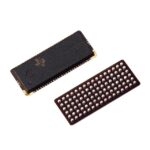 SN74LVCH32374AGKER

Learn what an integrated circuit is, how ICs work, the main types and the specs to check before choosing a part for your design…
Read More
Choose an AC to DC converter by input range, output demand, isolation, efficiency and thermal derating. Compare architectures and check installation needs.
Read More
SN74LVCH32374AGKER is listed in the Flip Flops range at ChipApex. The manufacturer field lists Texas Instruments. Its product description is IC FF D-TYPE QUAD…
Read More
SN74LVCH32374AGKER is listed in the Flip Flops range at ChipApex. The manufacturer field lists Texas Instruments. Its product description is IC FF D-TYPE QUAD…
Read More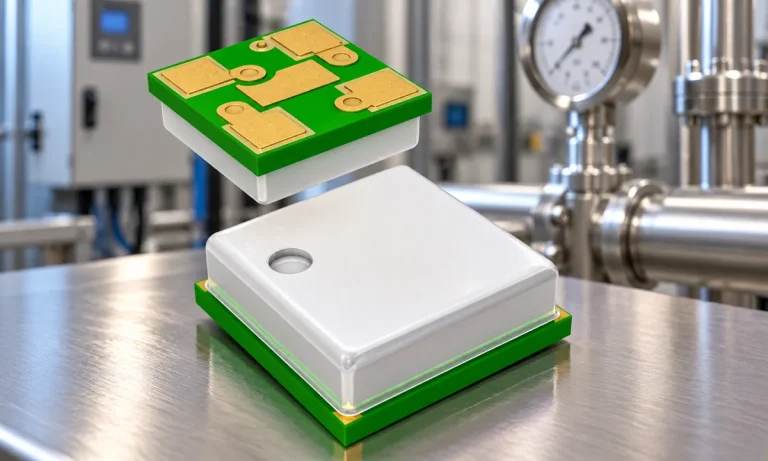
Learn how a pressure transducer converts pressure into voltage, current, or digital output, and compare pressure references and key selection specs.
Read MoreSN74LVCH32374AGKER is listed in the Flip Flops range at ChipApex. The manufacturer field lists Texas Instruments. Its product description is IC FF D-TYPE QUAD…
Read More
SN74LVCH32374AGKER is listed in the Flip Flops range at ChipApex. The manufacturer field lists Texas Instruments. Its product description is IC FF D-TYPE QUAD…
Read More
SN74LVCH32374AGKER is listed in the Flip Flops range at ChipApex. The manufacturer field lists Texas Instruments. Its product description is IC FF D-TYPE QUAD…
Read More
SN74LVCH32374AGKER is listed in the Flip Flops range at ChipApex. The manufacturer field lists Texas Instruments. Its product description is IC FF D-TYPE QUAD…
Read More
Find out when a bare shock switch needs a pull resistor, when an MCU internal pull-up is enough, and why sensor modules and piezo…
Read More
Choose logic inverter ICs by thresholds, supply, output drive and delay. Compare standard and Schmitt-trigger inputs, power sequencing and replacement checks.
Read More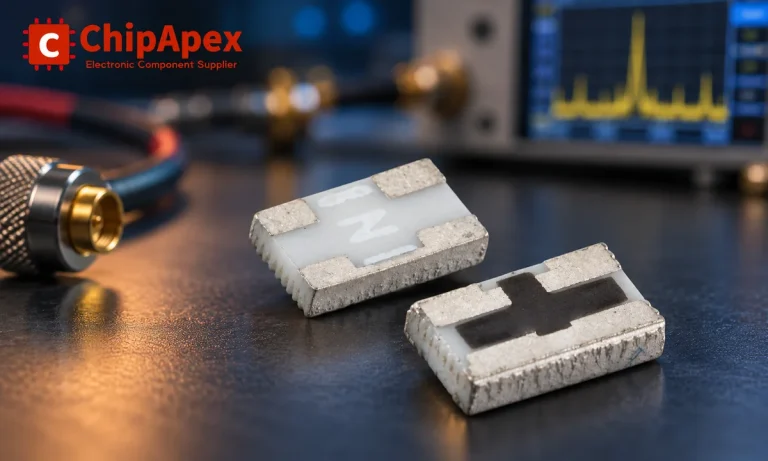
Understand RF attenuator dB values, fixed and programmable types, impedance, power limits and noise tradeoffs before choosing parts for an RF signal path.
Read More
The activity of extra discounts on wholesale prices is in full swing…
Please fill in your contact information and we will send you the latest wholesale price list.





