 ChipApex | Global Electronic Components Supplier

SEARCH
Search Product
Search Post
— IC芯片 | 连接器 | 传感器 | 被动器件 —
Search productSearch post
— IC芯片 | 连接器 | 传感器 | 被动器件 —
Consult the customer manager about the wholesale price.
consultation hotline:86-132-6715-2157
email:[email protected]
Contact the product manager for consultation. One-stop consultation is available.
Do you want a lower wholesale price? Please send us your inquiry and we will reply immediately.
SN74LVCZ32245AZKER is listed in the Buffers, Drivers, Receivers, Transceivers range at ChipApex. The manufacturer field lists Texas Instruments. Its product description is IC TXRX NON-INVERT 3.6V 96PBGA. Review the specifications below when checking this part for your BOM.
The SN74LVCZ32245AZKER is a 32-bit bus transceiver with three-state outputs manufactured by Texas Instruments. It operates within a voltage range of 1.65 V to 3.6 V and supports bidirectional data transfer. The device utilizes a 96-pin LFBGA package, specifically the BGA96, 6x16, 32 configuration. It functions as a non-inverting logic circuit designed for low-voltage applications. The component is rated for an operating temperature range from -40°C to +85°C. It features common control direction inputs and complies with RoHS standards.
Verify the specific suffix 'ZKE' corresponds to the intended tape-and-reel packaging and lead-free status. Confirm the manufacturer's datasheet for the exact pinout mapping of the 96-ball BGA footprint. Ensure the ordering part number matches the required moisture sensitivity level and reflow soldering profile specifications.
Select this component when interfacing wide data buses in space-constrained designs. It is suitable for systems requiring operation below 2.5 V where standard 3.3 V logic is insufficient. Consider the thermal dissipation capabilities of the BGA package during layout. Verify that the driving source can handle the capacitive load of the 32-bit width.
This part belongs to the SN74LVC family of logic integrated circuits. It serves as a high-density alternative to smaller bit-width transceivers. The Z suffix typically indicates compliance with specific environmental directives. It complements other Texas Instruments bus drivers in mixed-voltage system architectures.
Check for SN74LVC32245 variants with different package styles if board space allows. Verify compatibility with SN74LVCH32245 parts regarding voltage tolerance differences.
Explore related parts through Logic, Integrated Circuits (ICs), all product categories, ChipApex homepage.
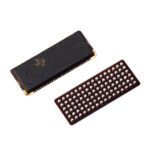 SN74LVCZ32245AZKER

SN74LVCZ32245AZKER is listed in the Buffers, Drivers, Receivers, Transceivers range at ChipApex. The manufacturer field lists Texas Instruments. Its product description is IC TXRX…
Read More
Understand how a comparator switches at a voltage threshold, why hysteresis prevents chatter, and which output and input specs matter.
Read More
SN74LVCZ32245AZKER is listed in the Buffers, Drivers, Receivers, Transceivers range at ChipApex. The manufacturer field lists Texas Instruments. Its product description is IC TXRX…
Read More
SN74LVCZ32245AZKER is listed in the Buffers, Drivers, Receivers, Transceivers range at ChipApex. The manufacturer field lists Texas Instruments. Its product description is IC TXRX…
Read More
SN74LVCZ32245AZKER is listed in the Buffers, Drivers, Receivers, Transceivers range at ChipApex. The manufacturer field lists Texas Instruments. Its product description is IC TXRX…
Read More
Explore electronic component types, functions, packages and datasheets. Learn selection, replacement and BOM checks before ordering parts for your PCB.
Read More
Understand thermal fuse operation, Tf, Th and Tm, electrical ratings and mounting. Check temperature limits and replacement requirements for your design.
Read More
Learn the relay definition, coil and contact operation, NO and NC forms, load ratings and suppression choices. Compare mechanical, reed and solid-state types.
Read More
SN74LVCZ32245AZKER is listed in the Buffers, Drivers, Receivers, Transceivers range at ChipApex. The manufacturer field lists Texas Instruments. Its product description is IC TXRX…
Read More
Understand RF attenuator dB values, fixed and programmable types, impedance, power limits and noise tradeoffs before choosing parts for an RF signal path.
Read More
SN74LVCZ32245AZKER is listed in the Buffers, Drivers, Receivers, Transceivers range at ChipApex. The manufacturer field lists Texas Instruments. Its product description is IC TXRX…
Read More
See when an inductor behaves linearly, how DC bias and saturation reduce inductance, and which current and temperature curves to check.
Read More
The activity of extra discounts on wholesale prices is in full swing…
Please fill in your contact information and we will send you the latest wholesale price list.





