 ChipApex | Global Electronic Components Supplier

SEARCH
Search Product
Search Post
— IC芯片 | 连接器 | 传感器 | 被动器件 —
Search productSearch post
— IC芯片 | 连接器 | 传感器 | 被动器件 —
Consult the customer manager about the wholesale price.
consultation hotline:86-132-6715-2157
email:[email protected]
Contact the product manager for consultation. One-stop consultation is available.
Do you want a lower wholesale price? Please send us your inquiry and we will reply immediately.
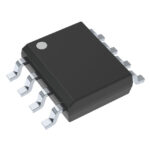
SN75HVD11DR is listed in the Drivers, Receivers, Transceivers range at ChipApex. The manufacturer field lists Texas Instruments. Its product description is IC TRANSCEIVER HALF 1/1 8SOIC. Review the specifications below when checking this part for your BOM.
The SN75HVD11DR is a half-duplex RS-485 transceiver manufactured by Texas Instruments, designed for balanced data transmission on multipoint buses. It operates with a supply voltage range of 4.75 V to 5.25 V and supports data rates up to 10 Mb/s. The device integrates one driver and one receiver within an 8-pin SOIC package. Key electrical characteristics include a minimum differential output voltage of 1.5 V and a shutdown current of less than 500 µA. It functions reliably across an industrial temperature range from -40°C to +85°C.
Verify the specific suffix 'DR' corresponds to the tape-and-reel packaging format required for automated assembly processes. Confirm that the component meets RoHS compliance standards applicable to the target market. Ensure the ordering quantity aligns with standard reel sizes to avoid partial reel handling issues during production.
Select this component when a 5-V supply rail is available and RS-485 compatibility is required. It is suitable for applications needing moderate data rates up to 10 Mb/s. Consider the SN65HVD11 series if a 3.3-V supply voltage is necessary instead of the 5-V requirement of this part.
This device belongs to the SN75HVD11 family of RS-485 transceivers from Texas Instruments. It shares functional similarities with the SN75HVD1176 but lacks the integrated transient voltage suppression diodes found in that variant. The DR suffix indicates surface-mount packaging in a standard SOIC-8 footprint.
The device supports data transmission rates up to 10 Mb/s.
Yes, the SN75HVD11DR includes internal circuitry to protect against electrostatic discharge events on the bus lines.
The recommended operating supply voltage range is 4.75 V to 5.25 V.
Explore related parts through Interface, Integrated Circuits (ICs), all product categories, ChipApex homepage.
 SN75HVD11DR

See when an inductor behaves linearly, how DC bias and saturation reduce inductance, and which current and temperature curves to check.
Read More
SN75HVD11DR is listed in the Drivers, Receivers, Transceivers range at ChipApex. The manufacturer field lists Texas Instruments. Its product description is IC TRANSCEIVER HALF…
Read More
Select MOV varistors by continuous voltage, clamping behavior, surge waveform and repetition. Check thermal disconnection, fuse coordination and replacements.
Read More
SN75HVD11DR is listed in the Drivers, Receivers, Transceivers range at ChipApex. The manufacturer field lists Texas Instruments. Its product description is IC TRANSCEIVER HALF…
Read More
Learn how a diode conducts, how to identify anode and cathode, and when to choose rectifier, TVS, Zener or photodiode types for a circuit.
Read More
SN75HVD11DR is listed in the Drivers, Receivers, Transceivers range at ChipApex. The manufacturer field lists Texas Instruments. Its product description is IC TRANSCEIVER HALF…
Read More
SN75HVD11DR is listed in the Drivers, Receivers, Transceivers range at ChipApex. The manufacturer field lists Texas Instruments. Its product description is IC TRANSCEIVER HALF…
Read More
Learn how rectifiers convert AC to DC, compare half-wave and bridge circuits, and select voltage, current, recovery and thermal ratings for your design.
Read More
SN75HVD11DR is listed in the Drivers, Receivers, Transceivers range at ChipApex. The manufacturer field lists Texas Instruments. Its product description is IC TRANSCEIVER HALF…
Read More
SN75HVD11DR is listed in the Drivers, Receivers, Transceivers range at ChipApex. The manufacturer field lists Texas Instruments. Its product description is IC TRANSCEIVER HALF…
Read More
SN75HVD11DR is listed in the Drivers, Receivers, Transceivers range at ChipApex. The manufacturer field lists Texas Instruments. Its product description is IC TRANSCEIVER HALF…
Read More
Learn what an IMU measures, how accelerometers and gyroscopes work together, why orientation estimates drift, and what to compare.
Read More
The activity of extra discounts on wholesale prices is in full swing…
Please fill in your contact information and we will send you the latest wholesale price list.





