ChipApex | Global Electronic Components Supplier

SEARCH
Search Product
Search Post
— IC芯片 | 连接器 | 传感器 | 被动器件 —
Search productSearch post
— IC芯片 | 连接器 | 传感器 | 被动器件 —
Consult the customer manager about the wholesale price.
consultation hotline:86-132-6715-2157
email:[email protected]
Contact the product manager for consultation. One-stop consultation is available.
Do you want a lower wholesale price? Please send us your inquiry and we will reply immediately.
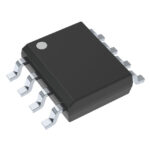
TLV2442IDR is listed in the Instrumentation, Op Amps, Buffer Amps range at ChipApex. The manufacturer field lists Texas Instruments. Its product description is IC CMOS 2 CIRCUIT 8SOIC. Review the specifications below when checking this part for your BOM.
The TLV2442IDR is a dual operational amplifier from Texas Instruments utilizing Advanced LinCMOS technology. It features rail-to-rail output and an extended common-mode input voltage range. The device operates on a single supply voltage between 2.7 V and 10 V, or split supplies of ±1.35 V to ±5 V. Key electrical parameters include a typical gain-bandwidth product of 1.8 MHz, a maximum input offset voltage of 2.5 mV at 25°C, and a typical input bias current of 1 pA. It provides a typical supply current of 750 µA per channel and supports operation within a temperature range of -40°C to 85°C.
Verify the specific ordering suffix 'IDR' corresponds to the SOIC-8 package and tape-and-reel delivery format. Confirm that the component meets the required industrial temperature specifications (-40°C to 85°C). Ensure compatibility with the intended supply voltage range of 2.7 V to 10 V. Check for RoHS compliance status if environmental regulations apply to the final assembly.
Select this component when designing circuits requiring rail-to-rail output swing without the cost of rail-to-rail input stages. It is suitable for applications needing low noise and high input impedance. Consider the 1.8 MHz bandwidth for general-purpose signal processing. Evaluate the 750 µA per channel supply current against battery life requirements for portable devices.
This part belongs to the TLV244x family of low-voltage operational amplifiers. The family includes quad versions like the TLV2444 and lower-power variants such as the TLV243x and TLV2422. The TLV2442 specifically addresses designs needing two channels with wide input voltage ranges and robust output drive capabilities for telecommunications loads.
Public confirmed substitute part numbers: TLV2442CDR, TLV2442CPW, TLV2442AQD, TLV2442QPW.
Explore related parts through Amplifiers, Linear, Integrated Circuits (ICs), all product categories.
 TLV2442IDR

Learn how rectifiers convert AC to DC, compare half-wave and bridge circuits, and select voltage, current, recovery and thermal ratings for your design.
Read More
TLV2442IDR is listed in the Instrumentation, Op Amps, Buffer Amps range at ChipApex. The manufacturer field lists Texas Instruments. Its product description is IC…
Read More
TLV2442IDR is listed in the Instrumentation, Op Amps, Buffer Amps range at ChipApex. The manufacturer field lists Texas Instruments. Its product description is IC…
Read More
TLV2442IDR is listed in the Instrumentation, Op Amps, Buffer Amps range at ChipApex. The manufacturer field lists Texas Instruments. Its product description is IC…
Read More
Select a bridge rectifier by reverse voltage, capacitor charging current, startup surge and cooling. Work through a stated DC voltage and ripple example.
Read More
TLV2442IDR is listed in the Instrumentation, Op Amps, Buffer Amps range at ChipApex. The manufacturer field lists Texas Instruments. Its product description is IC…
Read More
TLV2442IDR is listed in the Instrumentation, Op Amps, Buffer Amps range at ChipApex. The manufacturer field lists Texas Instruments. Its product description is IC…
Read More
TLV2442IDR is listed in the Instrumentation, Op Amps, Buffer Amps range at ChipApex. The manufacturer field lists Texas Instruments. Its product description is IC…
Read More
TLV2442IDR is listed in the Instrumentation, Op Amps, Buffer Amps range at ChipApex. The manufacturer field lists Texas Instruments. Its product description is IC…
Read More
Choose an AC to DC converter by input range, output demand, isolation, efficiency and thermal derating. Compare architectures and check installation needs.
Read More
Learn how a diode conducts, how to identify anode and cathode, and when to choose rectifier, TVS, Zener or photodiode types for a circuit.
Read More
See when an inductor behaves linearly, how DC bias and saturation reduce inductance, and which current and temperature curves to check.
Read More
The activity of extra discounts on wholesale prices is in full swing…
Please fill in your contact information and we will send you the latest wholesale price list.