ChipApex | Global Electronic Components Supplier

SEARCH
Search Product
Search Post
— IC芯片 | 连接器 | 传感器 | 被动器件 —
Search productSearch post
— IC芯片 | 连接器 | 传感器 | 被动器件 —
Consult the customer manager about the wholesale price.
consultation hotline:86-132-6715-2157
email:[email protected]
Contact the product manager for consultation. One-stop consultation is available.
Do you want a lower wholesale price? Please send us your inquiry and we will reply immediately.
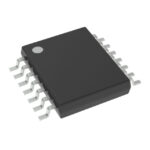
TLV9364IPWR is listed in the Instrumentation, Op Amps, Buffer Amps range at ChipApex. The manufacturer field lists Texas Instruments. Its product description is QUAD 10-MHZ, 40-V RAIL-TO-RAIL O. Review the specifications below when checking this part for your BOM.
The TLV9364IPWR is a quad operational amplifier from the Texas Instruments TLV936x family, housed in a 14-pin TSSOP package. It operates with a supply voltage range of 4.5 V to 40 V and supports an ambient temperature range of –40°C to +125°C. Key electrical specifications include a gain-bandwidth product of 10.6 MHz, a slew rate of 25 V/µs, and a typical input offset voltage of ±400 µV. The device features rail-to-rail output capability, low quiescent current of 2.6 mA per amplifier, and robust electromagnetic interference rejection.
Verify the specific ordering suffix IPWR corresponds to the TSSOP-14 package variant when sourcing. Confirm that the required operating temperature range aligns with the specified industrial grade limits. Ensure PCB layout guidelines are followed to manage thermal dissipation effectively given the quad configuration.
Select this component for applications requiring high voltage operation up to 40 V with cost-sensitive design constraints. The quad configuration reduces board space compared to single-channel alternatives. Consider the 10.6 MHz bandwidth and 25 V/µs slew rate for moderate-speed signal processing tasks.
This part belongs to the TLV936x series of general-purpose operational amplifiers designed for high-voltage, cost-sensitive systems. The family includes single (TLV9361), dual (TLV9362), and quad (TLV9364) variants. All members share identical electrical characteristics but differ in channel count and package options.
Direct functional substitutes within the same family include TLV9361 and TLV9362, provided the channel count requirement is adjusted accordingly. Other packages such as SOIC-14 (TLV9364D) offer pin-compatible alternatives for the quad configuration.
Explore related parts through Amplifiers, Linear, Integrated Circuits (ICs), all product categories.
 TLV9364IPWR

Compare Pt100 and Pt1000 RTDs, two-, three- and four-wire connections, excitation and self-heating. Build an error budget from element to reported temperature.
Read More
Learn how a diode conducts, how to identify anode and cathode, and when to choose rectifier, TVS, Zener or photodiode types for a circuit.
Read More
TLV9364IPWR is listed in the Instrumentation, Op Amps, Buffer Amps range at ChipApex. The manufacturer field lists Texas Instruments. Its product description is QUAD…
Read More
TLV9364IPWR is listed in the Instrumentation, Op Amps, Buffer Amps range at ChipApex. The manufacturer field lists Texas Instruments. Its product description is QUAD…
Read More
TLV9364IPWR is listed in the Instrumentation, Op Amps, Buffer Amps range at ChipApex. The manufacturer field lists Texas Instruments. Its product description is QUAD…
Read More
TLV9364IPWR is listed in the Instrumentation, Op Amps, Buffer Amps range at ChipApex. The manufacturer field lists Texas Instruments. Its product description is QUAD…
Read More
Learn how rectifiers convert AC to DC, compare half-wave and bridge circuits, and select voltage, current, recovery and thermal ratings for your design.
Read More
TLV9364IPWR is listed in the Instrumentation, Op Amps, Buffer Amps range at ChipApex. The manufacturer field lists Texas Instruments. Its product description is QUAD…
Read More
TLV9364IPWR is listed in the Instrumentation, Op Amps, Buffer Amps range at ChipApex. The manufacturer field lists Texas Instruments. Its product description is QUAD…
Read More
Choose logic inverter ICs by thresholds, supply, output drive and delay. Compare standard and Schmitt-trigger inputs, power sequencing and replacement checks.
Read More
TLV9364IPWR is listed in the Instrumentation, Op Amps, Buffer Amps range at ChipApex. The manufacturer field lists Texas Instruments. Its product description is QUAD…
Read More
Select a bridge rectifier by reverse voltage, capacitor charging current, startup surge and cooling. Work through a stated DC voltage and ripple example.
Read More
The activity of extra discounts on wholesale prices is in full swing…
Please fill in your contact information and we will send you the latest wholesale price list.