 ChipApex | Global Electronic Components Supplier

SEARCH
Search Product
Search Post
— IC芯片 | 连接器 | 传感器 | 被动器件 —
Search productSearch post
— IC芯片 | 连接器 | 传感器 | 被动器件 —
Consult the customer manager about the wholesale price.
consultation hotline:86-132-6715-2157
email:[email protected]
Contact the product manager for consultation. One-stop consultation is available.
Do you want a lower wholesale price? Please send us your inquiry and we will reply immediately.
TP3057N is listed in the Codecs range at ChipApex. The manufacturer field lists Texas Instruments. Its product description is IC CODEC FILTER CMOS 16DIP. Review the specifications below when checking this part for your BOM.
The TP3057N is an A-law monolithic PCM CODEC/filter utilizing a switched-capacitor architecture. It operates on dual ±5V supplies with typical active power consumption of 50 mW and standby power of 3 mW. The device supports master clocks of 1.536 MHz, 1.544 MHz, or 2.048 MHz and bit clocks ranging from 64 kHz to 2.048 MHz. It features TTL/CMOS compatible digital interfaces and includes internal auto-zero circuitry and precision voltage references.
Verify the specific package configuration and manufacturer origin when sourcing this component. Confirm that the device meets the required operational temperature range and electrical specifications for the intended application environment before finalizing procurement decisions.
Select the TP3057N specifically for applications requiring A-law encoding standards. Ensure the design accommodates dual ±5V power supplies and provides appropriate clock signals for the desired synchronous or asynchronous operation mode.
This component belongs to the TP3054 and TP3057 Enhanced Serial Interface CODEC/Filter COMBO Family. It utilizes National Semiconductor's advanced double-poly CMOS process (microCMOS) for fabrication.
The TP3054 serves as the functional equivalent within the same family but utilizes μ-law encoding instead of A-law. Other variants in the series include surface mount packages such as the TP3057WM and TP3057V.
Power-down can be controlled by pulling the MCLKR/PDN pin high or by holding both FSX and FSR inputs continuously low. The device powers down approximately 1 ms after the last frame sync pulse.
The device requires two master clocks (transmit and receive) which may be asynchronous. Supported frequencies are 1.536 MHz, 1.544 MHz, or 2.048 MHz.
Yes, separate transmit and receive clocks may be applied for asynchronous operation, though best performance is realized when they are synchronous.
Explore related parts through Interface, Integrated Circuits (ICs), all product categories, ChipApex homepage.
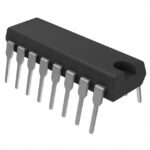 TP3057N

TP3057N is listed in the Codecs range at ChipApex. The manufacturer field lists Texas Instruments. Its product description is IC CODEC FILTER CMOS 16DIP.…
Read More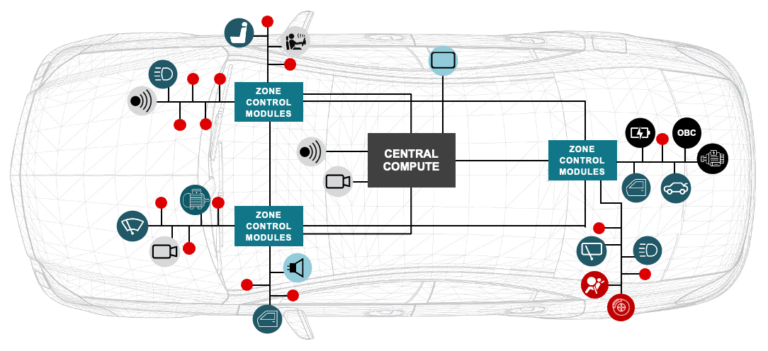
TP3057N is listed in the Codecs range at ChipApex. The manufacturer field lists Texas Instruments. Its product description is IC CODEC FILTER CMOS 16DIP.…
Read More
TP3057N is listed in the Codecs range at ChipApex. The manufacturer field lists Texas Instruments. Its product description is IC CODEC FILTER CMOS 16DIP.…
Read More
Learn how rectifiers convert AC to DC, compare half-wave and bridge circuits, and select voltage, current, recovery and thermal ratings for your design.
Read More
Choose a DIP switch by contact type, coded positions, footprint and signal ratings. Check logic polarity, assembly conditions and PCB configuration behavior.
Read More
TP3057N is listed in the Codecs range at ChipApex. The manufacturer field lists Texas Instruments. Its product description is IC CODEC FILTER CMOS 16DIP.…
Read More
Find out when a bare shock switch needs a pull resistor, when an MCU internal pull-up is enough, and why sensor modules and piezo…
Read More
TP3057N is listed in the Codecs range at ChipApex. The manufacturer field lists Texas Instruments. Its product description is IC CODEC FILTER CMOS 16DIP.…
Read More
TP3057N is listed in the Codecs range at ChipApex. The manufacturer field lists Texas Instruments. Its product description is IC CODEC FILTER CMOS 16DIP.…
Read More
Compare RC, crystal and MEMS oscillator circuits. Check ppm, jitter, load capacitance, startup margin and output compatibility before choosing a clock source.
Read More
TP3057N is listed in the Codecs range at ChipApex. The manufacturer field lists Texas Instruments. Its product description is IC CODEC FILTER CMOS 16DIP.…
Read More
See when an inductor behaves linearly, how DC bias and saturation reduce inductance, and which current and temperature curves to check.
Read More
The activity of extra discounts on wholesale prices is in full swing…
Please fill in your contact information and we will send you the latest wholesale price list.







