ChipApex | Global Electronic Components Supplier

SEARCH
Search Product
Search Post
— IC芯片 | 连接器 | 传感器 | 被动器件 —
Search productSearch post
— IC芯片 | 连接器 | 传感器 | 被动器件 —
Consult the customer manager about the wholesale price.
consultation hotline:86-132-6715-2157
email:[email protected]
Contact the product manager for consultation. One-stop consultation is available.
Do you want a lower wholesale price? Please send us your inquiry and we will reply immediately.
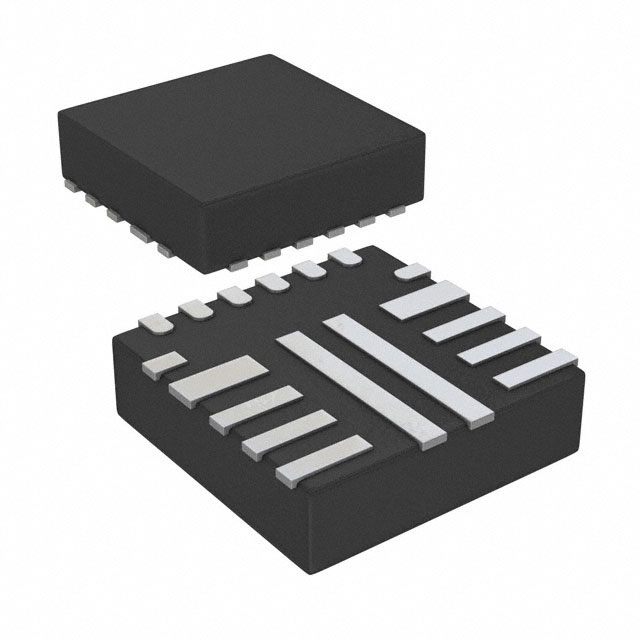
TPS56C215RNNR is listed in the Voltage Regulators - DC DC Switching Regulators range at ChipApex. The manufacturer field lists Texas Instruments. Its product description is IC REG BUCK ADJ 12A 18VQFN. Review the specifications below when checking this part for your BOM.
The TPS56C215RNNR is a synchronous buck converter from Texas Instruments featuring the SWIFT topology. It operates with an input voltage range of 4.5 V to 17 V and delivers up to 8 A output current. The device supports adjustable or fixed 0.6 V outputs, reaching a maximum of 5.5 V. It integrates power switches and operates at switching frequencies between 400 kHz and 1.2 MHz. The component functions within a junction temperature range of -40°C to +150°C and utilizes an 18-VQFN-HR package.
Verify the specific suffix against official documentation to confirm pinout and functionality variations. Confirm moisture sensitivity level requirements for surface mount assembly processes. Ensure compatibility with the intended operating temperature range and load conditions before finalizing procurement specifications.
Select this component when high efficiency and compact footprint are required for 8 A loads. The wide input voltage range suits single-cell lithium battery or 12 V/24 V bus architectures. Consider the integrated design for reducing bill of materials compared to discrete solutions requiring external drivers.
This part belongs to the TPS56x21x family of SWIFT converters. It shares architectural similarities with the TPS568215 but may differ in specific pin configurations or internal compensation settings. Engineers should consult the specific datasheet for electrical characteristics rather than assuming interchangeability with related model numbers.
The device requires a minimum input voltage of 4.5 V to function correctly.
Yes, the device integrates the feedback network, allowing for direct connection to the output without external divider resistors for standard voltages.
Explore related parts through Power Management (PMIC), Integrated Circuits (ICs), all product categories, ChipApex homepage.
 TPS56C215RNNR

Understand how a comparator switches at a voltage threshold, why hysteresis prevents chatter, and which output and input specs matter.
Read More
Compare thermistors, RTDs, thermocouples and temperature ICs. Learn how range, accuracy, response, interfaces and mounting affect component selection.
Read More
Compare RC, crystal and MEMS oscillator circuits. Check ppm, jitter, load capacitance, startup margin and output compatibility before choosing a clock source.
Read More
TPS56C215RNNR is listed in the Voltage Regulators - DC DC Switching Regulators range at ChipApex. The manufacturer field lists Texas Instruments. Its product description…
Read More
TPS56C215RNNR is listed in the Voltage Regulators - DC DC Switching Regulators range at ChipApex. The manufacturer field lists Texas Instruments. Its product description…
Read More
TPS56C215RNNR is listed in the Voltage Regulators - DC DC Switching Regulators range at ChipApex. The manufacturer field lists Texas Instruments. Its product description…
Read More
TPS56C215RNNR is listed in the Voltage Regulators - DC DC Switching Regulators range at ChipApex. The manufacturer field lists Texas Instruments. Its product description…
Read More
TPS56C215RNNR is listed in the Voltage Regulators - DC DC Switching Regulators range at ChipApex. The manufacturer field lists Texas Instruments. Its product description…
Read More
TPS56C215RNNR is listed in the Voltage Regulators - DC DC Switching Regulators range at ChipApex. The manufacturer field lists Texas Instruments. Its product description…
Read More
Select a bridge rectifier by reverse voltage, capacitor charging current, startup surge and cooling. Work through a stated DC voltage and ripple example.
Read More
Understand RF attenuator dB values, fixed and programmable types, impedance, power limits and noise tradeoffs before choosing parts for an RF signal path.
Read More
Learn how a diode conducts, how to identify anode and cathode, and when to choose rectifier, TVS, Zener or photodiode types for a circuit.
Read More
The activity of extra discounts on wholesale prices is in full swing…
Please fill in your contact information and we will send you the latest wholesale price list.