 ChipApex | Global Electronic Components Supplier

SEARCH
Search Product
Search Post
— IC芯片 | 连接器 | 传感器 | 被动器件 —
Search productSearch post
— IC芯片 | 连接器 | 传感器 | 被动器件 —
Consult the customer manager about the wholesale price.
consultation hotline:86-132-6715-2157
email:[email protected]
Contact the product manager for consultation. One-stop consultation is available.
Do you want a lower wholesale price? Please send us your inquiry and we will reply immediately.
XC6806C43011-G is listed in the Battery Chargers range at ChipApex. The manufacturer field lists Torex Semiconductor Ltd. Its product description is IC BATT CHG LI-ION 1CELL 10LGA. Review the specifications below when checking this part for your BOM.
The XC6806C43011-G is a single-cell lithium-ion or lithium-polymer battery linear charger IC manufactured by Torex Semiconductor. It features a fixed output voltage of 4.6 V and supports an output current of 200 mA. The device operates within a supply voltage range of 4.5 V to 5.5 V, with a quiescent current of 200 uA. It is housed in a compact LGA-10 package (10-LGA-B01, 2.5x1.6 mm) suitable for surface mount installation. The component functions across a temperature range of -40°C to +85°C and has a maximum power dissipation of 1.2 W.
Verify the specific suffix 'C' against official datasheets to confirm pinout and electrical characteristics, as variations exist within the XC6806 series. Confirm availability status, as some related models are marked as discontinued. Ensure compatibility with existing PCB footprints for the 10-LGA-B01 package before procurement.
Select this component when a fixed 4.6 V output is required for specific battery chemistries or system requirements. Consider the 200 mA output current limit and 1.2 W power dissipation capability for thermal management. The integrated current path function may simplify design compared to standard chargers lacking this feature.
This part belongs to the XC6806 series from Torex Semiconductor, which focuses on battery charge management solutions. The series includes variants with different output voltages and current capabilities. The XC6806C43011-G specifically targets applications needing a 4.6 V regulation point within a low-power, compact footprint.
Publicly confirmed substitute part numbers for the XC6806C43011-G are not available in the provided documentation. Verify functional equivalence with other XC6806 variants only if datasheet parameters match exactly.
Explore related parts through Power Management (PMIC), Integrated Circuits (ICs), all product categories, ChipApex homepage.
 XC6806C43011-G

Choose a DIP switch by contact type, coded positions, footprint and signal ratings. Check logic polarity, assembly conditions and PCB configuration behavior.
Read More
XC6806C43011-G is listed in the Battery Chargers range at ChipApex. The manufacturer field lists Torex Semiconductor Ltd. Its product description is IC BATT CHG…
Read More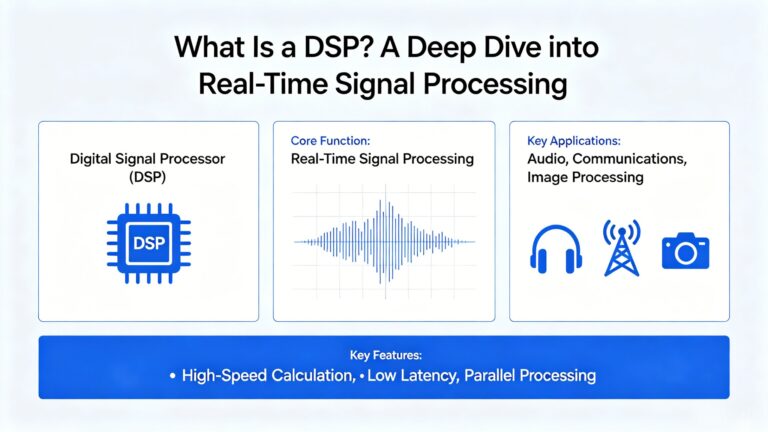
XC6806C43011-G is listed in the Battery Chargers range at ChipApex. The manufacturer field lists Torex Semiconductor Ltd. Its product description is IC BATT CHG…
Read More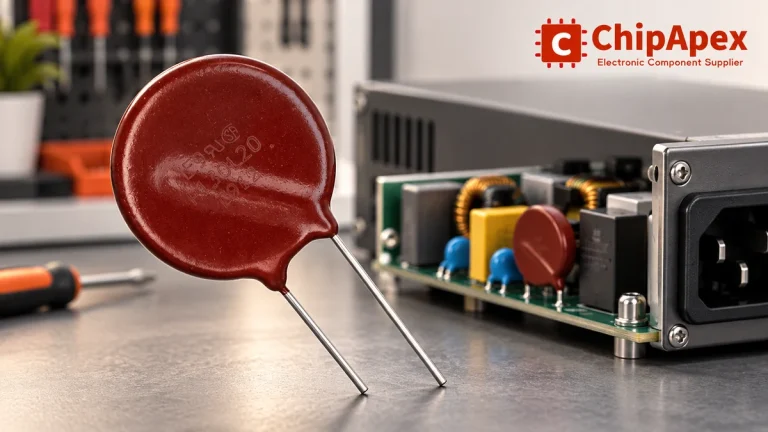
Select MOV varistors by continuous voltage, clamping behavior, surge waveform and repetition. Check thermal disconnection, fuse coordination and replacements.
Read More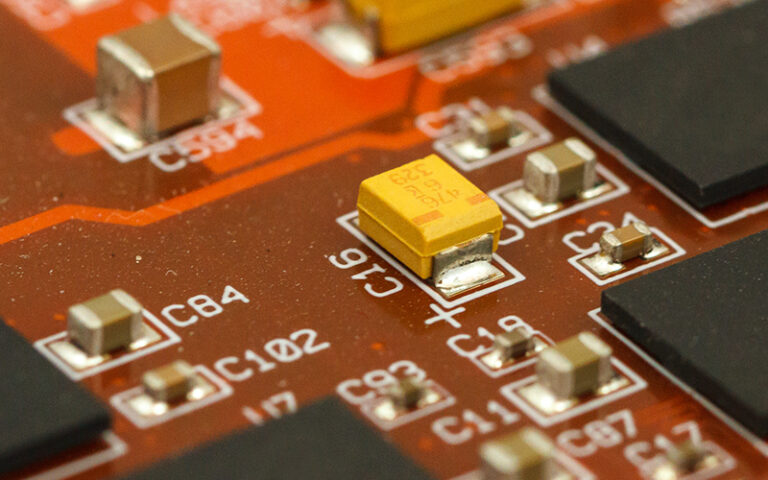
XC6806C43011-G is listed in the Battery Chargers range at ChipApex. The manufacturer field lists Torex Semiconductor Ltd. Its product description is IC BATT CHG…
Read More
XC6806C43011-G is listed in the Battery Chargers range at ChipApex. The manufacturer field lists Torex Semiconductor Ltd. Its product description is IC BATT CHG…
Read More
XC6806C43011-G is listed in the Battery Chargers range at ChipApex. The manufacturer field lists Torex Semiconductor Ltd. Its product description is IC BATT CHG…
Read More
XC6806C43011-G is listed in the Battery Chargers range at ChipApex. The manufacturer field lists Torex Semiconductor Ltd. Its product description is IC BATT CHG…
Read More
Learn what data acquisition means, from sensors and conditioning to sampling and storage. Review channel timing, wiring, calibration and data quality.
Read More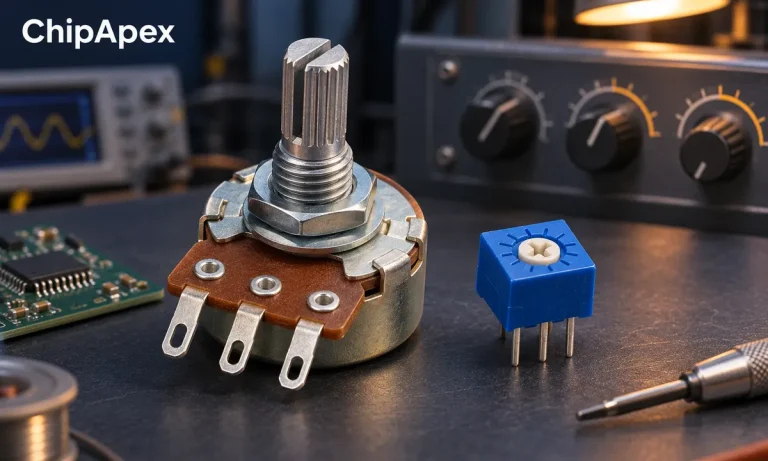
Compare rheostat and potentiometer wiring and functions. Understand divider loading, wiper current, track power and practical component selection.
Read More
Learn the relay definition, coil and contact operation, NO and NC forms, load ratings and suppression choices. Compare mechanical, reed and solid-state types.
Read More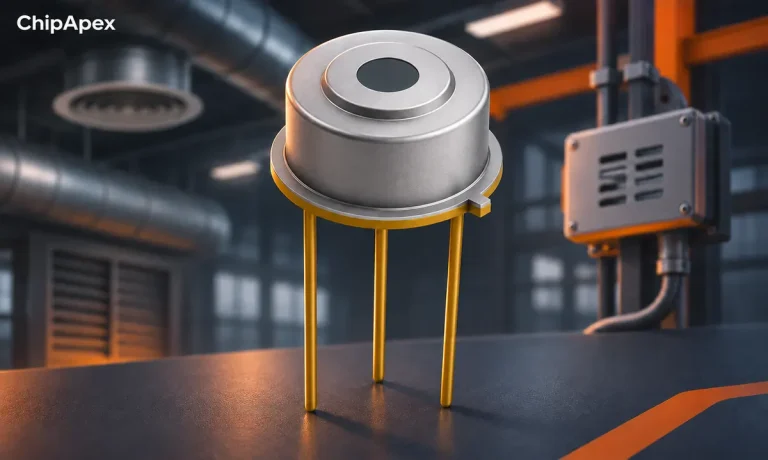
Compare gas sensor technologies, cross-sensitivity and calibration needs. Define the gas, range and environment before choosing a sensing component.
Read More
The activity of extra discounts on wholesale prices is in full swing…
Please fill in your contact information and we will send you the latest wholesale price list.






