 ChipApex | Global Electronic Components Supplier

SEARCH
Search Product
Search Post
— IC芯片 | 连接器 | 传感器 | 被动器件 —
Search productSearch post
— IC芯片 | 连接器 | 传感器 | 被动器件 —
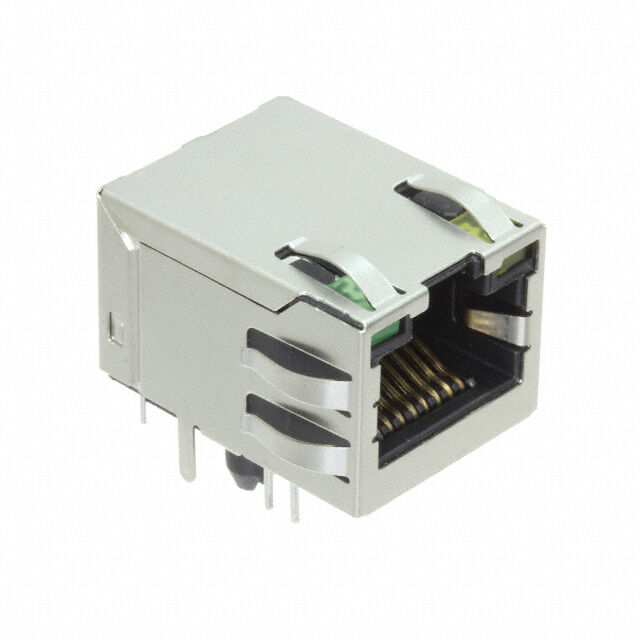
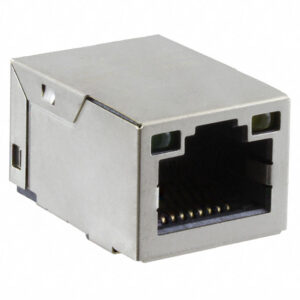
The RJ45 connector—short for Registered Jack 45—is the most widely used interface for Ethernet networking, found in devices ranging from home routers to industrial switches. It uses an 8P8C (8 Position, 8 Contact) configuration standardized by ANSI/TIA-1096-A, with typical pinouts following T-568A or T-568B wiring schemes. While similar in appearance to the smaller RJ11 telephone connector, RJ45 supports more conductors and higher data rates, making it the standard for LAN transmission across Cat5e, Cat6, and Cat6a cabling. These jacks support high-speed Ethernet protocols defined by IEEE 802.3, including 10/100/1000Base-T and multi-gigabit applications. When integrated with magnetics—meaning the inclusion of built-in transformers and common-mode chokes—RJ45 jacks provide enhanced signal conditioning, isolation, and EMI (electromagnetic interference) suppression, which are essential for reliable, standards-compliant Ethernet communication. Choosing an RJ45 jack with integrated magnetics offers several key advantages over non-magnetic versions. First and foremost, they eliminate the need for external magnetics on the PCB, saving valuable board space and simplifying layout—especially important in compact or high-density designs. These magnetics provide galvanic isolation (typically 1500 Vrms or higher) between the device and the network, protecting sensitive circuits from voltage transients and ground loops. They also improve signal integrity, especially at higher transmission speeds or over longer cable runs, by filtering noise and compensating for impedance mismatches. In applications supporting PoE (Power over Ethernet), jacks with integrated magnetics ensure compatibility with IEEE 802.3af, at, or bt standards, delivering power safely alongside data.
 0833-2X4R-33-FView Product1-1840377-4View Product
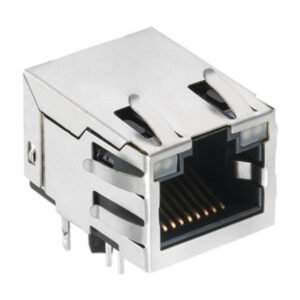 7499311610View Product
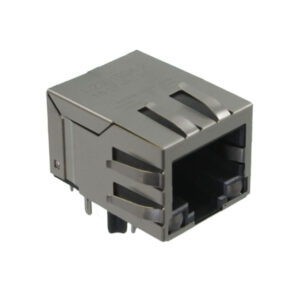 6-2301994-2View ProductRJMG222K3446NERAView Product
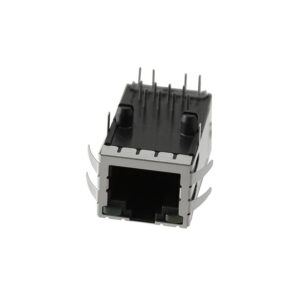 MTJ-88SX1-FSP-PG-LG-M7YView Product
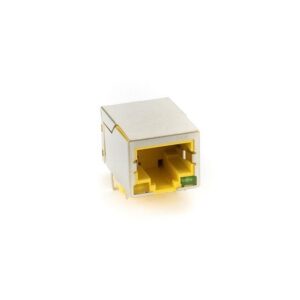 AR11-4697View Product
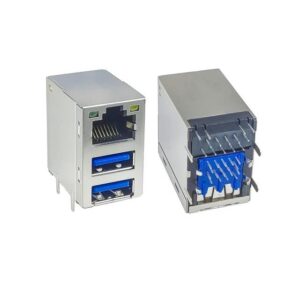 TWU082292125S1L27View Product
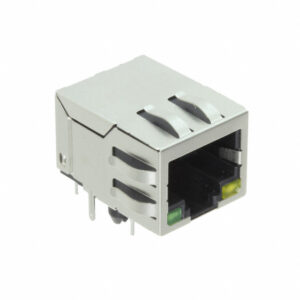 ARJM11A1-805-NN-CW2View Product
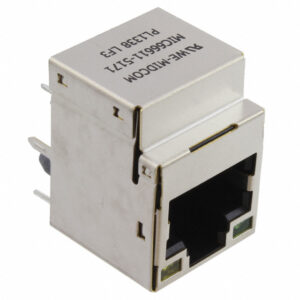 7499210123View ProductARJM11D7-577-NN-EW4View Product
 JXD6-0001NLView Product
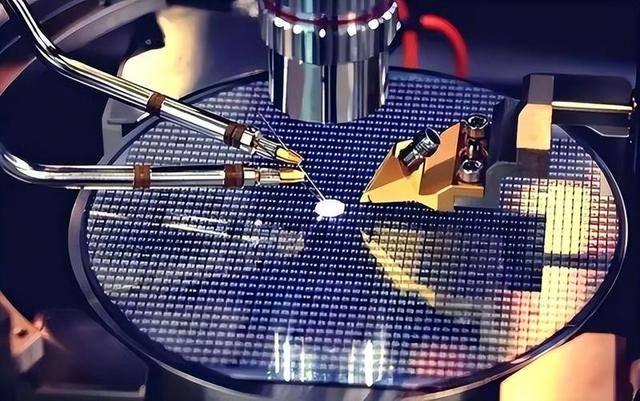
On September 22nd, it was reported that Samsung Electronics, the South Korean tech giant, had successfully passed NVIDIA’s certification test for its 12-layer HBM3E…
Read More
Choose logic inverter ICs by thresholds, supply, output drive and delay. Compare standard and Schmitt-trigger inputs, power sequencing and replacement checks.
Read More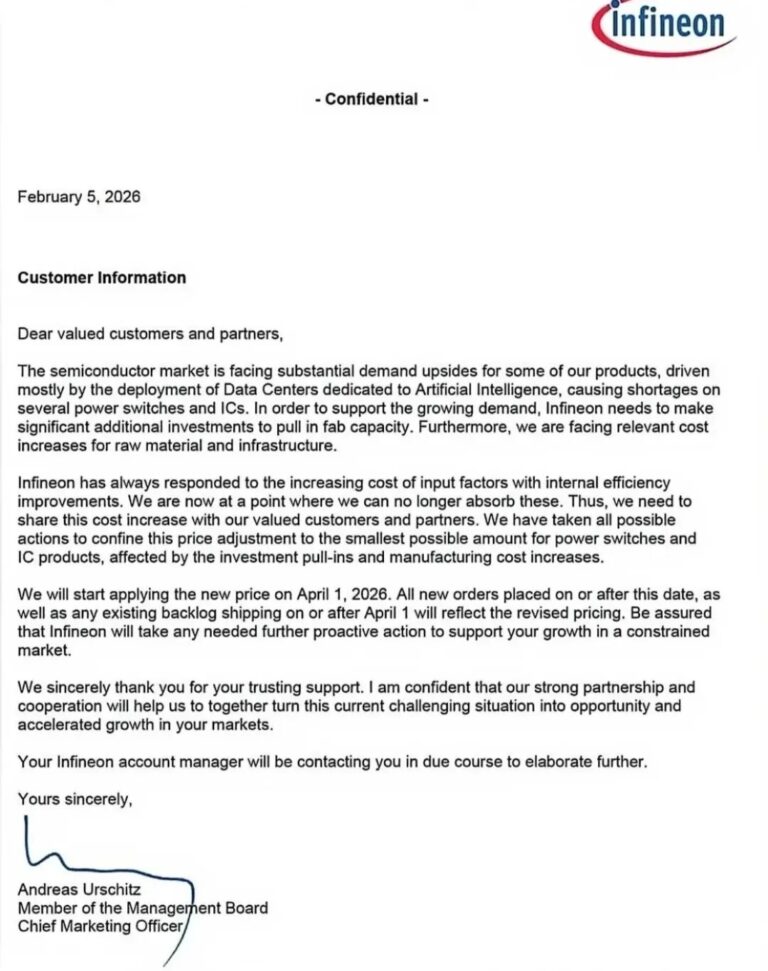
Munich, Germany – February 8, 2026 — Infineon Technologies, the German semiconductor giant, officially issued a price increase notice on February 5, announcing that…
Read More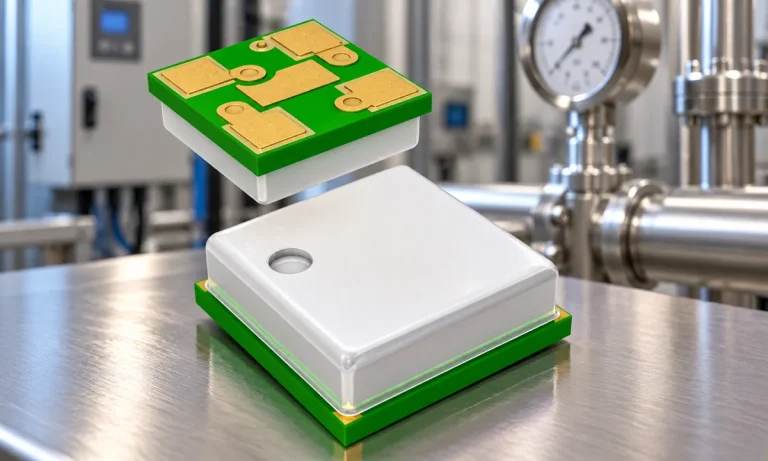
Learn how a pressure transducer converts pressure into voltage, current, or digital output, and compare pressure references and key selection specs.
Read More
Learn what an IMU measures, how accelerometers and gyroscopes work together, why orientation estimates drift, and what to compare.
Read More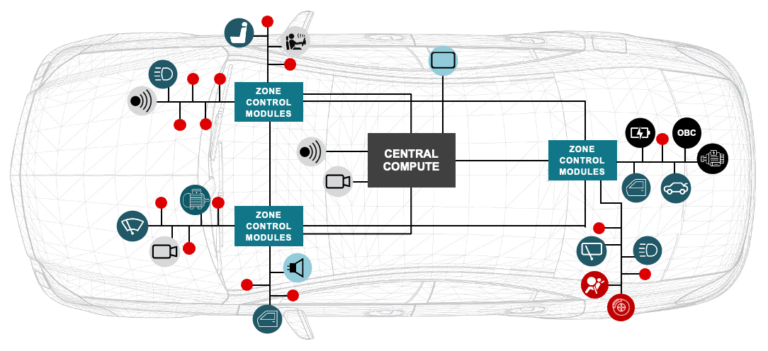
Las Vegas, January 6, 2026 — At the Consumer Electronics Show (CES) 2026, Texas Instruments (TI) (NASDAQ: TXN) announced a suite of next-generation semiconductor…
Read More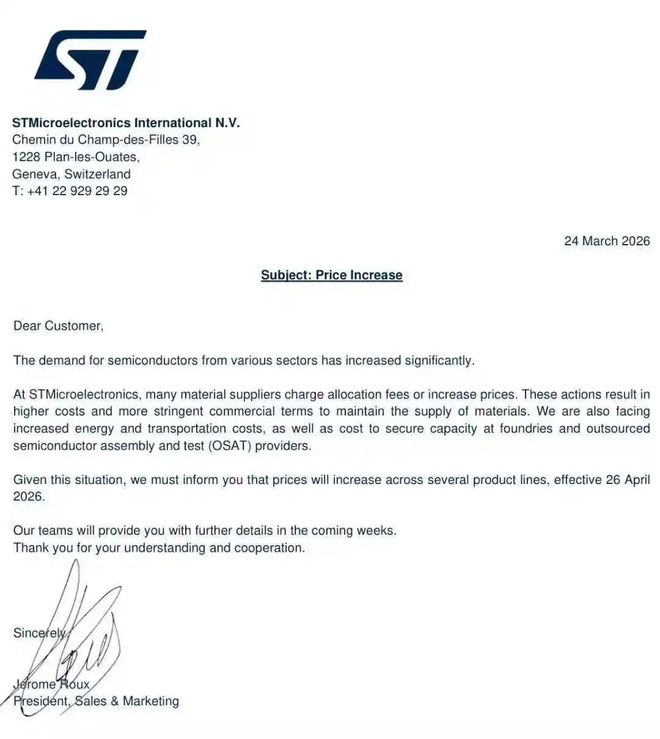
Geneva, Switzerland – March 25, 2026 – STMicroelectronics N.V. (NYSE: STM), a global semiconductor leader serving customers across the electronics applications spectrum, has announced…
Read More
Choose tactile switches by operating force, travel, actuator height, footprint and lifetime. Check debounce, sealing and the assembled button mechanism.
Read More
Embedded Integrated Circuit Modules: The Backbone of Modern Technology Embedded Integrated Circuit Modules (EICMs) have become an indispensable part of modern technology. Serving as…
Read More
The global memory market is entering an unprecedented supply-constrained phase as soaring demand from artificial intelligence (AI) infrastructure collides with strategic capacity reallocations by…
Read More
Learn the relay definition, coil and contact operation, NO and NC forms, load ratings and suppression choices. Compare mechanical, reed and solid-state types.
Read More
Compare RC, crystal and MEMS oscillator circuits. Check ppm, jitter, load capacitance, startup margin and output compatibility before choosing a clock source.
Read More
The activity of extra discounts on wholesale prices is in full swing…
Please fill in your contact information and we will send you the latest wholesale price list.

