ChipApex | Global Electronic Components Supplier

SEARCH
Search Product
Search Post
Search productSearch post

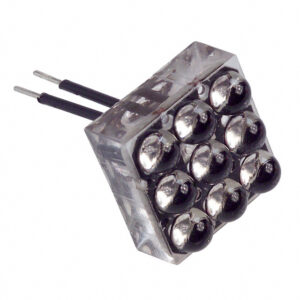
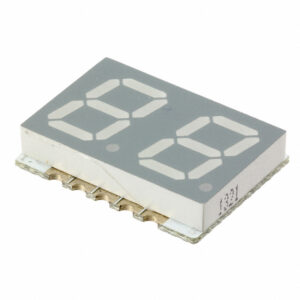
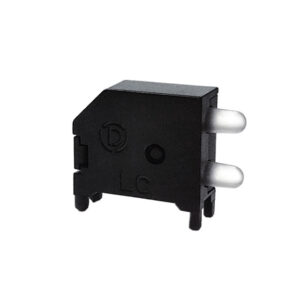
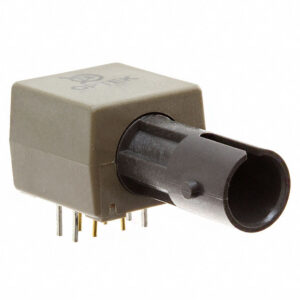
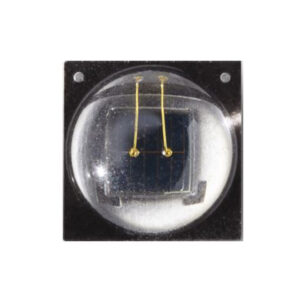
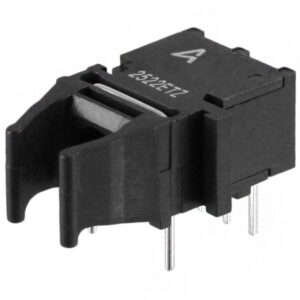
Broadly defined, optoelectronic products are devices that convert electricity to light, and accessory or supporting items such as reflectors or mounting hardware designed for use with such products. It is a diverse product category, including LEDs, fiber optic transmitters and receivers, LCD, OLED, and VFD displays, EL wire, incandescent lamps, lasers, light pipes and xenon flash tubes, among many other product types.
| Select products | Mfr | Description | Package | Supplier Device Package | Mounting Type | Series | Operating Temperature |
|---|---|---|---|---|---|---|---|
| Rohm Semiconductor | LED INDICATION SMD | Tape & Reel (TR) | - | - | * | ||
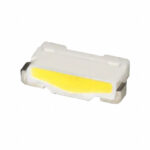 CSL0406WBCW1 $0.28 | Rohm Semiconductor | LED WHITE DIFFUSED 2812 SMD | Tape & Reel (TR) | 2812 | Surface Mount | - | |
| Rohm Semiconductor | LED WHITE 2812 SMD R/A | Tape & Reel (TR) | 2812 | Surface Mount, Right Angle | CSL0406WBCW | ||
| Rohm Semiconductor | LED WHITE 2812 SMD R/A | Tape & Reel (TR) | 2812 | Surface Mount, Right Angle | CSL0406WBCW | ||
CSL0416WBCW1 $1.40 | Rohm Semiconductor | LED WHITE 2812 SMD R/A | Tape & Reel (TR),Cut Tape (CT) | 2812 | Surface Mount, Right Angle | - | |
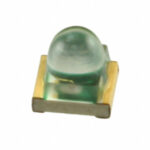 CSL0701DT5 $1.49 | Rohm Semiconductor | LED ORANGE CLEAR SMD | Tape & Reel (TR),Cut Tape (CT) | - | Surface Mount | CSL07 | |
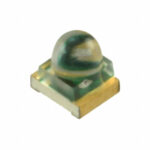 CSL0701UT5 $1.64 | Rohm Semiconductor | LED RED CLEAR SMD | Tape & Reel (TR),Cut Tape (CT) | - | Surface Mount | CSL07 | |
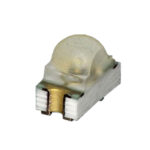 CSL0901BT1 $0.60 | Rohm Semiconductor | LED BLUE 0603 SMD | Tape & Reel (TR),Cut Tape (CT) | 603 | Surface Mount | CSL0901x |
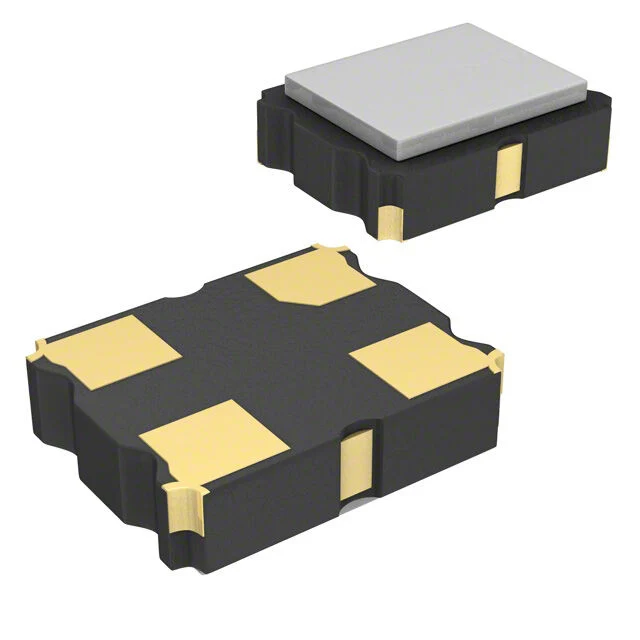
Calculate high-side and low-side local oscillator frequencies, locate the receiver image and check how much LO drive reaches the RF mixer input port.
Read More
May 4, 2026 — The global power semiconductor market is grappling with a worsening supply crunch, as lead times for key components have extended…
Read More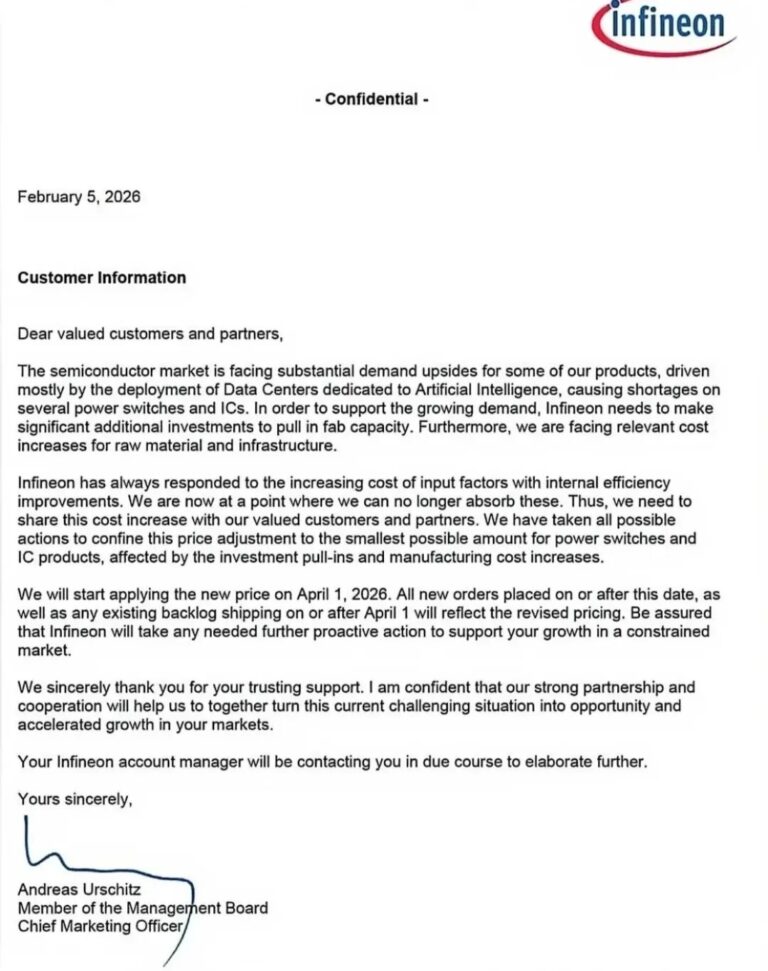
Munich, Germany – February 8, 2026 — Infineon Technologies, the German semiconductor giant, officially issued a price increase notice on February 5, announcing that…
Read More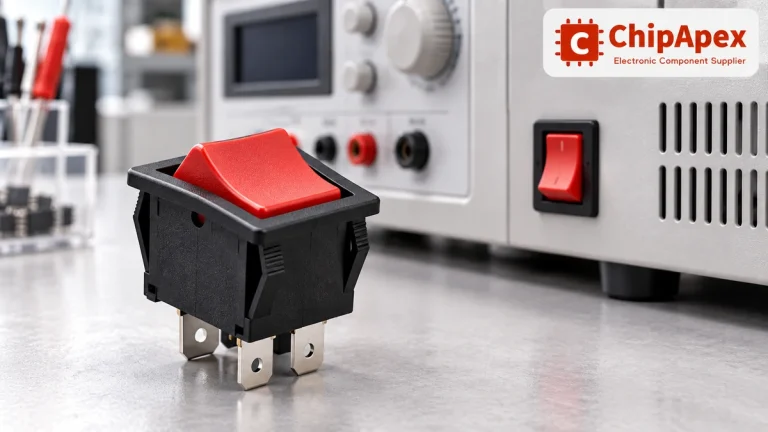
Choose a rocker switch by AC/DC ratings, contact arrangement, illumination, panel fit and sealing. Get practical checks for engineering and component sourcing.
Read More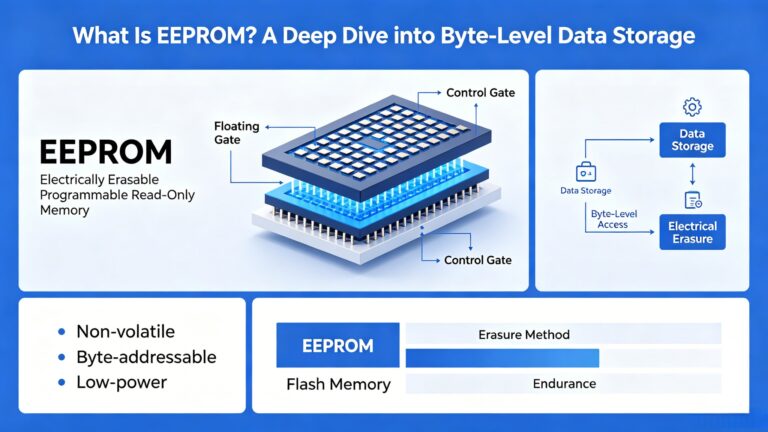
In the vast landscape of memory technology, EEPROM (Electrically Erasable Programmable Read-Only Memory) often plays the unsung hero. While NAND Flash grabs headlines for…
Read More
TOKYO, July 31, 2026 — Renesas Electronics Corporation has officially announced a major domestic manufacturing restructuring, confirming plans to gradually discontinue all wafer fabrication…
Read More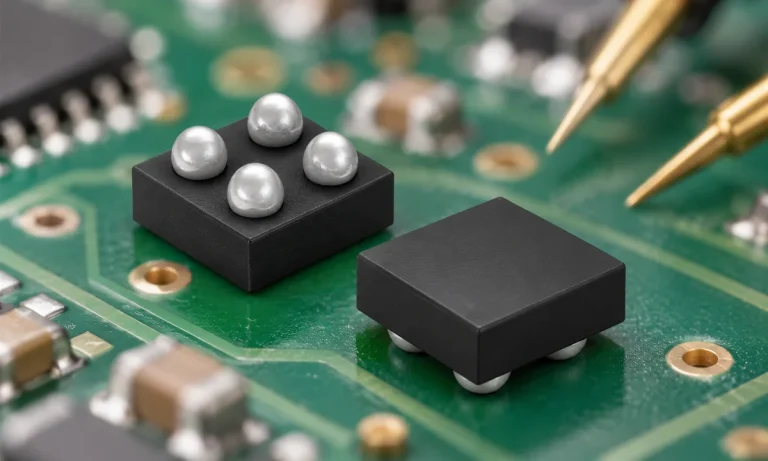
Understand how a comparator switches at a voltage threshold, why hysteresis prevents chatter, and which output and input specs matter.
Read More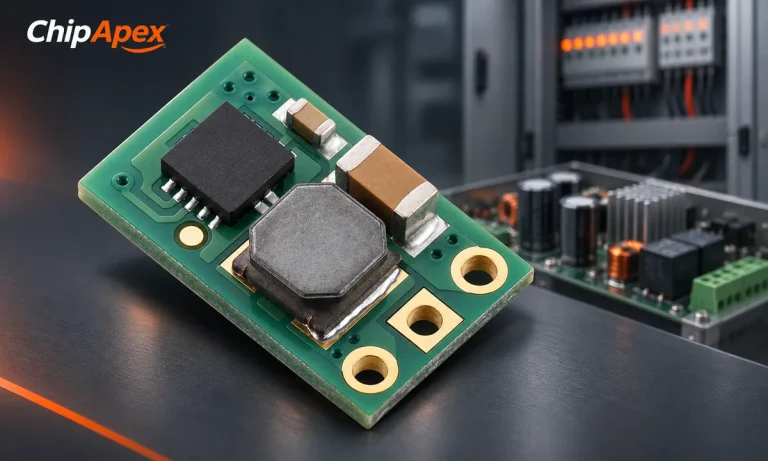
Select a DC-DC converter by input range, topology, isolation and temperature. Compare ripple, efficiency and load limits before choosing a component.
Read More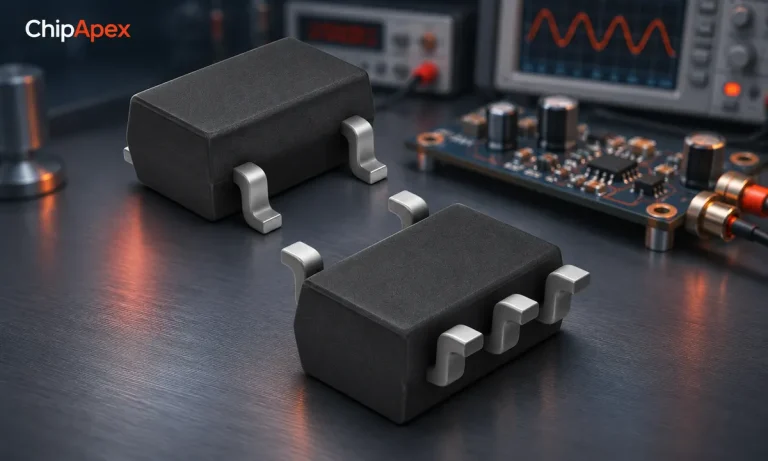
Learn how a JFET works and how to compare bias, leakage, noise and pinout. Review practical selection questions for high-impedance analog circuits.
Read More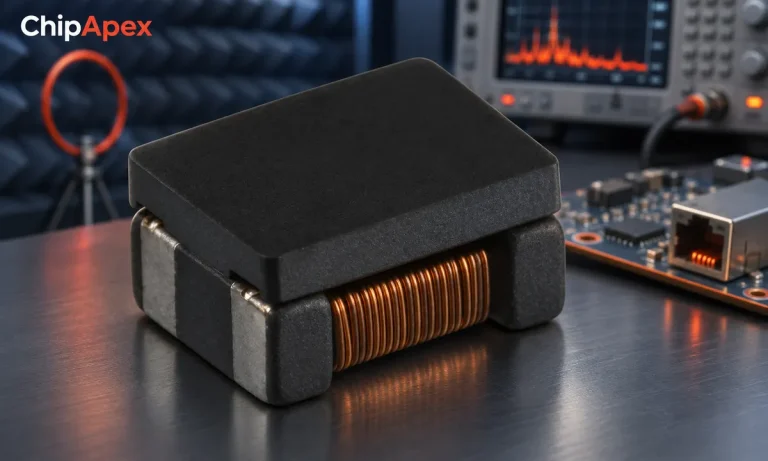
Select a common mode choke using noise frequency, current, insulation and signal integrity. Understand impedance curves, layout and filter limitations.
Read More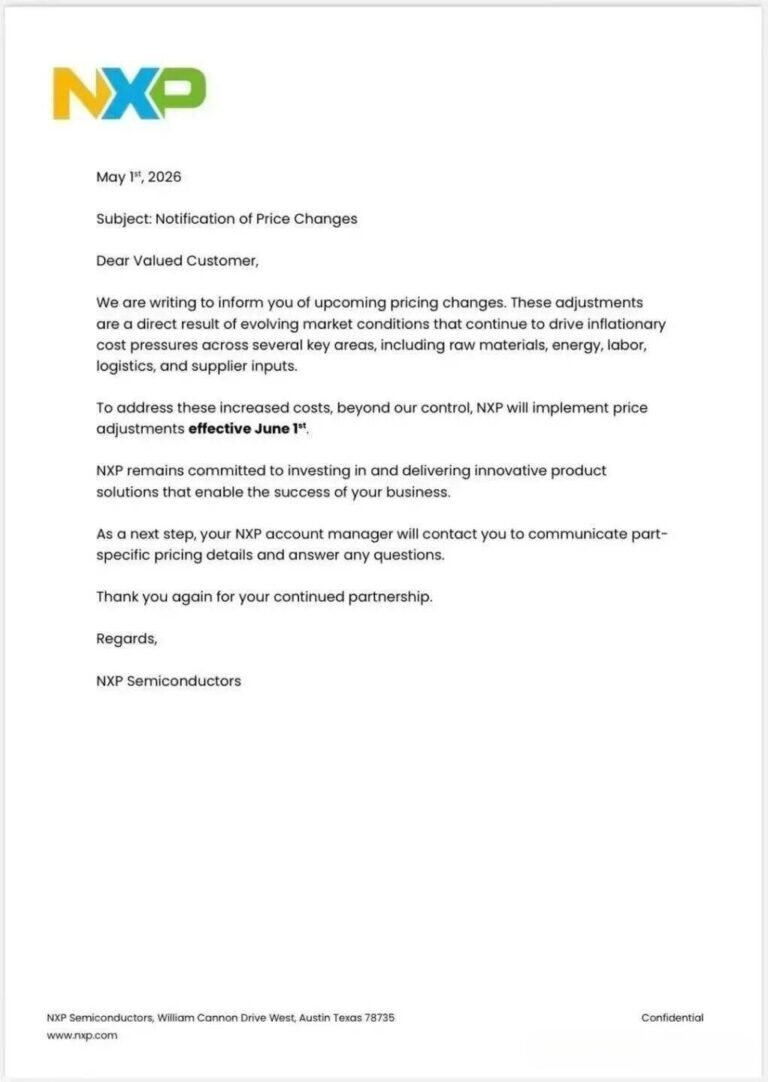
May 8, 2026 – Eindhoven, Netherlands NXP Semiconductors (NXPI), a global leader in automotive and industrial semiconductor solutions, has officially notified its worldwide channel…
Read More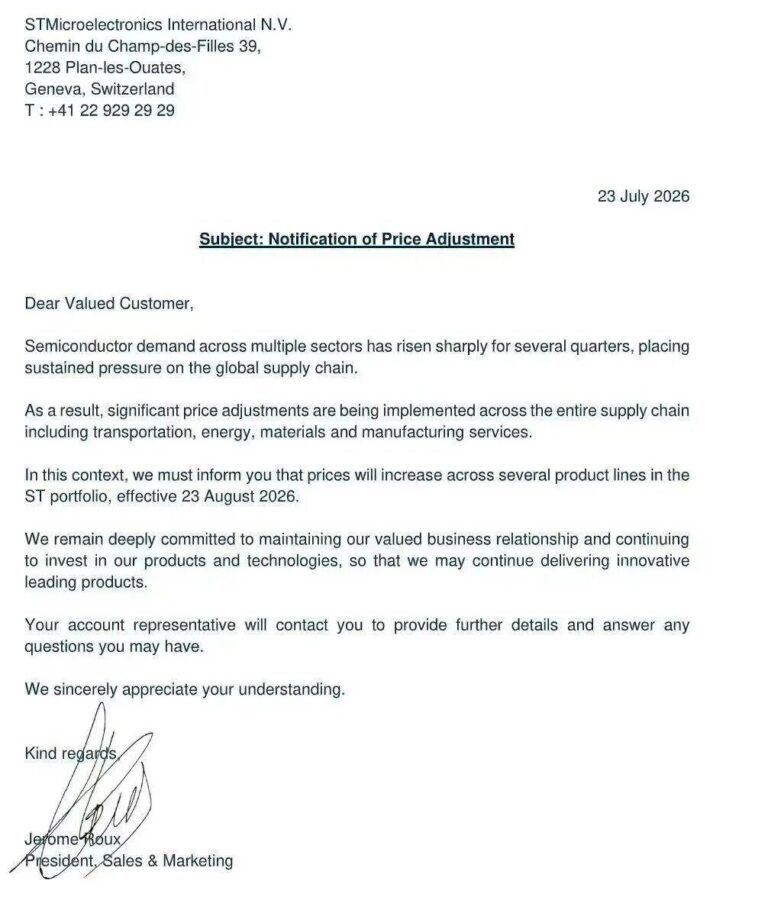
Geneva, Switzerland – August 20, 2026 – Global leading semiconductor manufacturer STMicroelectronics (ST) has officially issued a new global price adjustment notice to global…
Read More
The activity of extra discounts on wholesale prices is in full swing…
Please fill in your contact information and we will send you the latest wholesale price list.