 ChipApex | Global Electronic Components Supplier

SEARCH
Search Product
Search Post
Search productSearch post
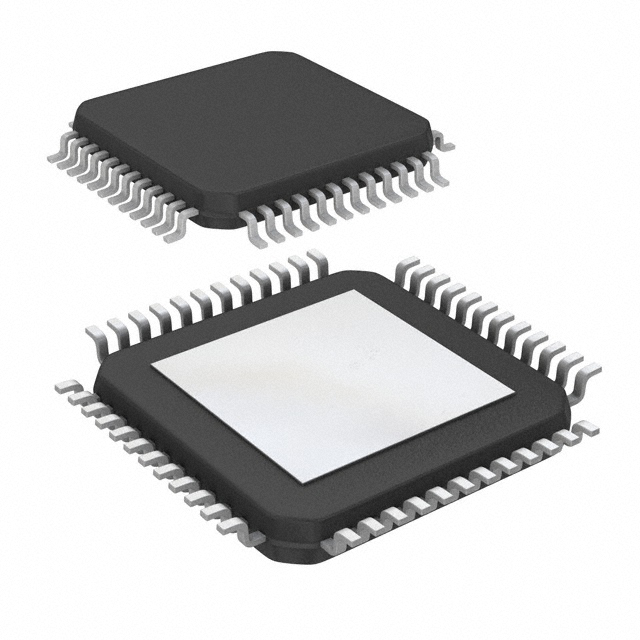
Products in this family are used for power manipulation, transformation, or conversion of some form, and are adapted for specific applications of an esoteric nature. Their feature sets are therefore highly varied, and include such things as air/fuel sensor interfaces, automotive alternator voltage regulation, DDR termination, liquid lens control, motorcycle turn signal control, thermoelectric (peltier) cooler control, piezo haptic control, valve control, small engine management, and others.
| Select products | Mfr | Description | Package | Supplier Device Package | Mounting Type | Series | Operating Temperature |
|---|---|---|---|---|---|---|---|
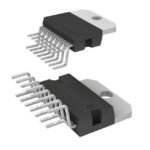 E-L5950 $4.43 | STMicroelectronics | IC REG CONV CAR 5OUT 15MULTIWATT | Tube | 15-Multiwatt | Through Hole | - | -40°C ~ 85°C |
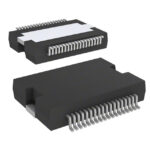 E-L9758BBTR $4.28 | STMicroelectronics | IC REG CONV AUTO 9OUT POWERSO-36 | Tape & Reel (TR) | PowerSO-36, Bottom Pad | Surface Mount | - | -40°C ~ 125°C |
L4943 $2.24 | STMicroelectronics | IC REG CONV CAR 3OUT 15MULTIWATT | Tube | 15-Multiwatt | Through Hole | - | -40°C ~ 85°C |
 L4952D $1.79 | STMicroelectronics | IC REG CONV CAR AUDIO 3OUT 20SO | Tube | 20-SO | Surface Mount | - | -40°C ~ 150°C |
L4952D013TR $1.79 | STMicroelectronics | IC REG CONV CAR AUDIO 3OUT 20SO | Tape & Reel (TR) | 20-SO | Surface Mount | - | -40°C ~ 150°C |
L4953G $2.75 | STMicroelectronics | IC REG CONV CAR AUD 15MULTIWATT | Tube | 15-Multiwatt | Through Hole | - | - |
| STMicroelectronics | IC REG CONV MULTIWATT | Tube | Multiwatt-15 | Through Hole | - | - | |
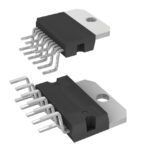 L4959 $1.61 | STMicroelectronics | IC REG AUDIO 4OUT 11MULTIWATT | Tube | 11-Multiwatt | Through Hole | - | 0°C ~ 70°C |
 ISL62884CIRTZ-TView Product
 TPS650830ZAJTView Product
 UCC3882DWTR-1View Product
 MAX17482GTL+TView Product
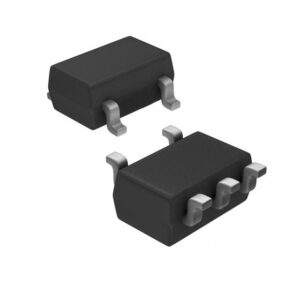 S-1701C3024-M5T1GView Product
 STPD01PURView Product
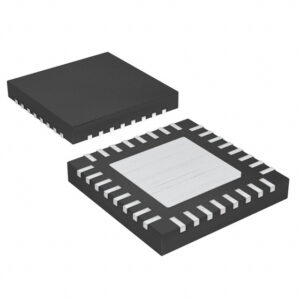 ADP3211MNR2GView Product
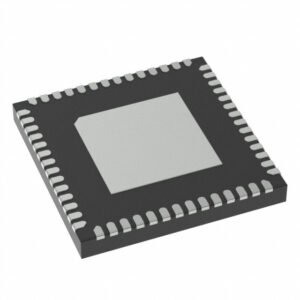 MMPF0100NPZESView Product
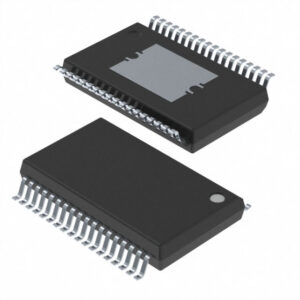 TLE7368EXUMA3View Product
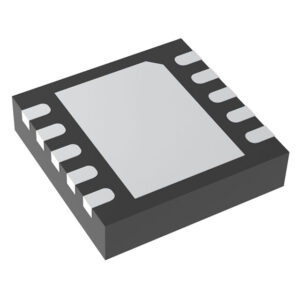 MAX8794ETB/V+TView Product
 IR3563BMGB04TRPView Product
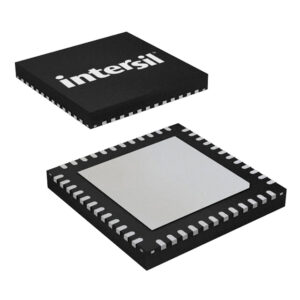 ISL6377HRZ-TView Product
Choose logic inverter ICs by thresholds, supply, output drive and delay. Compare standard and Schmitt-trigger inputs, power sequencing and replacement checks.
Read More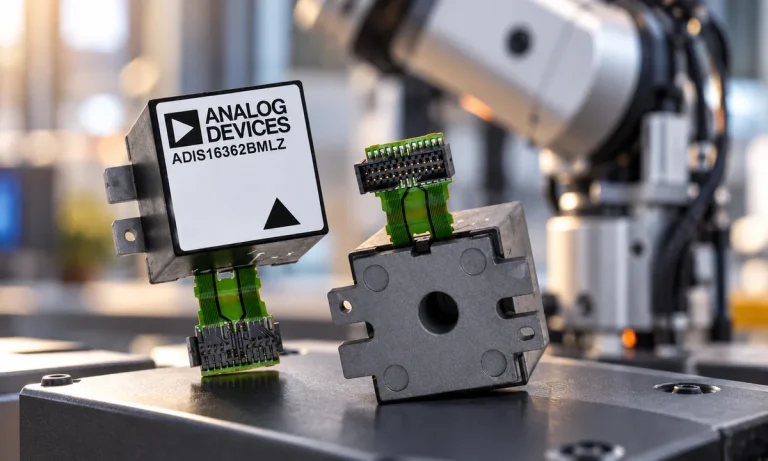
Learn what an IMU measures, how accelerometers and gyroscopes work together, why orientation estimates drift, and what to compare.
Read More
WILMINGTON, Mass. – July 3, 2026 – Analog Devices, Inc. (ADI), the global leading supplier of high-performance analog, mixed-signal and signal processing semiconductors, has…
Read More
See how a MEMS gyroscope measures angular rate, why its angle estimate drifts, and which range, noise, interface and temperature specs to compare.
Read More
Learn how CPLDs implement hardware logic, compare them with FPGAs and MCUs, and check timing, I/O voltage, startup behavior and programming requirements.
Read More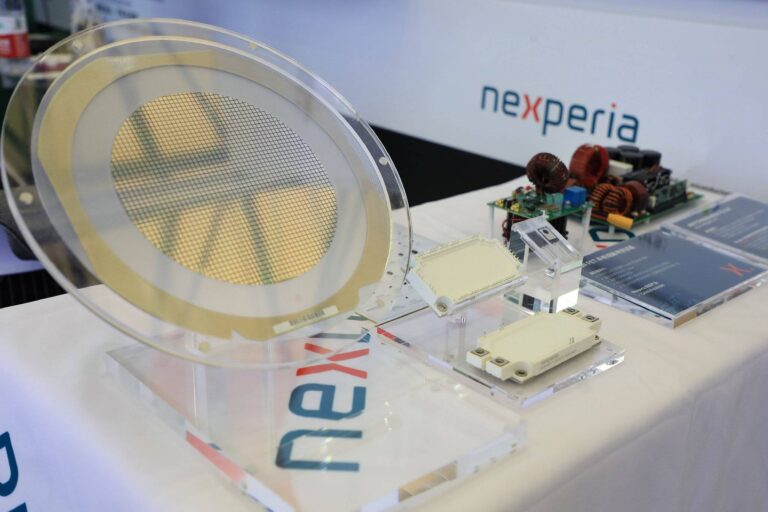
Dutch authorities announced on November 7 the lifting of control measures on Nexperia (formerly NXP Semiconductors' Standard Products division), marking the end of a…
Read More
Identify a VGA DE-15 connector, check RGB, sync and DDC pin groups, and choose the right adapter direction for a legacy analog display or…
Read More
A perfect storm of surging demand and supply chain disruptions is roiling the global electronic components market, with advanced semiconductors and critical materials now…
Read More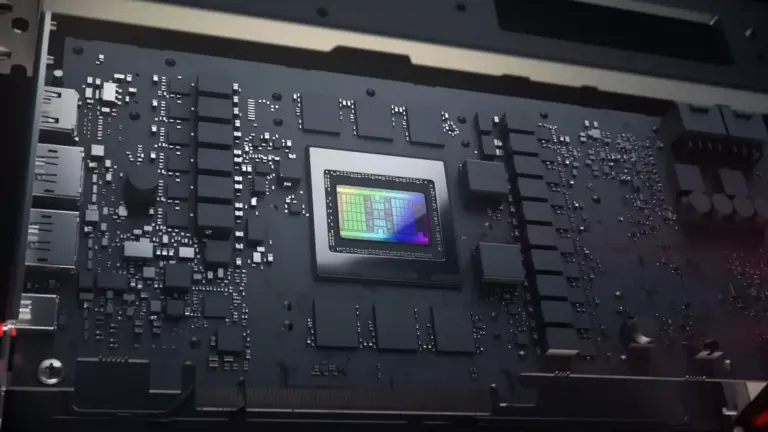
Latest updates from leading semiconductor manufacturers: Wolfspeed launches new SiC modules, AMD reveals MI430X with HBM4, TSMC eyes third Japan fab, and Samsung samples…
Read More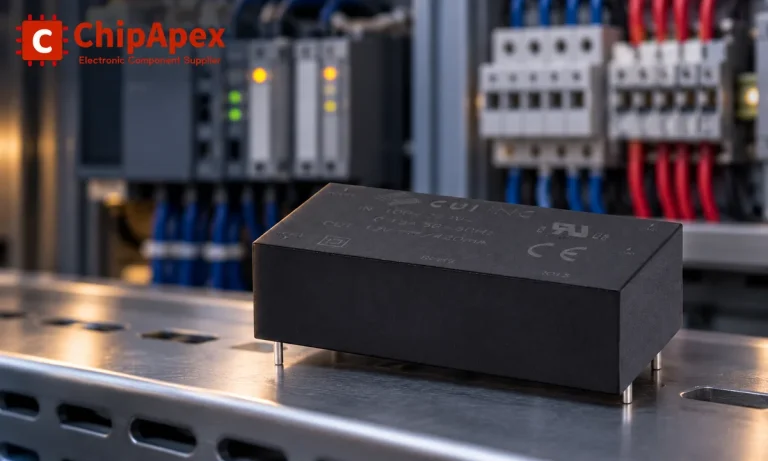
Choose an AC to DC converter by input range, output demand, isolation, efficiency and thermal derating. Compare architectures and check installation needs.
Read More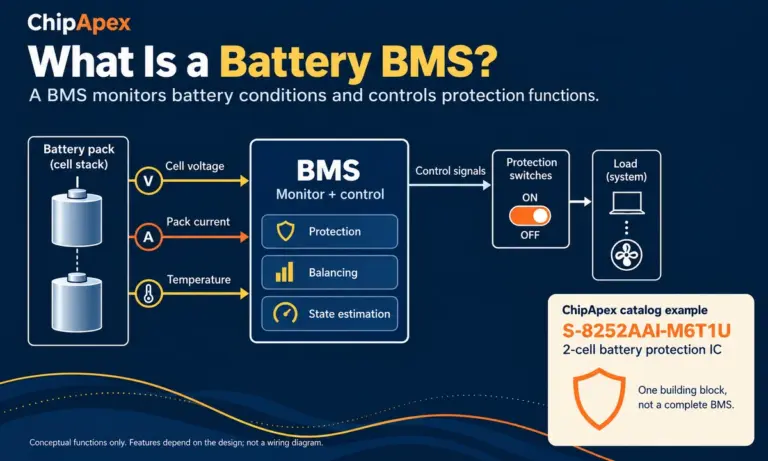
Learn what a battery BMS does, how protection differs from charging, and which pack specifications to check when sourcing BMS components through ChipApex.
Read More
Learn how a Zener diode regulates voltage. Calculate resistor current and power, check tolerance and temperature, and distinguish Zener and TVS applications.
Read More
The activity of extra discounts on wholesale prices is in full swing…
Please fill in your contact information and we will send you the latest wholesale price list.

