 ChipApex | Global Electronic Components Supplier

SEARCH
Search Product
Search Post
— IC芯片 | 连接器 | 传感器 | 被动器件 —
Search productSearch post
— IC芯片 | 连接器 | 传感器 | 被动器件 —

Crystals, Oscillators, and Resonators serve as critical components in frequency control applications, each offering unique characteristics that make them suitable for different electronic design requirements. Crystals, typically crafted from precision-cut quartz, represent the foundational frequency-generating element, providing stability and precise frequency references with low aging rates and minimal temperature drift. Unlike standalone components, crystals require external oscillator circuitry to generate a usable clock signal, which can be both an advantage and limitation in circuit design. Oscillators build upon crystal technology by integrating the crystal with supporting circuitry, creating a self-contained frequency source that eliminates the need for additional external components. This integration offers advantages in complexity reduction and reliability. Advanced oscillator variants like TCXOs (Temperature-Compensated Crystal Oscillators) and VCXO (Voltage Controlled Crystal Oscillator) further enhance frequency stability through temperature compensation mechanisms, making them ideal for high-precision applications such as telecommunications, GPS systems, and network timing infrastructure. Resonators, in contrast, represent a more cost-effective alternative, typically manufactured from ceramic or Surface Acoustic Wave (SAW) materials. While inherently less precise than quartz crystals, resonators excel in applications prioritizing size, cost, and durability over extreme frequency accuracy. Their compact form factor and design make them particularly attractive for consumer electronics, automotive systems, and microcontroller-based designs where moderate frequency stability is acceptable. Resonators typically offer frequency tolerances in the range of ±0.5% to ±0.1%, compared to crystals\' remarkable ±0.005% to ±0.05% precision. The selection between these components ultimately depends on a nuanced evaluation of application-specific requirements. Designers must carefully balance factors including frequency accuracy, temperature stability, power consumption, physical size, environmental resilience, and total system cost. For mission-critical systems demanding exceptional precision, quartz crystals and high-grade oscillators remain irreplaceable. Conversely, for cost-sensitive, less demanding applications, ceramic resonators provide an elegant and economical solution. For questions and further information on Crystals, Oscillators, or Resonators visit the Tech Forum. Some common frequencies are: 32.768 kHz – Used in real-time clocks (RTCs) and low-power timing applications. 32768Hz is 215 Hz. Allows binary division for 1 second intervals. 1.8432 MHz – Common for UART baud rate communication in microcontrollers. 1.8342MHz can be divided easily to create standard rates: 115,200 = 1843200/16, 57,600 =1843200/32, etc 16.000 MHz – Frequently used with microcontrollers such as the ATmega328P (Arduino), Zigbee, and Bluetooth BLE. 19.200 MHz – Found in wireless communication devices, such as mobile phones. Used as a reference clock for CDMA/GSM 23.104 MHz – Used for a reference clock for some GPS systems.
| Select products | Mfr | Description | Package | Supplier Device Package | Mounting Type | Series | Operating Temperature |
|---|---|---|---|---|---|---|---|
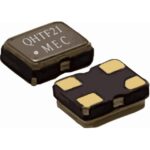 18QHTF21-27.178-PD $28.04 | Mercury Electronics Ind. Co. Ltd | 27.178 MHz XO 1.8V 2.0X1.6 MM PD | Strip | - | Surface Mount | 18QHTF21 | -40°C ~ 85°C |
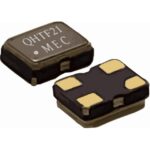 18QHTF21-27.190-OE $28.04 | Mercury Electronics Ind. Co. Ltd | 27.19 MHz XO 1.8V 2.0X1.6 MM OE | Strip | - | Surface Mount | 18QHTF21 | -40°C ~ 85°C |
18QHTF21-27.190-PD $28.04 | Mercury Electronics Ind. Co. Ltd | 27.19 MHz XO 1.8V 2.0X1.6 MM PD | Strip | - | Surface Mount | 18QHTF21 | -40°C ~ 85°C |
18QHTF21-27.195-OE $28.04 | Mercury Electronics Ind. Co. Ltd | 27.195 MHz XO 1.8V 2.0X1.6 MM OE | Strip | - | Surface Mount | 18QHTF21 | -40°C ~ 85°C |
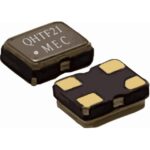 18QHTF21-27.195-PD $28.04 | Mercury Electronics Ind. Co. Ltd | 27.195 MHz XO 1.8V 2.0X1.6 MM PD | Strip | - | Surface Mount | 18QHTF21 | -40°C ~ 85°C |
18QHTF21-27.200-OE $28.04 | Mercury Electronics Ind. Co. Ltd | 27.2 MHz XO 1.8V 2.0X1.6 MM OE | Strip | - | Surface Mount | 18QHTF21 | -40°C ~ 85°C |
18QHTF21-27.200-PD $28.04 | Mercury Electronics Ind. Co. Ltd | 27.2 MHz XO 1.8V 2.0X1.6 MM PD | Strip | - | Surface Mount | 18QHTF21 | -40°C ~ 85°C |
18QHTF21-27.225-OE $28.04 | Mercury Electronics Ind. Co. Ltd | 27.225 MHz XO 1.8V 2.0X1.6 MM OE | Strip | - | Surface Mount | 18QHTF21 | -40°C ~ 85°C |
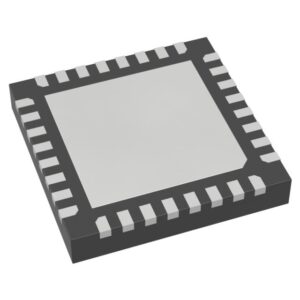 HMC1160LP5EView Product
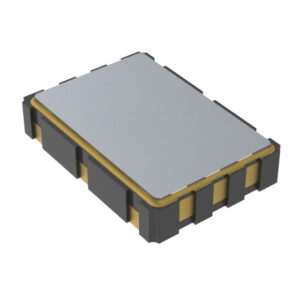 566CFA000626ACGView Product
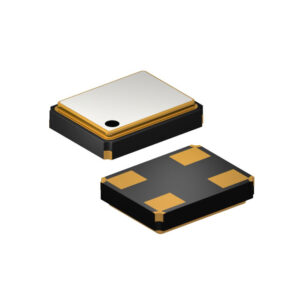 SXT21421AA16-26.000MView Product
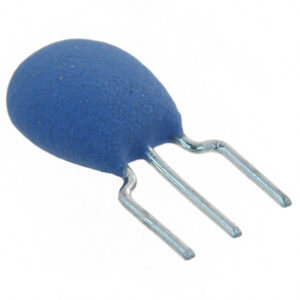 CSTLS40M0X51-A0View Product
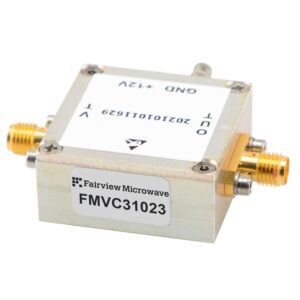 FMVC31023View Product
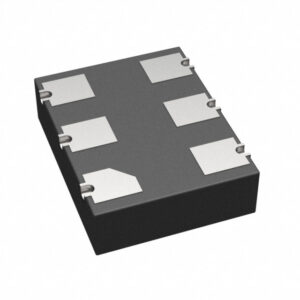 SIT3373AC-2B9-33NZ280.550000View Product
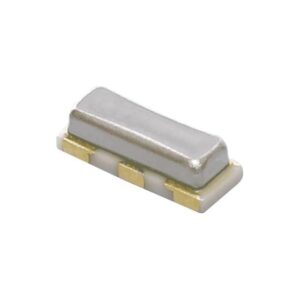 CSTNE15M0V53C000R0View Product
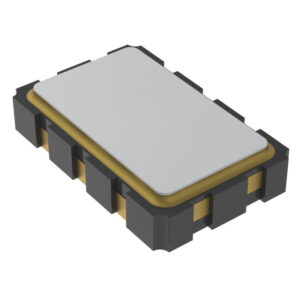 516BAA000644BAGRView Product
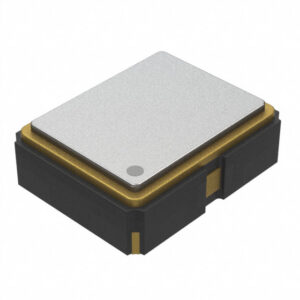 CA25C2702GLRView Product
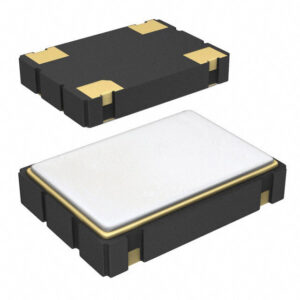 SG-9101CA-D20SHBACView ProductSG-9101CA-D40PHABBView ProductSXT21416BA27-26.000MView Product
In the world of electronics, memory components play a critical role in system performance—and DRAM (Dynamic Random-Access Memory) is one of the most widely…
Read More
[Shenzhen/Shanghai/Beijing, January 2025] — As global digital transformation accelerates, the electronic components industry has reached a critical inflection point in 2025. Emerging fields such…
Read More
What Is NAND Flash? A Practical Guide for Engineers & Procurement Teams In today’s data-driven world—from smartphones and SSDs to industrial IoT devices—NAND flash…
Read More
Learn how a diode conducts, how to identify anode and cathode, and when to choose rectifier, TVS, Zener or photodiode types for a circuit.
Read More
Selecting the right microcontroller (MCU) isn’t just about specs—it’s about balancing performance, power, cost, and supply chain reliability. As an engineer, you’ve probably faced…
Read More
Understand tactile switches, PCB and keyboard differences, four-pin wiring, debounce, force, travel and replacement checks for reliable control inputs.
Read More
Understand voltage controlled oscillator tuning, phase noise and PLL operation. Check supply noise, output loading and requirements before selection.
Read More
Select a common mode choke using noise frequency, current, insulation and signal integrity. Understand impedance curves, layout and filter limitations.
Read More
Compare RC, crystal and MEMS oscillator circuits. Check ppm, jitter, load capacitance, startup margin and output compatibility before choosing a clock source.
Read More
Learn why PTC resistance rises with temperature, how it differs from NTC, and which ratings matter for sensing and protection.
Read More
Recently, a survey by the Electronic Components Industry Association (ECIA) revealed that the sales sentiment of global electronic components remained optimistic in the third…
Read More
On October 1, 2025 local time, OpenAI, an artificial intelligence research company, announced the establishment of a cooperative relationship with Samsung Electronics and SK…
Read More
The activity of extra discounts on wholesale prices is in full swing…
Please fill in your contact information and we will send you the latest wholesale price list.

