ChipApex | Global Electronic Components Supplier

SEARCH
Search Product
Search Post
— IC芯片 | 连接器 | 传感器 | 被动器件 —
Search productSearch post
— IC芯片 | 连接器 | 传感器 | 被动器件 —
Consult the customer manager about the wholesale price.
consultation hotline:86-132-6715-2157
email:[email protected]
Contact the product manager for consultation. One-stop consultation is available.
Do you want a lower wholesale price? Please send us your inquiry and we will reply immediately.
The SICK GL2S-N1312 is a retro-reflective photoelectric sensor designed for precise object detection in industrial environments. It features a compact square housing measuring 7.7 mm x 21.8 mm x 13.5 mm. The device utilizes a visible red PinPoint LED light source with a wavelength of 640 nm, producing a focused beam spot size of Ø 11 mm at a distance of 250 mm. The standard detection range extends from 0.03 m to 2.5 m when paired with the PL40A reflector, while the maximum operational range reaches up to 3 m under specific conditions. The sensor operates without manual adjustment mechanisms and offers an average service life of 100,000 hours at +25 °C.
Verify that the required reflector type matches the application distance requirements, as the PL40A reflector is specified for the standard 2.5 m range. Confirm that the M12 connector interface aligns with existing cable assemblies. Ensure ambient lighting conditions do not exceed the sensor's interference immunity specifications. Check that the mounting geometry accommodates the 7.7 mm width dimension within the available panel cutout.
Select this model when high precision is required for detecting small objects due to the PinPoint LED characteristic. Consider the limited adjustment-free operation if fixed alignment is feasible during installation. Evaluate the short minimum detection distance of 0.03 m to ensure objects do not enter the blind zone too closely. Compare against diffuse sensors if reflective surfaces are absent or inconsistent.
This component belongs to the GL2S series of miniature photoelectric sensors manufactured by SICK. The series is characterized by its extremely small form factor and robust construction suitable for harsh industrial settings. The GL2S-N1312 specifically denotes the retro-reflective variant with red light emission, distinguishing it from infrared or laser-based models within the same product family.
Public confirmed substitute part numbers are not available in the provided documentation.
 1091798
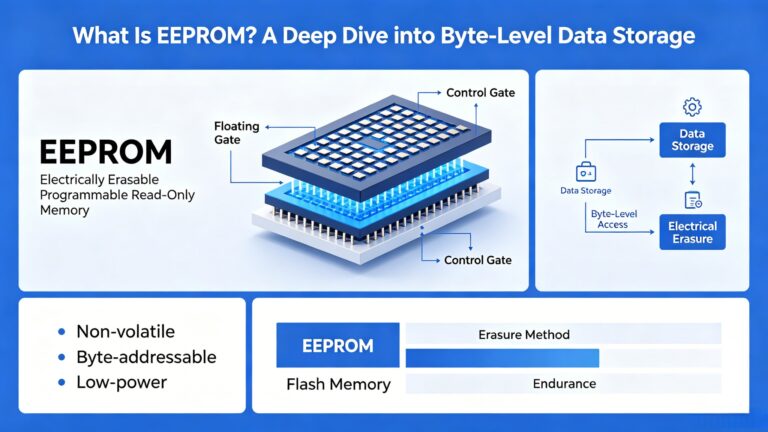
In the vast landscape of memory technology, EEPROM (Electrically Erasable Programmable Read-Only Memory) often plays the unsung hero. While NAND Flash grabs headlines for…
Read More
Compare thermistors, RTDs, thermocouples and temperature ICs. Learn how range, accuracy, response, interfaces and mounting affect component selection.
Read More
Understand how a comparator switches at a voltage threshold, why hysteresis prevents chatter, and which output and input specs matter.
Read More
Learn how rectifiers convert AC to DC, compare half-wave and bridge circuits, and select voltage, current, recovery and thermal ratings for your design.
Read More
ChipApex – May 8, 2026 Texas Instruments (TI), the global leader in analog and embedded semiconductors, has officially notified customers of an upcoming company-wide…
Read More
Choose a DIP switch by contact type, coded positions, footprint and signal ratings. Check logic polarity, assembly conditions and PCB configuration behavior.
Read More
SANTA CLARA, Calif. — Leading semiconductor solution provider Marvell Technology (NASDAQ: MRVL) officially rolled out a selective price adjustment for its core electronic component…
Read More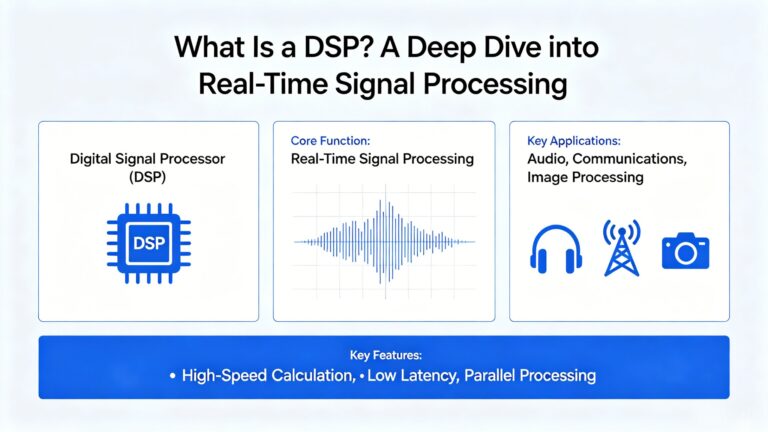
In the embedded world, general-purpose CPUs are great at running operating systems, and MCUs excel at logic control. But when you need to process…
Read More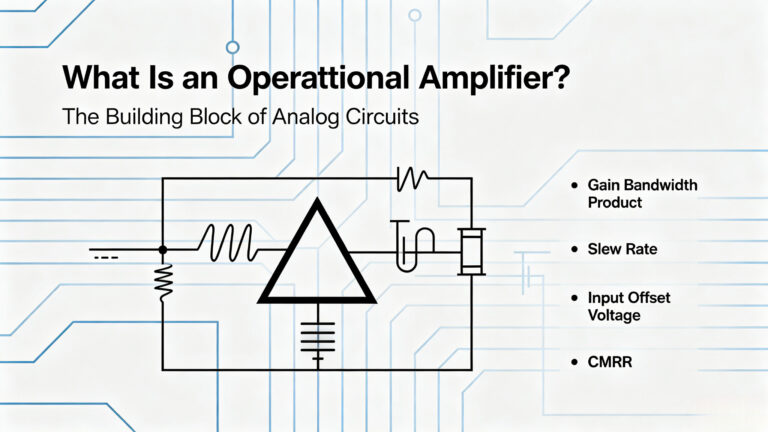
If you’ve spent any time staring at a schematic, you’ve seen the triangle. Two inputs, one output, and a gain symbol that looks deceptively…
Read More
Munich, Germany – February 8, 2026 — Infineon Technologies, the German semiconductor giant, officially issued a price increase notice on February 5, announcing that…
Read More
In the world of electronics, memory components play a critical role in system performance—and DRAM (Dynamic Random-Access Memory) is one of the most widely…
Read More
Select a bridge rectifier by reverse voltage, capacitor charging current, startup surge and cooling. Work through a stated DC voltage and ripple example.
Read More
The activity of extra discounts on wholesale prices is in full swing…
Please fill in your contact information and we will send you the latest wholesale price list.