 ChipApex | Global Electronic Components Supplier

SEARCH
Search Product
Search Post
— IC芯片 | 连接器 | 传感器 | 被动器件 —
Search productSearch post
— IC芯片 | 连接器 | 传感器 | 被动器件 —
Consult the customer manager about the wholesale price.
consultation hotline:86-132-6715-2157
email:[email protected]
Contact the product manager for consultation. One-stop consultation is available.
Do you want a lower wholesale price? Please send us your inquiry and we will reply immediately.
Phoenix Contact part number 1405940 is a sensor/actuator cable belonging to the SAC series. It features a 3-position configuration with an angled M8 male plug on one end and a straight M8 female socket on the other, utilizing A-coding. The cable length is customizable within a range of 0.2 meters to 85.0 meters. This cordset is designed for industrial automation applications requiring reliable signal transmission between control systems and field devices.
Verify the specific cable length requirement during ordering, as this model supports variable lengths between 0.2 m and 85.0 m. Confirm that the M8 A-coding aligns with existing connector interfaces. Ensure the application environment is compatible with the specified contact materials and housing compounds. Check for any updated compliance certifications relevant to your region before finalizing procurement.
Select this component when a pre-assembled M8 cordset is required for sensor or actuator linkage. The A-coding is standard for general-purpose signals; verify compatibility if power or data-specific coding is needed. Consider the maximum length constraint of 85.0 m for signal integrity. Evaluate the environmental conditions against the IP rating and temperature limits of the connector materials.
This item belongs to Phoenix Contact's SAC series of automation cables, which are widely used in industrial environments. The series offers various configurations for different connector types and pin counts. Part 1405940 specifically addresses the need for standardized M8 connections with flexible length options, supporting efficient assembly in control panels and machine building.
No public confirmed substitute part numbers are available in the provided documentation. Verify compatibility with existing M8 A-coded infrastructure before considering alternative brands or models.
The connectors utilize A-coding, which is standard for general-purpose sensor and actuator signals.
Yes, the cable length can be specified at ordering within a range of 0.2 meters to 85.0 meters.
 1405940

Learn what an IMU measures, how accelerometers and gyroscopes work together, why orientation estimates drift, and what to compare.
Read More
TOKYO, July 31, 2026 — Renesas Electronics Corporation has officially announced a major domestic manufacturing restructuring, confirming plans to gradually discontinue all wafer fabrication…
Read More
As the backbone of modern technology, electronic components are undergoing revolutionary changes, driven by advancements in materials science, miniaturization, and smart manufacturing. From ultra-efficient…
Read More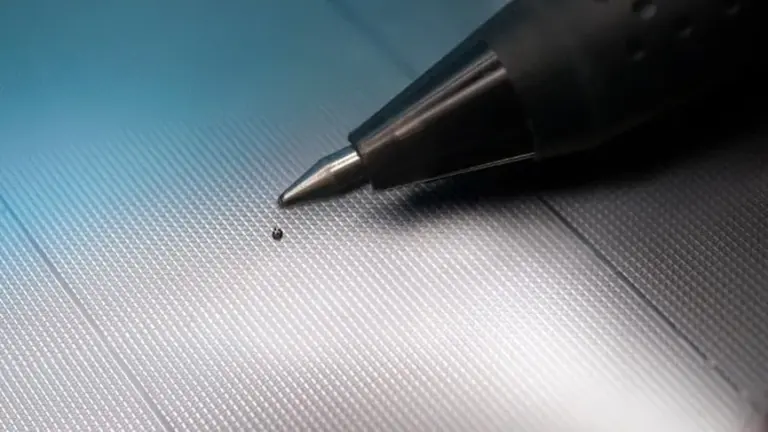
Recently, the global electronic components market has been constantly evolving, and different regions and enterprises have witnessed new moves in aspects such as technological…
Read More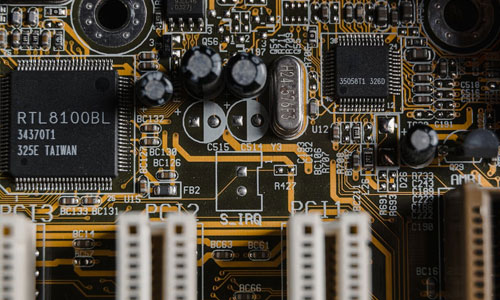
The rapid advancement of artificial intelligence (AI) is transforming industries across the globe, and the world of electronic components is no exception. From smarter…
Read More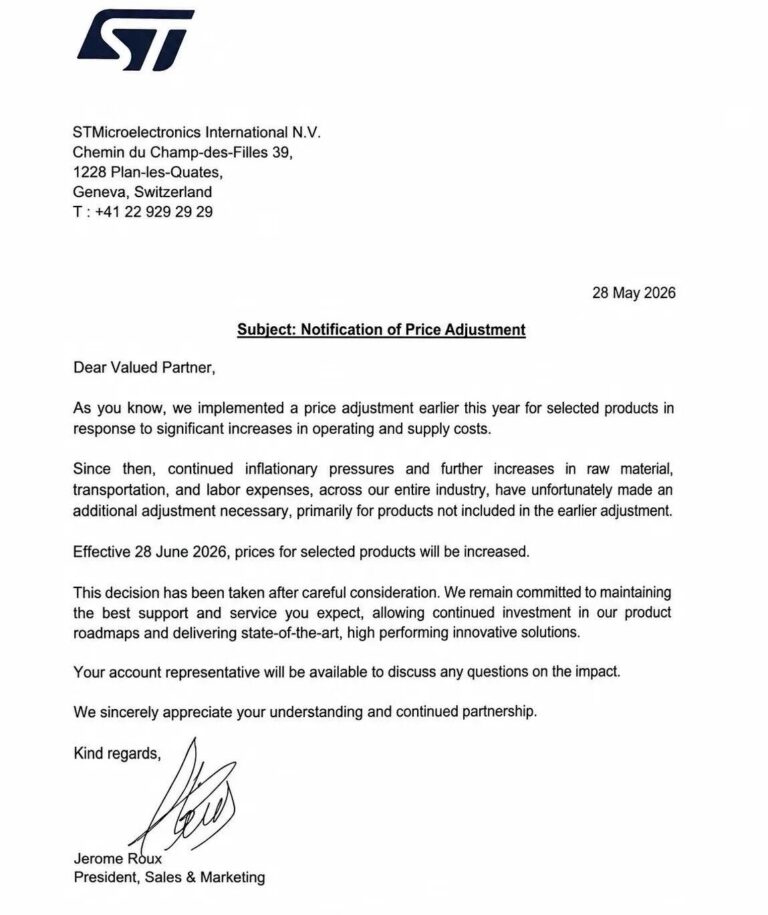
STMicroelectronics (ST), a global leader in semiconductor manufacturing, has officially notified customers of a new round of price increases for selected products, set to…
Read More
The Dutch government’s intervention in the control of Nexperia (Anshi Semiconductor) is triggering a chain reaction of turmoil in the global power semiconductor market.…
Read More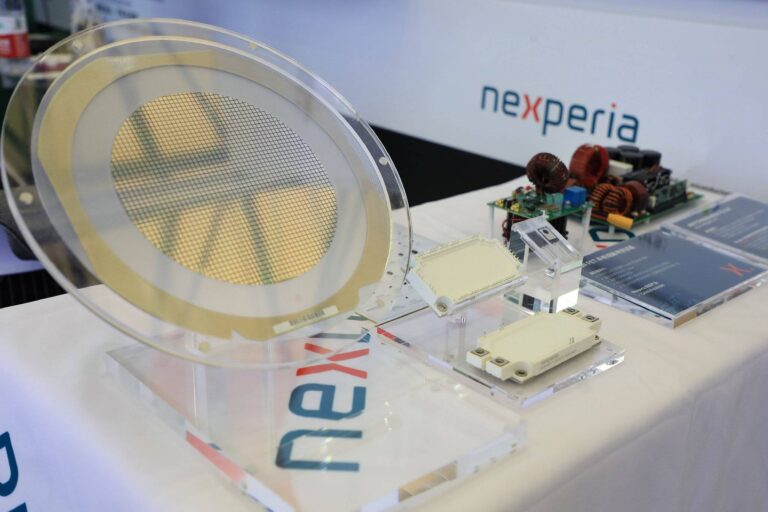
Dutch authorities announced on November 7 the lifting of control measures on Nexperia (formerly NXP Semiconductors’ Standard Products division), marking the end of a…
Read More
Understand how oscillators generate timing signals, how they differ from crystals, and which frequency, output and stability specs matter when choosing one.
Read More
See when an inductor behaves linearly, how DC bias and saturation reduce inductance, and which current and temperature curves to check.
Read More
Compare thermistors, RTDs, thermocouples and temperature ICs. Learn how range, accuracy, response, interfaces and mounting affect component selection.
Read More
Learn why PTC resistance rises with temperature, how it differs from NTC, and which ratings matter for sensing and protection.
Read More
The activity of extra discounts on wholesale prices is in full swing…
Please fill in your contact information and we will send you the latest wholesale price list.




