 ChipApex | Global Electronic Components Supplier

SEARCH
Search Product
Search Post
— IC芯片 | 连接器 | 传感器 | 被动器件 —
Search productSearch post
— IC芯片 | 连接器 | 传感器 | 被动器件 —
Consult the customer manager about the wholesale price.
consultation hotline:86-132-6715-2157
email:[email protected]
Contact the product manager for consultation. One-stop consultation is available.
Do you want a lower wholesale price? Please send us your inquiry and we will reply immediately.
The Phoenix Contact 1408718 is a PCB terminal block designed for secure electrical connections in control cabinet environments. It features a nominal current rating of 24 A and supports a rated voltage of 630 V. The component utilizes a push-in spring connection mechanism, allowing for tool-free wiring installation. It accommodates conductor cross-sections ranging from 0.5 mm² to 4 mm² for solid and stranded wires. The unit has a pitch of 7.62 mm and is available in a two-pole configuration with a height of 82 mm.
Verify that the specific order code matches the required pole count and color coding. Confirm compatibility with mating rail systems if DIN-rail mounting is intended. Ensure the selected variant meets the specific insulation voltage requirements of your circuit design before finalizing procurement.
Choose this component when tool-free assembly speed is critical for production throughput. Evaluate the required current carrying capacity against the actual load to ensure compliance with thermal limits. Consider the available panel space relative to the 7.62 mm pitch to optimize layout density.
This terminal block belongs to the Phoenix Contact Universal series, which provides standardized interfaces for various industrial applications. The series is characterized by consistent dimensions and connection technologies across different pole counts, facilitating modular expansion and system scalability in complex electrical architectures.
Direct replacements must match the 7.62 mm pitch and 24 A current rating. Verify that alternative components support the same push-in connection method to maintain assembly workflow consistency. Check physical dimensions to ensure fit within existing enclosure constraints.
The terminal supports conductor cross-sections up to 4 mm² for both solid and stranded wires.
No, the push-in spring connection mechanism allows for tool-free wiring installation.
 1408718
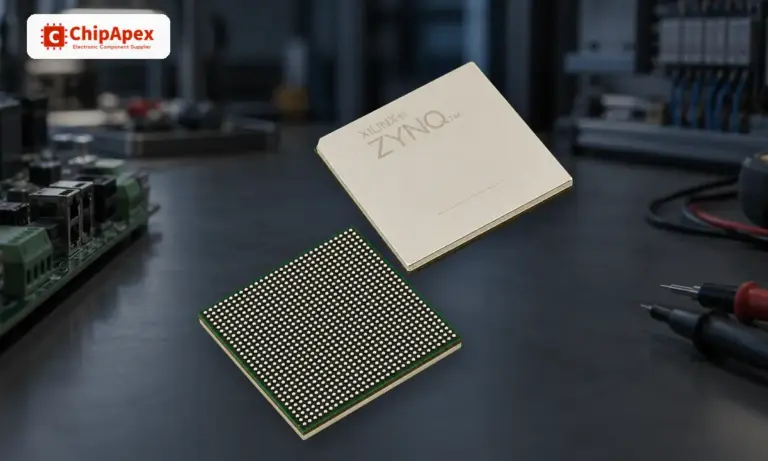
Learn what an integrated circuit is, how ICs work, the main types and the specs to check before choosing a part for your design…
Read More
Find out when a bare shock switch needs a pull resistor, when an MCU internal pull-up is enough, and why sensor modules and piezo…
Read More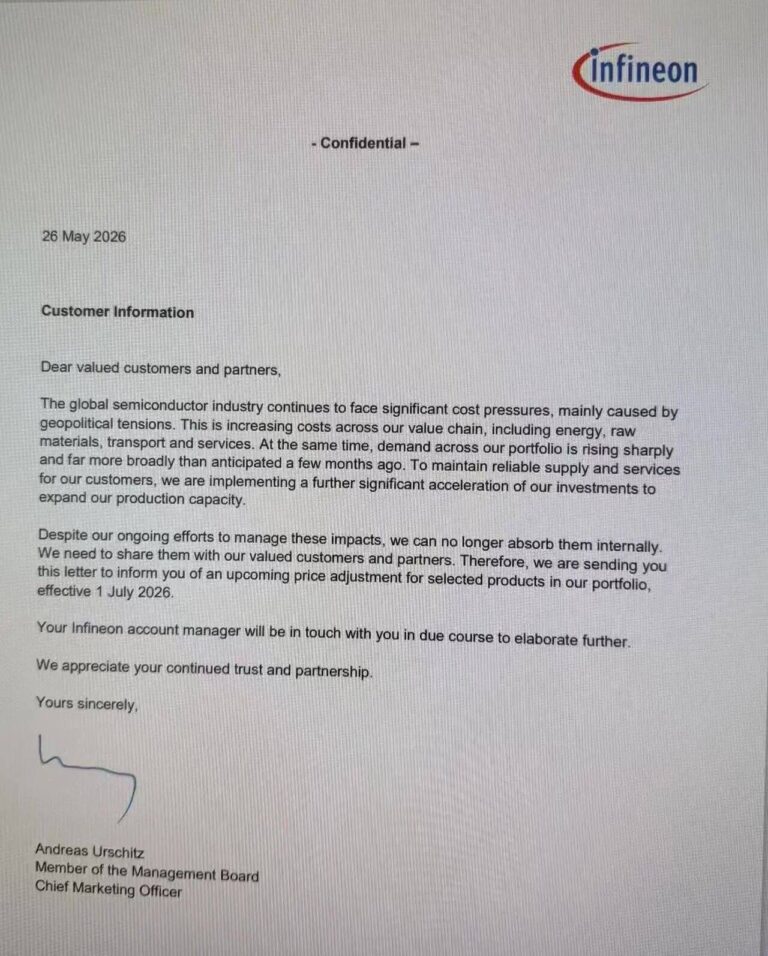
Munich, Germany – May 26, 2026 – Power semiconductor and automotive chip giant Infineon Technologies AG has formally notified customers worldwide of a second…
Read More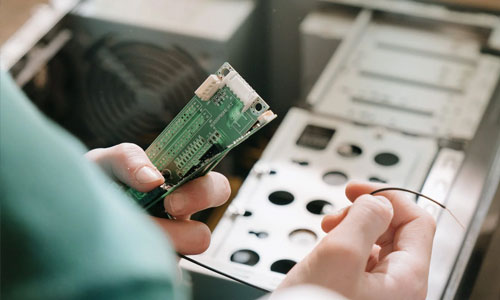
[Shenzhen/Shanghai/Beijing, January 2025] — As global digital transformation accelerates, the electronic components industry has reached a critical inflection point in 2025. Emerging fields such…
Read More
Learn what an IMU measures, how accelerometers and gyroscopes work together, why orientation estimates drift, and what to compare.
Read More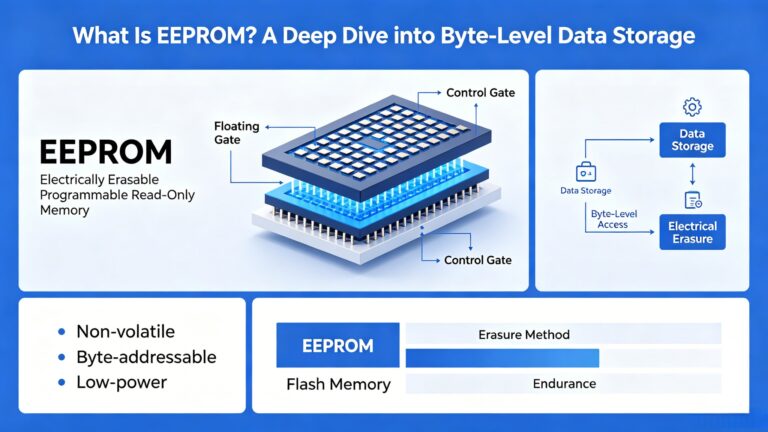
In the vast landscape of memory technology, EEPROM (Electrically Erasable Programmable Read-Only Memory) often plays the unsung hero. While NAND Flash grabs headlines for…
Read More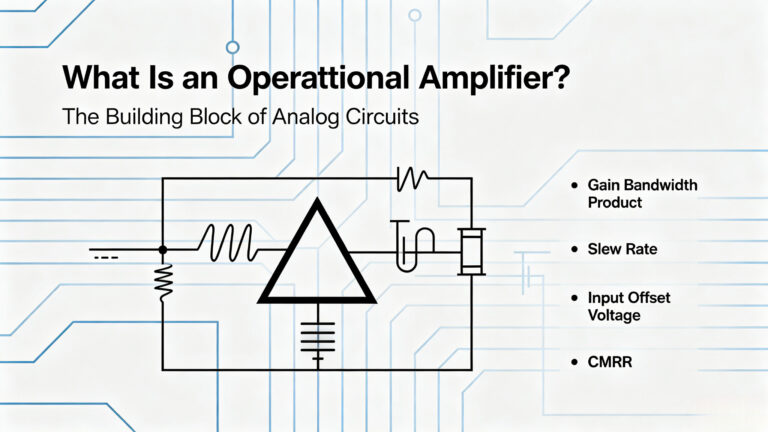
If you’ve spent any time staring at a schematic, you’ve seen the triangle. Two inputs, one output, and a gain symbol that looks deceptively…
Read More
Learn how a pressure transducer converts pressure into voltage, current, or digital output, and compare pressure references and key selection specs.
Read More
See how a MEMS gyroscope measures angular rate, why its angle estimate drifts, and which range, noise, interface and temperature specs to compare.
Read More
The rapid advancement of artificial intelligence (AI) is transforming industries across the globe, and the world of electronic components is no exception. From smarter…
Read More
Tokyo / Munich / Tessenderlo, December 24, 2025As the global semiconductor industry enters the first year of the 2nm process era, international electronic component…
Read More
Understand RF attenuator dB values, fixed and programmable types, impedance, power limits and noise tradeoffs before choosing parts for an RF signal path.
Read More
The activity of extra discounts on wholesale prices is in full swing…
Please fill in your contact information and we will send you the latest wholesale price list.




