ChipApex | Global Electronic Components Supplier

SEARCH
Search Product
Search Post
— IC芯片 | 连接器 | 传感器 | 被动器件 —
Search productSearch post
— IC芯片 | 连接器 | 传感器 | 被动器件 —
Consult the customer manager about the wholesale price.
consultation hotline:86-132-6715-2157
email:[email protected]
Contact the product manager for consultation. One-stop consultation is available.
Do you want a lower wholesale price? Please send us your inquiry and we will reply immediately.
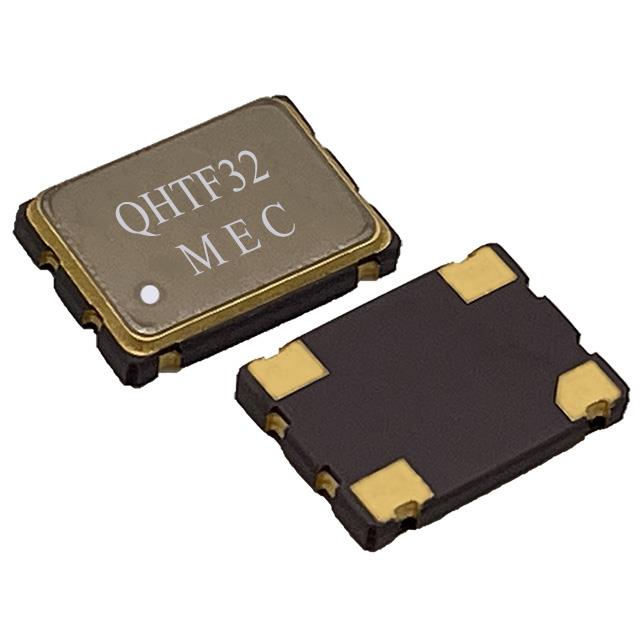
18QHTF32-54.4288-OE is listed in the Oscillators range at ChipApex. The manufacturer field lists Mercury Electronics Ind. Co. Ltd. Its product description is 54.4288 MHz XO 1.8V 3.2X2.5MM OE. Review the specifications below when checking this part for your BOM.
The 18QHTF32-54.4288-OE is a crystal oscillator manufactured by Mercury Electronics Ind. Co., Ltd. It operates at a frequency of 54.4288 MHz and utilizes LVCMOS output logic. The component supports a supply voltage of 1.8V and includes an Enable/Disable control function. It is housed in a compact 4-SMD, No Lead package, designed for surface-mount applications requiring precise timing signals.
Verify the specific frequency tolerance and load capacitance requirements against the official datasheet before procurement. Confirm that the 1.8V supply voltage aligns with the target system design. Ensure the 4-SMD no-lead package footprint matches the PCB layout specifications to guarantee proper soldering and mechanical stability during operation.
Select this component when a 54.4288 MHz clock signal is required with low-voltage 1.8V operation. The LVCMOS output is suitable for standard CMOS logic families. Consider the enable/disable feature if power conservation or dynamic clock gating is necessary for the application design.
This part belongs to the 18QHTF32 series from Mercury Electronics, which offers various frequencies within the same package form factor. The series provides standardized timing solutions for embedded systems. The manufacturer has established expertise in quartz crystal production, ensuring consistent quality across their oscillator product lines.
Direct substitutes must match the 54.4288 MHz frequency, 1.8V supply, LVCMOS output, and 4-SMD package. Verify electrical parameters such as phase noise and jitter against the original specification to ensure functional equivalence in the circuit design.
Explore related parts through Crystals, Oscillators, Resonators, all product categories, ChipApex homepage.
 18QHTF32-54.4288-OE
Choose logic inverter ICs by thresholds, supply, output drive and delay. Compare standard and Schmitt-trigger inputs, power sequencing and replacement checks.
Read More
See when an inductor behaves linearly, how DC bias and saturation reduce inductance, and which current and temperature curves to check.
Read More
Learn how a diode conducts, how to identify anode and cathode, and when to choose rectifier, TVS, Zener or photodiode types for a circuit.
Read More
18QHTF32-54.4288-OE is listed in the Oscillators range at ChipApex. The manufacturer field lists Mercury Electronics Ind. Co. Ltd. Its product description is 54.4288 MHz…
Read More
18QHTF32-54.4288-OE is listed in the Oscillators range at ChipApex. The manufacturer field lists Mercury Electronics Ind. Co. Ltd. Its product description is 54.4288 MHz…
Read More
18QHTF32-54.4288-OE is listed in the Oscillators range at ChipApex. The manufacturer field lists Mercury Electronics Ind. Co. Ltd. Its product description is 54.4288 MHz…
Read More
18QHTF32-54.4288-OE is listed in the Oscillators range at ChipApex. The manufacturer field lists Mercury Electronics Ind. Co. Ltd. Its product description is 54.4288 MHz…
Read More
18QHTF32-54.4288-OE is listed in the Oscillators range at ChipApex. The manufacturer field lists Mercury Electronics Ind. Co. Ltd. Its product description is 54.4288 MHz…
Read More
Compare RC, crystal and MEMS oscillator circuits. Check ppm, jitter, load capacitance, startup margin and output compatibility before choosing a clock source.
Read More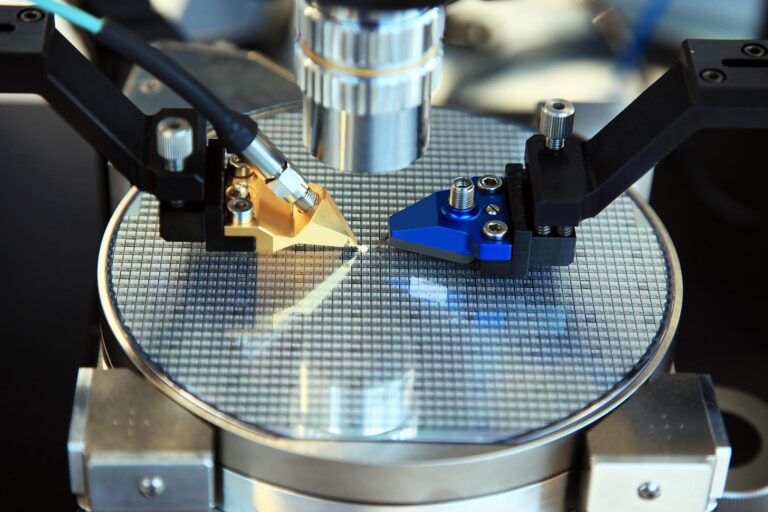
18QHTF32-54.4288-OE is listed in the Oscillators range at ChipApex. The manufacturer field lists Mercury Electronics Ind. Co. Ltd. Its product description is 54.4288 MHz…
Read More
Understand tactile switches, PCB and keyboard differences, four-pin wiring, debounce, force, travel and replacement checks for reliable control inputs.
Read More
18QHTF32-54.4288-OE is listed in the Oscillators range at ChipApex. The manufacturer field lists Mercury Electronics Ind. Co. Ltd. Its product description is 54.4288 MHz…
Read More
The activity of extra discounts on wholesale prices is in full swing…
Please fill in your contact information and we will send you the latest wholesale price list.