 ChipApex | Global Electronic Components Supplier

SEARCH
Search Product
Search Post
— IC芯片 | 连接器 | 传感器 | 被动器件 —
Search productSearch post
— IC芯片 | 连接器 | 传感器 | 被动器件 —
Consult the customer manager about the wholesale price.
consultation hotline:86-132-6715-2157
email:[email protected]
Contact the product manager for consultation. One-stop consultation is available.
Do you want a lower wholesale price? Please send us your inquiry and we will reply immediately.
The SICK CLV503-11210 is a miniature fixed-mount barcode scanner designed for space-constrained industrial environments. It operates with a scanning frequency of 100 Hz, making it suitable for slow-moving applications. The device features an RS-232 interface and includes onboard diagnostics such as a pushbutton trigger, LED status indicator, and audible beep. Its compact form factor facilitates easy installation in OEM and machine builder settings where physical footprint is limited.
Verify the specific suffix code to confirm interface type and cable configuration. Ensure the application speed does not exceed the 100 Hz scanning limit. Confirm compatibility with existing RS-232 controllers. Check for required mounting accessories separately. Validate environmental ratings against operational conditions.
Choose this model for static or slow-moving object identification where space is critical. The CLV505 variant is recommended for higher conveyor speeds up to 5 m/s due to its 1,000 Hz frequency. Consider the raster version if specific optical requirements dictate. Verify power supply compatibility with the selected interface variant.
This component belongs to the SICK CLV50x series of miniature barcode scanners. The series is characterized by its USB-plug-like size and high decoding flexibility. It targets the OEM and machine builder market segments requiring robust data capture in tight mechanical assemblies.
Publicly confirmed substitute part numbers are not available in the provided documentation. Direct replacement requires matching the exact suffix code for interface and connector specifications. Consult official SICK catalogs for cross-referencing legacy models.
 2136557

Learn why PTC resistance rises with temperature, how it differs from NTC, and which ratings matter for sensing and protection.
Read More
Compare RC, crystal and MEMS oscillator circuits. Check ppm, jitter, load capacitance, startup margin and output compatibility before choosing a clock source.
Read More
Choose a DIP switch by contact type, coded positions, footprint and signal ratings. Check logic polarity, assembly conditions and PCB configuration behavior.
Read More
Over the past week, the global electronic components sector has witnessed dual transformations in policy and technology: Coupled with mounting pressure from a worsening…
Read More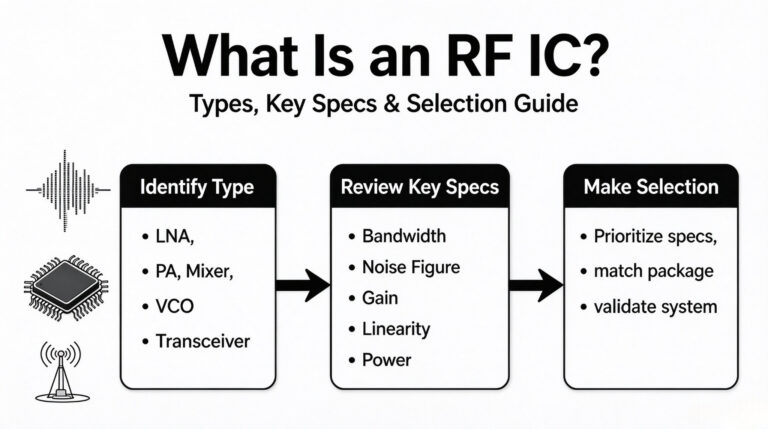
An RF IC, or radio-frequency integrated circuit, is a chip that processes wireless signals between the antenna and the baseband processor. Instead of building…
Read More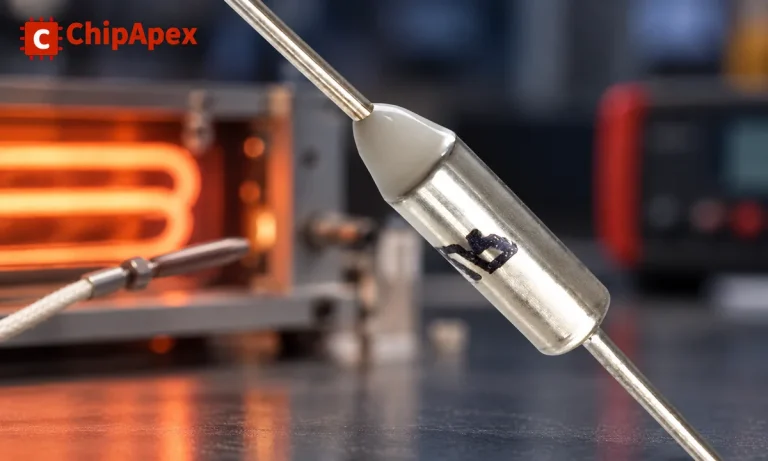
Understand thermal fuse operation, Tf, Th and Tm, electrical ratings and mounting. Check temperature limits and replacement requirements for your design.
Read More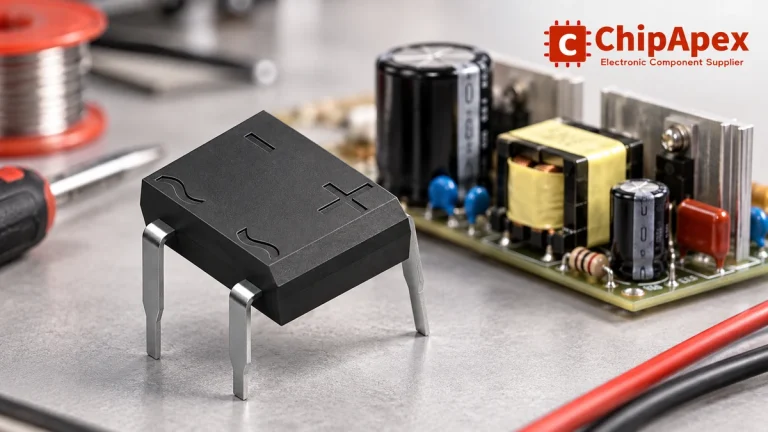
Select a bridge rectifier by reverse voltage, capacitor charging current, startup surge and cooling. Work through a stated DC voltage and ripple example.
Read More
In embedded design, the tug-of-war between cost and performance is constant. On one side, you have Microcontrollers (MCUs)—cheap, simple, and efficient. On the other,…
Read More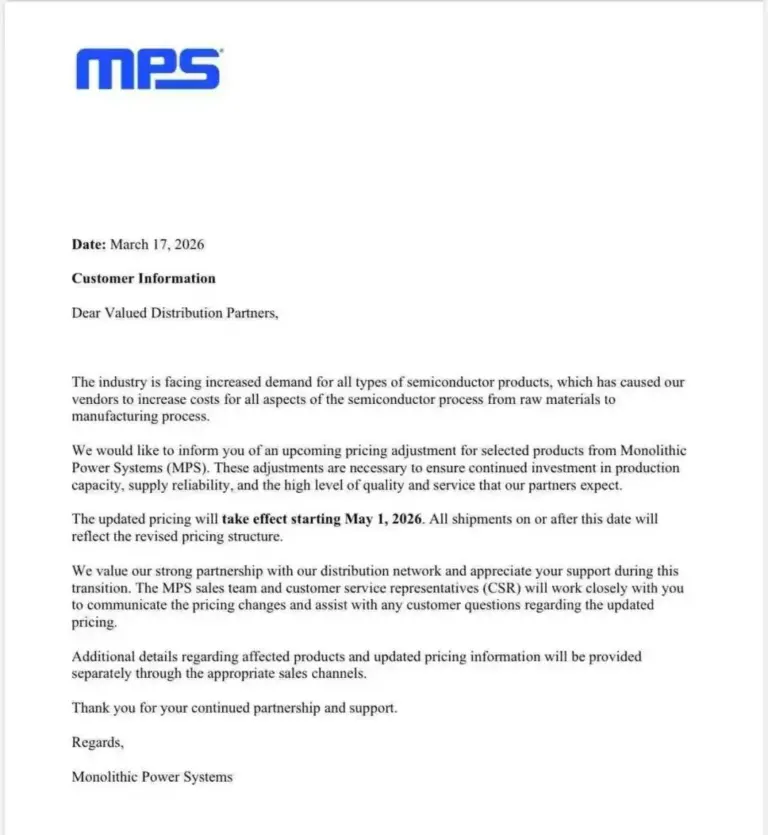
Monolithic Power Systems (MPS), a global leader in analog and mixed-signal semiconductors, has notified its distribution partners of an upcoming price increase for selected…
Read More
See when an inductor behaves linearly, how DC bias and saturation reduce inductance, and which current and temperature curves to check.
Read More
On September 22nd, it was reported that Samsung Electronics, the South Korean tech giant, had successfully passed NVIDIA’s certification test for its 12-layer HBM3E…
Read More
Embedded Integrated Circuit Modules: The Backbone of Modern Technology Embedded Integrated Circuit Modules (EICMs) have become an indispensable part of modern technology. Serving as…
Read More
The activity of extra discounts on wholesale prices is in full swing…
Please fill in your contact information and we will send you the latest wholesale price list.




