ChipApex | Global Electronic Components Supplier

SEARCH
Search Product
Search Post
— IC芯片 | 连接器 | 传感器 | 被动器件 —
Search productSearch post
— IC芯片 | 连接器 | 传感器 | 被动器件 —
Consult the customer manager about the wholesale price.
consultation hotline:86-132-6715-2157
email:[email protected]
Contact the product manager for consultation. One-stop consultation is available.
Do you want a lower wholesale price? Please send us your inquiry and we will reply immediately.
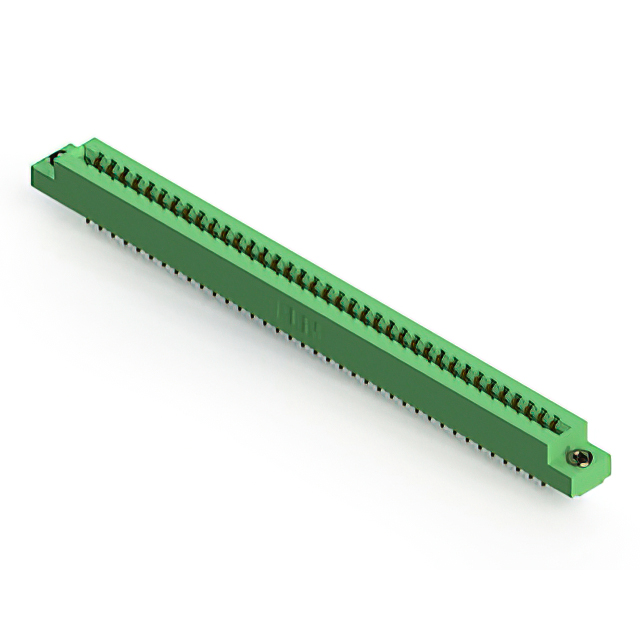
305-074-556-203 is listed in the Edgeboard Connectors range at ChipApex. The manufacturer field lists EDAC Inc.. Its product description is CONN EDGE DUAL FMALE 74POS 0.156. Review the specifications below when checking this part for your BOM.
The EDAC Inc. 305-074-556-203 is a standard card edge connector from the 305 series, designed for dual-row applications with 74 positions. It features a contact pitch of 0.156 inches (3.96 mm) and accepts printed circuit boards with a nominal thickness of 0.062 inches (1.57 mm). The component utilizes gold-plated copper alloy contacts and a green thermoplastic polyester insulator body. Rated for 5 A current, it operates within a temperature range of -40°C to +105°C and provides an insulation resistance of 5 GOhms.
Verify that the specific ordering suffix matches the required row spacing and mounting orientation. Confirm compliance with RoHS3 directives and REACH regulations before integration. Ensure the selected variant aligns with the target PCB thickness specification of 1.57 mm to guarantee proper mechanical fit and electrical performance during assembly.
Select this model when a dual-row card edge interface with a 3.96 mm pitch is required. The straddle mount design offers stability for vertical panel or PCB installations. Consider the 5 A current rating and wide operating temperature range for demanding environments. Verify compatibility with existing housing dimensions and mating card specifications.
This component belongs to the EDAC 305 series of standard card edge connectors. The series is characterized by its robust construction and versatile mounting options, including panel and PCB mount configurations. The 305 series supports various position counts while maintaining consistent electrical characteristics and material standards across the product line.
Direct substitutes include other EDAC 305 series variants with matching pin counts and pitch, such as the 305-072-556-203 or 305-080-556-203, provided the position count difference is acceptable. Cross-brand replacements require verification of identical pitch, row spacing, and mounting style.
Explore related parts through Connectors, Interconnects, all product categories, ChipApex homepage.
 305-074-556-203

305-074-556-203 is listed in the Edgeboard Connectors range at ChipApex. The manufacturer field lists EDAC Inc.. Its product description is CONN EDGE DUAL FMALE…
Read More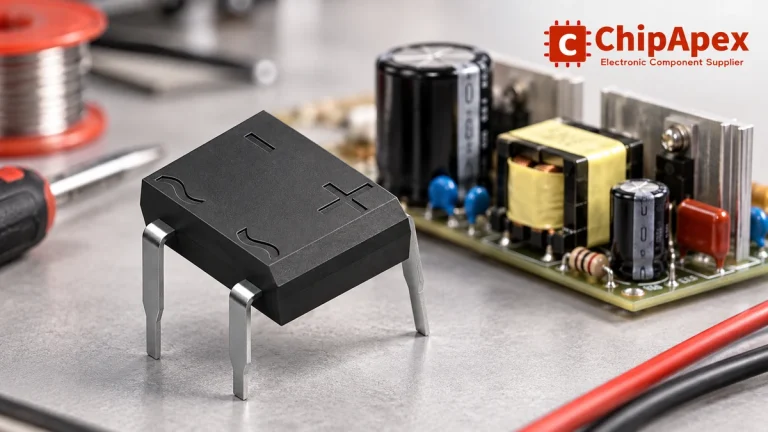
Select a bridge rectifier by reverse voltage, capacitor charging current, startup surge and cooling. Work through a stated DC voltage and ripple example.
Read More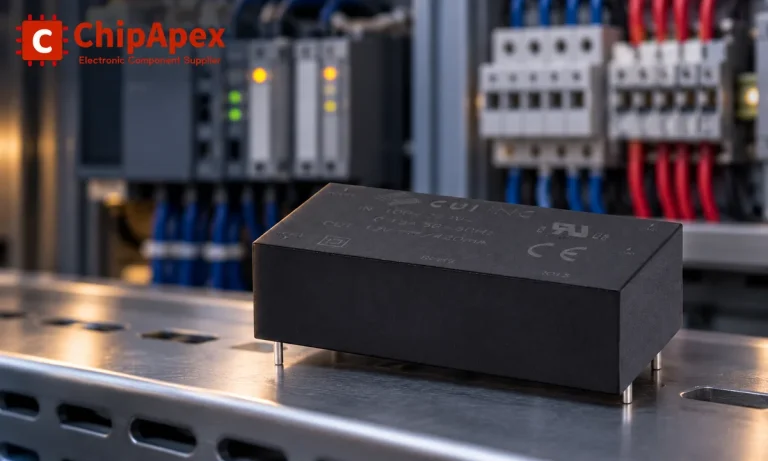
Choose an AC to DC converter by input range, output demand, isolation, efficiency and thermal derating. Compare architectures and check installation needs.
Read More
305-074-556-203 is listed in the Edgeboard Connectors range at ChipApex. The manufacturer field lists EDAC Inc.. Its product description is CONN EDGE DUAL FMALE…
Read More
305-074-556-203 is listed in the Edgeboard Connectors range at ChipApex. The manufacturer field lists EDAC Inc.. Its product description is CONN EDGE DUAL FMALE…
Read More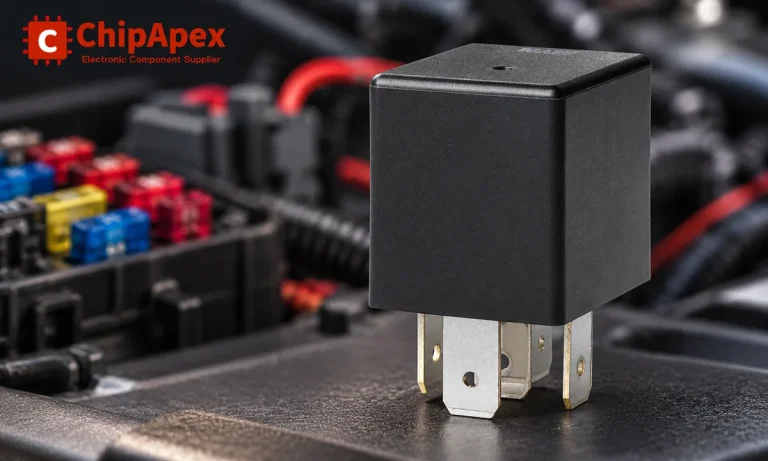
Learn the relay definition, coil and contact operation, NO and NC forms, load ratings and suppression choices. Compare mechanical, reed and solid-state types.
Read More
305-074-556-203 is listed in the Edgeboard Connectors range at ChipApex. The manufacturer field lists EDAC Inc.. Its product description is CONN EDGE DUAL FMALE…
Read More
Compare Pt100 and Pt1000 RTDs, two-, three- and four-wire connections, excitation and self-heating. Build an error budget from element to reported temperature.
Read More
See when an inductor behaves linearly, how DC bias and saturation reduce inductance, and which current and temperature curves to check.
Read More
305-074-556-203 is listed in the Edgeboard Connectors range at ChipApex. The manufacturer field lists EDAC Inc.. Its product description is CONN EDGE DUAL FMALE…
Read More
Learn how a diode conducts, how to identify anode and cathode, and when to choose rectifier, TVS, Zener or photodiode types for a circuit.
Read More
Learn why PTC resistance rises with temperature, how it differs from NTC, and which ratings matter for sensing and protection.
Read More
The activity of extra discounts on wholesale prices is in full swing…
Please fill in your contact information and we will send you the latest wholesale price list.