 ChipApex | Global Electronic Components Supplier

SEARCH
Search Product
Search Post
— IC芯片 | 连接器 | 传感器 | 被动器件 —
Search productSearch post
— IC芯片 | 连接器 | 传感器 | 被动器件 —
Consult the customer manager about the wholesale price.
consultation hotline:86-132-6715-2157
email:[email protected]
Contact the product manager for consultation. One-stop consultation is available.
Do you want a lower wholesale price? Please send us your inquiry and we will reply immediately.
The King Innovation 67025-KNGI is a twist-on wire connector designed for conventional copper-to-copper dry splicing. It supports a wire range of #22 to #14 AWG and operates at a maximum voltage of 300V. The unit features a maximum temperature rating of 105°C (221°F). Packaged in quantities of 100 per box, this blue nut connector is tested per UL and CSA standards for indoor electrical applications.
Verify the specific part number suffix against official manufacturer documentation to ensure accurate identification. Confirm that the required voltage and current ratings align with the 300V limit and #14/#22 AWG range. Ensure the application environment remains dry and indoor, as this component is not rated for wet locations or aluminum conductors. Cross-reference packaging quantities if bulk procurement is necessary.
Select this model only for copper-to-copper connections within the specified #14 to #22 AWG range. Do not use for aluminum wiring or wet location environments where waterproof connectors are required. Ensure the operating temperature does not exceed 105°C. Verify compatibility with standard twist-on installation methods for efficient deployment in residential or commercial indoor electrical systems.
This component belongs to the King Innovation Contractors Choice series, which focuses on practical solutions for standard electrical tasks. The blue color coding typically indicates the specific wire gauge capacity within the product line. As an indoor-rated connector, it serves as a fundamental joining element for low-voltage and line-voltage circuits in dry environments.
Publicly confirmed substitute part numbers are not available in the provided source material. Consult official nVent King Innovation catalogs for equivalent models with matching voltage, temperature, and wire gauge specifications before substitution.
 67025-KNGI

Compare Pt100 and Pt1000 RTDs, two-, three- and four-wire connections, excitation and self-heating. Build an error budget from element to reported temperature.
Read More
Understand how a comparator switches at a voltage threshold, why hysteresis prevents chatter, and which output and input specs matter.
Read More
Understand RF attenuator dB values, fixed and programmable types, impedance, power limits and noise tradeoffs before choosing parts for an RF signal path.
Read More
Understand how oscillators generate timing signals, how they differ from crystals, and which frequency, output and stability specs matter when choosing one.
Read More
If you’ve spent any time staring at a schematic, you’ve seen the triangle. Two inputs, one output, and a gain symbol that looks deceptively…
Read More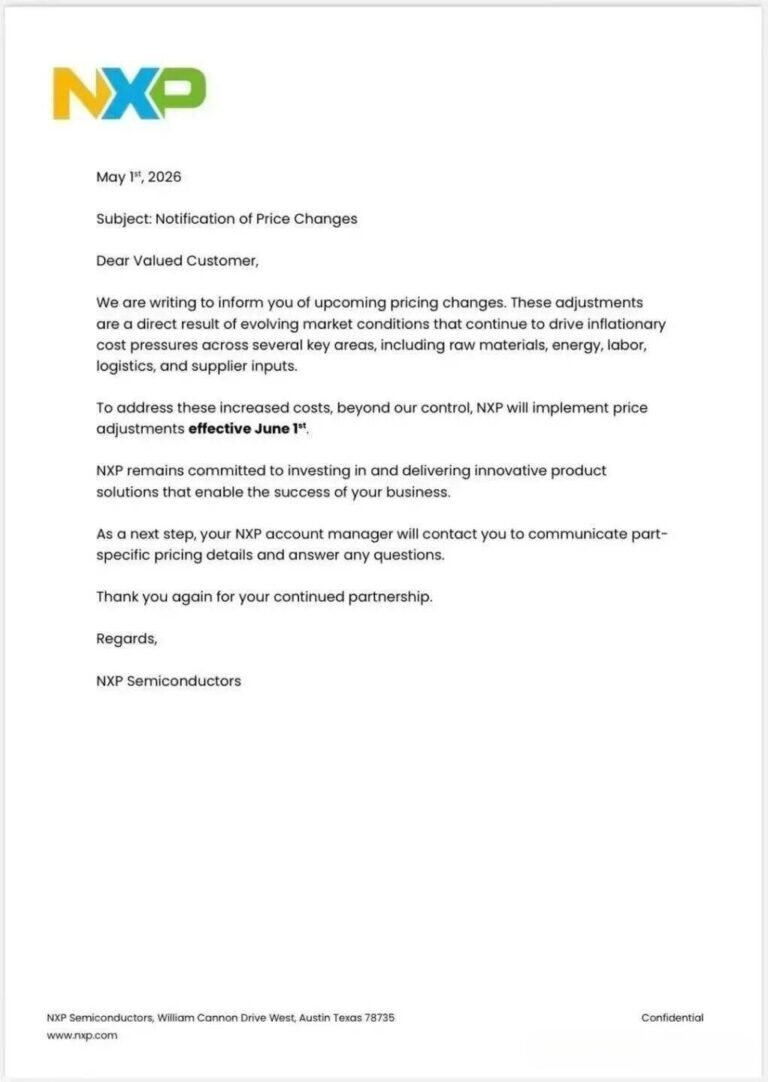
May 8, 2026 – Eindhoven, Netherlands NXP Semiconductors (NXPI), a global leader in automotive and industrial semiconductor solutions, has officially notified its worldwide channel…
Read More
Over the past week, the global electronic components sector has witnessed dual transformations in policy and technology: Coupled with mounting pressure from a worsening…
Read More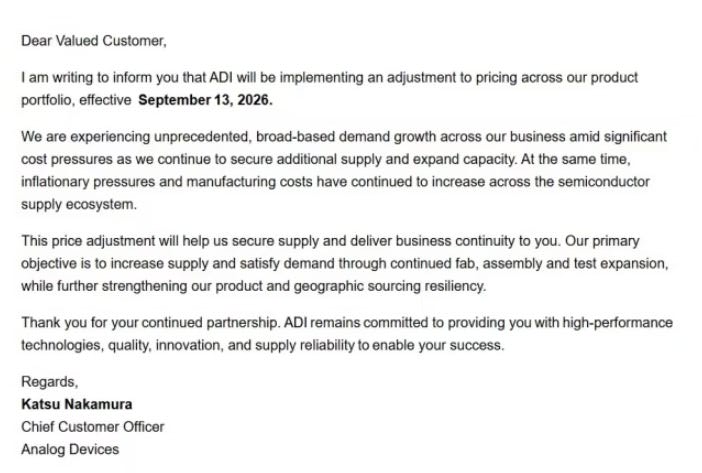
WILMINGTON, Mass. – August 11, 2026 — Analog Devices, Inc. (NASDAQ: ADI), the global leading supplier of high-performance analog, mixed-signal and digital signal processing…
Read More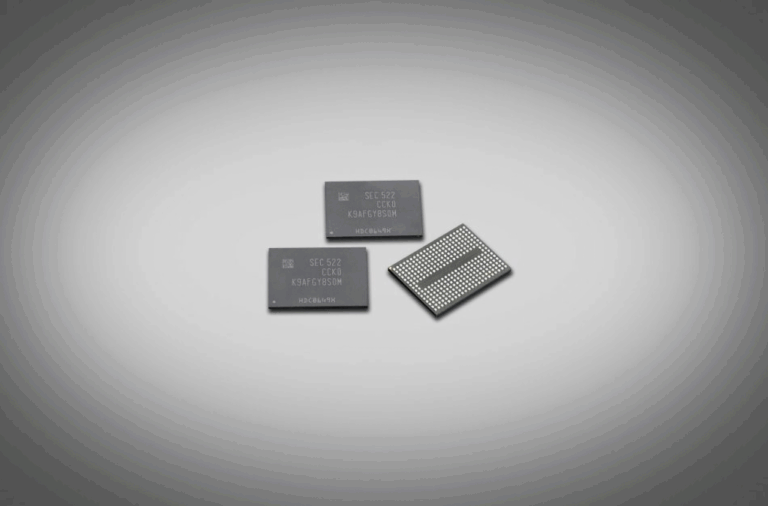
Date: May 13, 2026 The global memory industry is facing an unprecedented supply crunch in legacy MLC NAND Flash. Leading manufacturers including Samsung Electronics…
Read More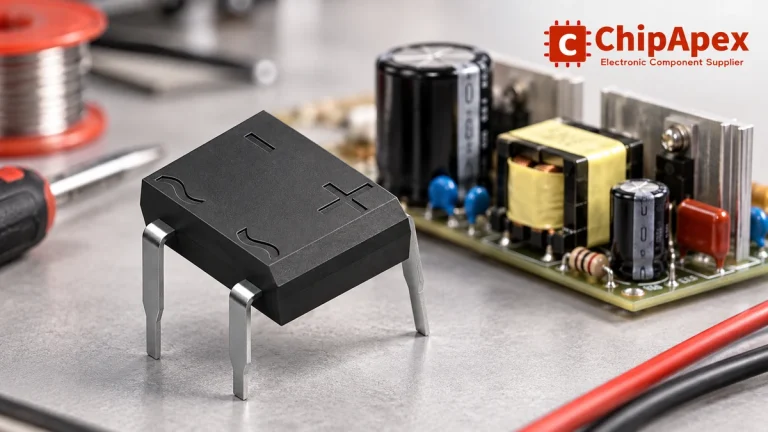
Select a bridge rectifier by reverse voltage, capacitor charging current, startup surge and cooling. Work through a stated DC voltage and ripple example.
Read More
As the backbone of modern technology, electronic components are undergoing revolutionary changes, driven by advancements in materials science, miniaturization, and smart manufacturing. From ultra-efficient…
Read More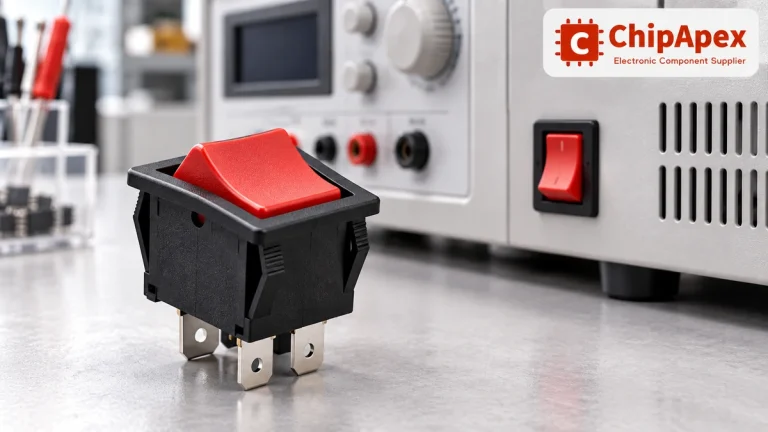
Choose a rocker switch by AC/DC ratings, contact arrangement, illumination, panel fit and sealing. Get practical checks for engineering and component sourcing.
Read More
The activity of extra discounts on wholesale prices is in full swing…
Please fill in your contact information and we will send you the latest wholesale price list.




