 ChipApex | Global Electronic Components Supplier

SEARCH
Search Product
Search Post
— IC芯片 | 连接器 | 传感器 | 被动器件 —
Search productSearch post
— IC芯片 | 连接器 | 传感器 | 被动器件 —
Consult the customer manager about the wholesale price.
consultation hotline:86-132-6715-2157
email:[email protected]
Contact the product manager for consultation. One-stop consultation is available.
Do you want a lower wholesale price? Please send us your inquiry and we will reply immediately.
7484112500 is listed in the Balun range at ChipApex. The manufacturer field lists Würth Elektronik. Its product description is BALUN 2.3GHZ-2.7GHZ 50/100 0603. Review the specifications below when checking this part for your BOM.
The Würth Elektronik 7484112500 is a multilayer chip balun designed for signal conditioning applications within the WE-BAL series. It operates in the frequency range of 2.3 GHz to 2.7 GHz with a balanced impedance of 100 Ohms and unbalanced impedance of 50 Ohms. The component features an insertion loss of 0.55 dB and a phase difference of 180° ± 10°. Packaged in a compact 0603 surface-mount footprint, it supports AEC-Q200 qualification and functions reliably between -40°C and +85°C.
Verify that the specific order matches manufacturer part number 7484112500 to ensure correct impedance and frequency specifications. Confirm AEC-Q200 compliance requirements are met if deploying in automotive contexts. Check RoHS status documentation for environmental compliance needs. Ensure soldering profiles align with SMD surface-mount technology guidelines for 0603 packages to maintain electrical integrity during assembly.
Select this component when designing circuits requiring precise 180-degree phase shifting between balanced and unbalanced lines in the 2.3-2.7 GHz range. The 0.55 dB insertion loss makes it suitable for efficiency-sensitive applications. Consider the 0603 package size for board real estate limitations. Validate thermal performance within the specified -40°C to +85°C operating range against system heat dissipation capabilities.
This device belongs to the WE-BAL series of signal conditioning components from Würth Elektronik. It serves as a passive RF transformer replacing discrete transformer implementations. The series focuses on miniaturization while maintaining high-frequency performance characteristics required for modern wireless communication protocols and industrial sensing applications.
The phase difference is specified as 180° ± 10°.
Yes, the component meets AEC-Q200 qualification standards.
Explore related parts through RF and Wireless, all product categories, ChipApex homepage.
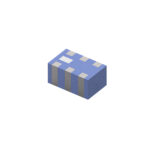 7484112500

Compare thermistors, RTDs, thermocouples and temperature ICs. Learn how range, accuracy, response, interfaces and mounting affect component selection.
Read More
7484112500 is listed in the Balun range at ChipApex. The manufacturer field lists Würth Elektronik. Its product description is BALUN 2.3GHZ-2.7GHZ 50/100 0603. Review…
Read More
7484112500 is listed in the Balun range at ChipApex. The manufacturer field lists Würth Elektronik. Its product description is BALUN 2.3GHZ-2.7GHZ 50/100 0603. Review…
Read More
7484112500 is listed in the Balun range at ChipApex. The manufacturer field lists Würth Elektronik. Its product description is BALUN 2.3GHZ-2.7GHZ 50/100 0603. Review…
Read More
7484112500 is listed in the Balun range at ChipApex. The manufacturer field lists Würth Elektronik. Its product description is BALUN 2.3GHZ-2.7GHZ 50/100 0603. Review…
Read More
See how a MEMS gyroscope measures angular rate, why its angle estimate drifts, and which range, noise, interface and temperature specs to compare.
Read More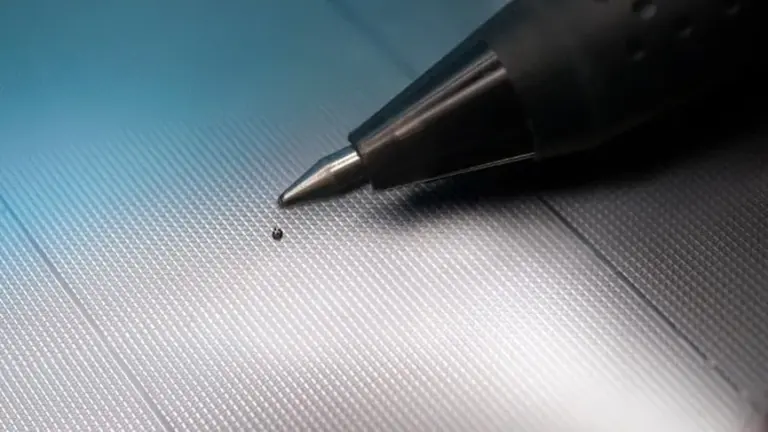
7484112500 is listed in the Balun range at ChipApex. The manufacturer field lists Würth Elektronik. Its product description is BALUN 2.3GHZ-2.7GHZ 50/100 0603. Review…
Read More
Choose a DIP switch by contact type, coded positions, footprint and signal ratings. Check logic polarity, assembly conditions and PCB configuration behavior.
Read More
7484112500 is listed in the Balun range at ChipApex. The manufacturer field lists Würth Elektronik. Its product description is BALUN 2.3GHZ-2.7GHZ 50/100 0603. Review…
Read More
7484112500 is listed in the Balun range at ChipApex. The manufacturer field lists Würth Elektronik. Its product description is BALUN 2.3GHZ-2.7GHZ 50/100 0603. Review…
Read More
7484112500 is listed in the Balun range at ChipApex. The manufacturer field lists Würth Elektronik. Its product description is BALUN 2.3GHZ-2.7GHZ 50/100 0603. Review…
Read More
See when an inductor behaves linearly, how DC bias and saturation reduce inductance, and which current and temperature curves to check.
Read More
The activity of extra discounts on wholesale prices is in full swing…
Please fill in your contact information and we will send you the latest wholesale price list.




