ChipApex | Global Electronic Components Supplier

SEARCH
Search Product
Search Post
— IC芯片 | 连接器 | 传感器 | 被动器件 —
Search productSearch post
— IC芯片 | 连接器 | 传感器 | 被动器件 —
Consult the customer manager about the wholesale price.
consultation hotline:86-132-6715-2157
email:[email protected]
Contact the product manager for consultation. One-stop consultation is available.
Do you want a lower wholesale price? Please send us your inquiry and we will reply immediately.
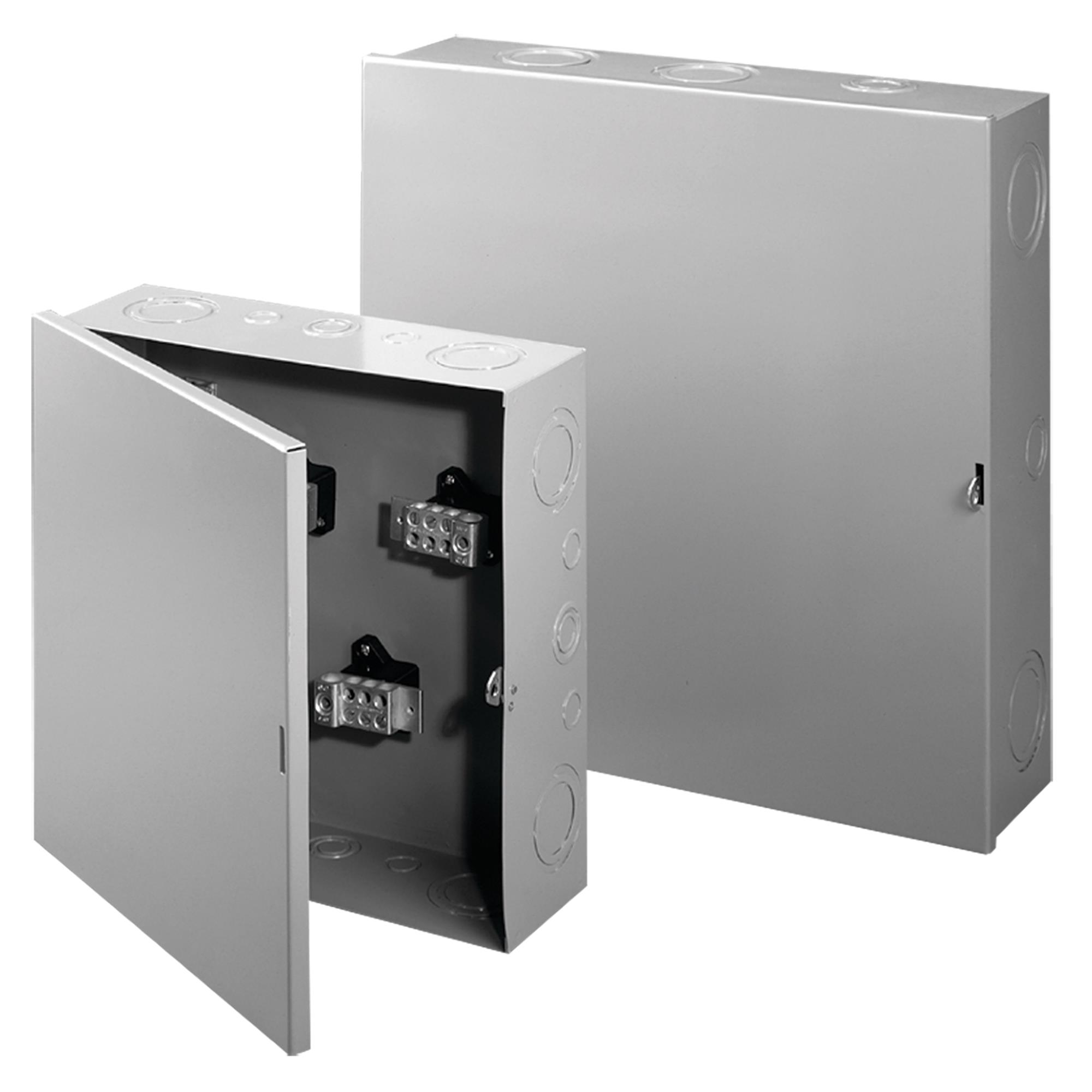
The nVent Hoffman ASB223R is a Type 1 splitter box designed for indoor use, constructed from steel with a gray polyester powder paint finish. It features dimensions of 16 inches in height, 16 inches in width, and 5 inches in depth. The unit supports a 225-ampere main lug rating and includes three branch lugs rated at 175 amperes each. It operates at 600 volts AC and is configured for three-wire systems. The enclosure utilizes standard hinges and a pull latch mechanism.
Verify the specific voltage and wire configuration requirements against the official datasheet before procurement. Confirm that the 225A main and 175A branch ratings align with the intended load calculations. Ensure the installation environment meets the Type 1 indoor protection standards specified by the manufacturer.
Select this model when a Type 1 indoor enclosure is required for splitting feeders in a three-wire system. Consider the 16x16x5 inch footprint for space constraints. Verify compatibility with existing busbar or terminal block setups if modifications are needed beyond the pre-installed components.
This component belongs to the S90B series of splitter boxes manufactured by nVent Hoffman. It is part of a line of steel enclosures designed for indoor electrical distribution tasks. The series typically offers various sizes and ratings to accommodate different feeder and branch circuit requirements within industrial and commercial settings.
Check for updated nVent Hoffman part numbers as product lines evolve. Ensure any substitute maintains the same Type 1 rating, 225A main capacity, and physical dimensions for direct replacement.
 ASB223R
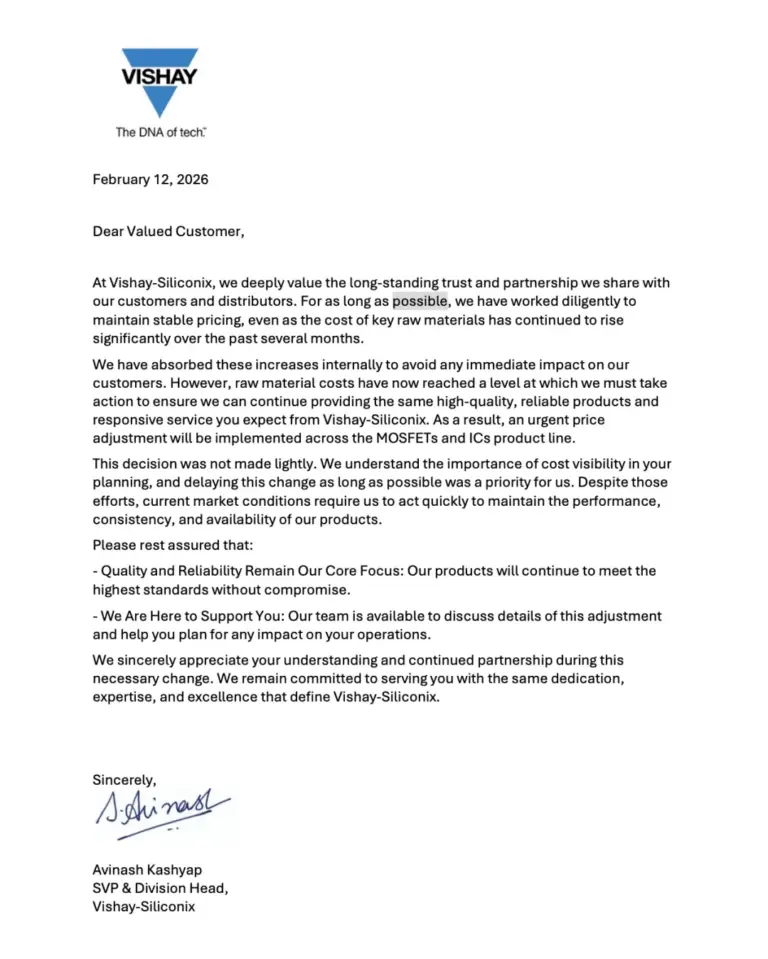
Vishay Intertechnology, Inc., a global leader in discrete semiconductors and passive electronic components, has officially announced a price adjustment for its Metal-Oxide-Semiconductor Field-Effect Transistors…
Read More
Compare Pt100 and Pt1000 RTDs, two-, three- and four-wire connections, excitation and self-heating. Build an error budget from element to reported temperature.
Read More
Understand tactile switches, PCB and keyboard differences, four-pin wiring, debounce, force, travel and replacement checks for reliable control inputs.
Read More
Compare thermistors, RTDs, thermocouples and temperature ICs. Learn how range, accuracy, response, interfaces and mounting affect component selection.
Read More
CHICAGO, USA – May 27, 2026 – Global leading interconnect manufacturer Molex officially issued a global distributor price adjustment notice on May 27, confirming…
Read More
Learn what data acquisition means, from sensors and conditioning to sampling and storage. Review channel timing, wiring, calibration and data quality.
Read More
Choose a DIP switch by contact type, coded positions, footprint and signal ratings. Check logic polarity, assembly conditions and PCB configuration behavior.
Read More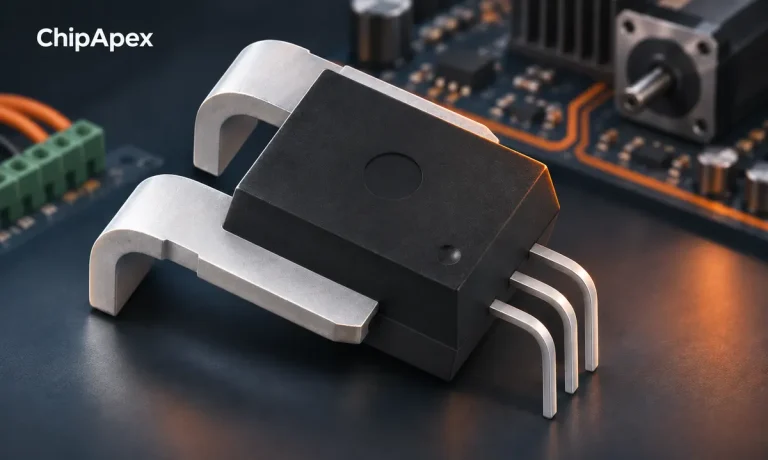
Compare Hall, shunt, current transformer and Rogowski sensing. Check AC/DC capability, accuracy, isolation, heat and response before selecting a sensor.
Read More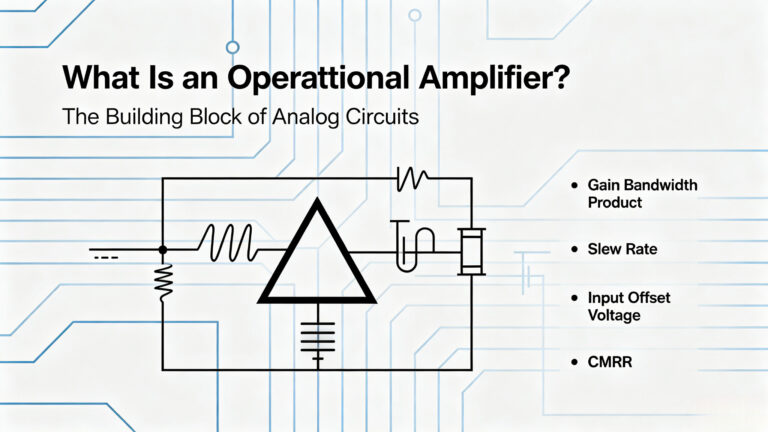
If you’ve spent any time staring at a schematic, you’ve seen the triangle. Two inputs, one output, and a gain symbol that looks deceptively…
Read More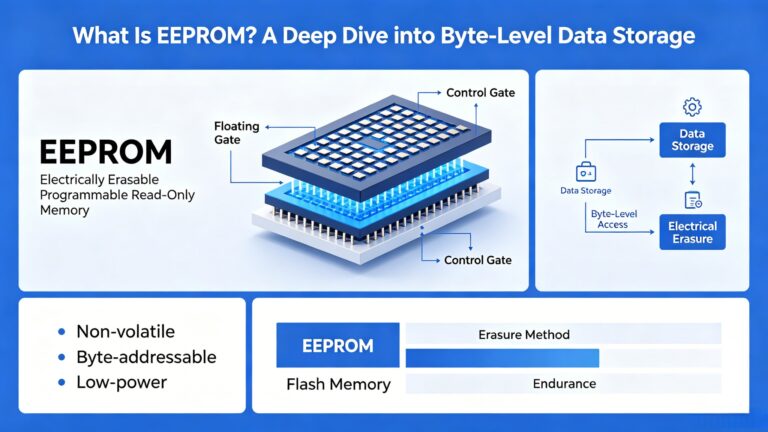
In the vast landscape of memory technology, EEPROM (Electrically Erasable Programmable Read-Only Memory) often plays the unsung hero. While NAND Flash grabs headlines for…
Read More
Understand UART protocol framing, baud rate and electrical interfaces. Learn 8N1 timing, TX/RX wiring, buffering and practical troubleshooting steps.
Read More
Understand how oscillators generate timing signals, how they differ from crystals, and which frequency, output and stability specs matter when choosing one.
Read More
The activity of extra discounts on wholesale prices is in full swing…
Please fill in your contact information and we will send you the latest wholesale price list.