ChipApex | Global Electronic Components Supplier

SEARCH
Search Product
Search Post
— IC芯片 | 连接器 | 传感器 | 被动器件 —
Search productSearch post
— IC芯片 | 连接器 | 传感器 | 被动器件 —
Consult the customer manager about the wholesale price.
consultation hotline:86-132-6715-2157
email:[email protected]
Contact the product manager for consultation. One-stop consultation is available.
Do you want a lower wholesale price? Please send us your inquiry and we will reply immediately.
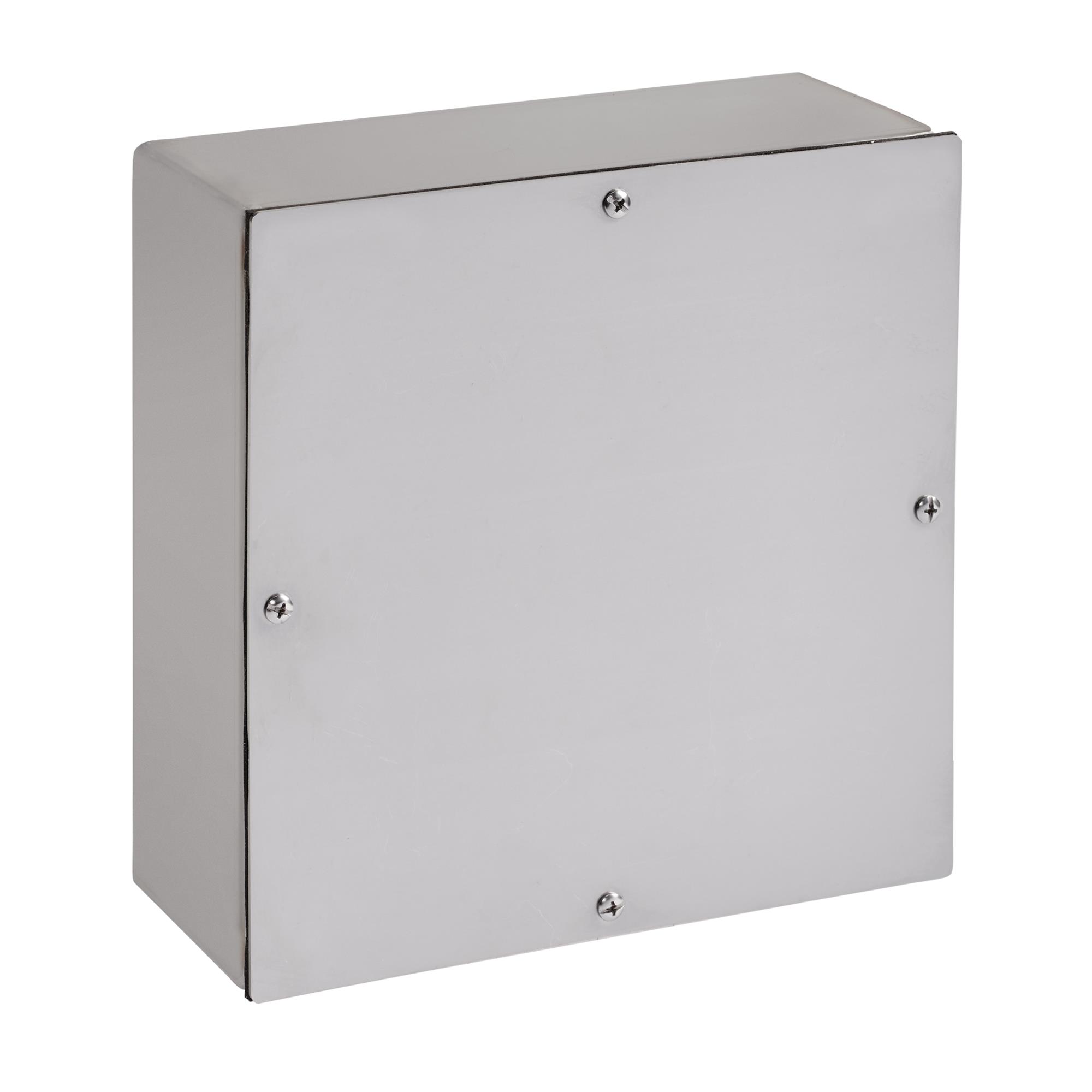
The Hoffman Enclosures ASE18X18X6SSNK is a Type 4X pull box constructed from 304 stainless steel. It features an external screw cover design and measures 18 inches in length, 18 inches in width, and 6 inches in depth. The unit is rated for outdoor use and provides NEMA 4X protection against corrosion, water, and dust ingress. This enclosure is designed for electrical wiring applications requiring high durability and environmental resistance.
Verify the specific material grade (304 stainless steel) and dimensional accuracy (18x18x6 inches) against project requirements. Confirm the Type 4X rating is suitable for the intended outdoor or wet location application. Ensure the screw cover mechanism meets security needs. Cross-reference with official manufacturer documentation to validate compliance with relevant safety standards before procurement.
Select this model when high corrosion resistance is critical due to the 304 stainless steel construction. The 18x18x6 inch dimensions provide ample space for wire pulls compared to smaller junction boxes. The Type 4X rating makes it suitable for harsh outdoor conditions where standard enclosures might fail. Consider the weight and mounting requirements associated with metal enclosures.
This component belongs to the Hoffman ASE series of pull boxes and enclosures. It is part of a broader range of electrical housing solutions designed for various environmental ratings. The 'SS' designation typically indicates stainless steel construction, distinguishing it from painted steel alternatives within the same dimensional family.
Direct substitutes include other Type 4X stainless steel pull boxes with identical 18x18x6 inch dimensions. Verify that alternative models maintain the 304 stainless steel specification and compatible mounting hole patterns. Ensure any replacement also carries the appropriate NEMA 4X certification for the specific installation environment.
 ASE18X18X6SSNK

Compare RC, crystal and MEMS oscillator circuits. Check ppm, jitter, load capacitance, startup margin and output compatibility before choosing a clock source.
Read More
[Shenzhen/Shanghai/Beijing, January 2025] — As global digital transformation accelerates, the electronic components industry has reached a critical inflection point in 2025. Emerging fields such…
Read More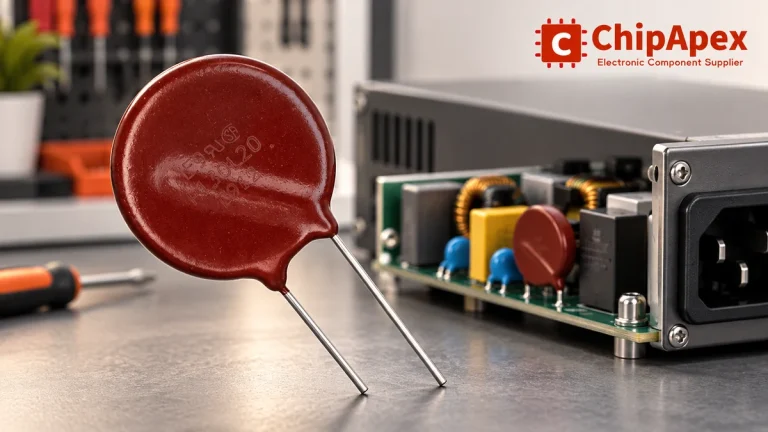
Select MOV varistors by continuous voltage, clamping behavior, surge waveform and repetition. Check thermal disconnection, fuse coordination and replacements.
Read More
See how a MEMS gyroscope measures angular rate, why its angle estimate drifts, and which range, noise, interface and temperature specs to compare.
Read More
PLANO, Texas – March 20, 2026 – Diodes Incorporated (Nasdaq: DIOD), a leading global manufacturer and supplier of high-quality application-specific standard products in the…
Read More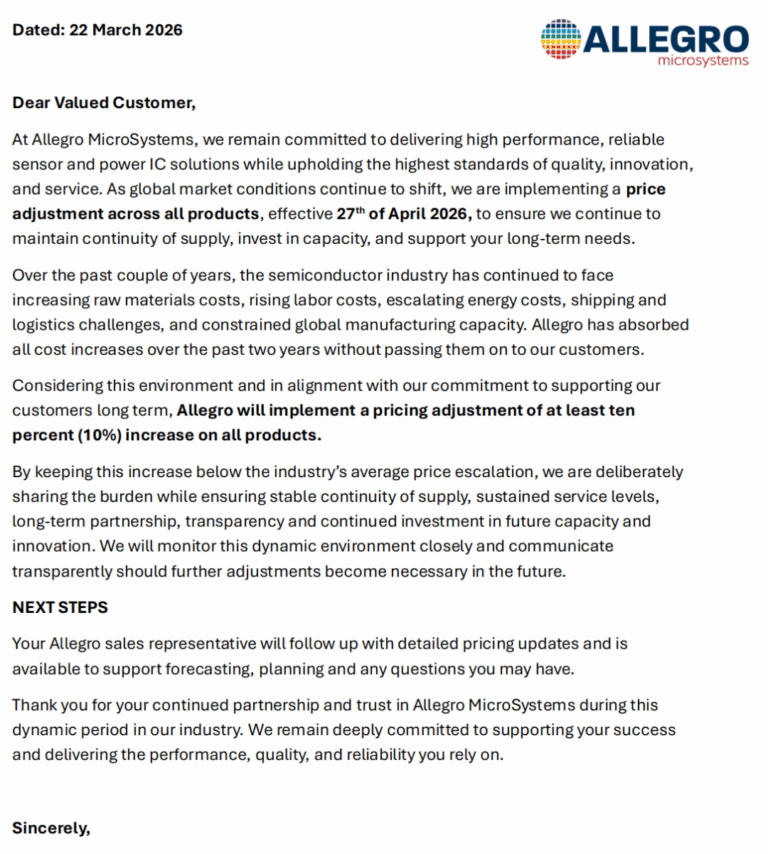
Manchester, New Hampshire, USA – March 22, 2026 – Allegro MicroSystems, Inc. (Nasdaq: ALGM), a global leader in high-performance power and sensing semiconductor solutions…
Read More
Learn how an analog front end conditions sensor signals. Compare gain, noise, filtering, ADC settling and integration options before selecting components.
Read More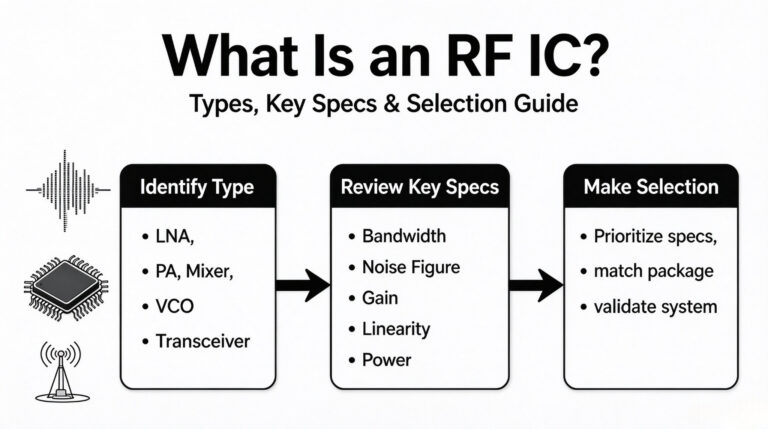
An RF IC, or radio-frequency integrated circuit, is a chip that processes wireless signals between the antenna and the baseband processor. Instead of building…
Read More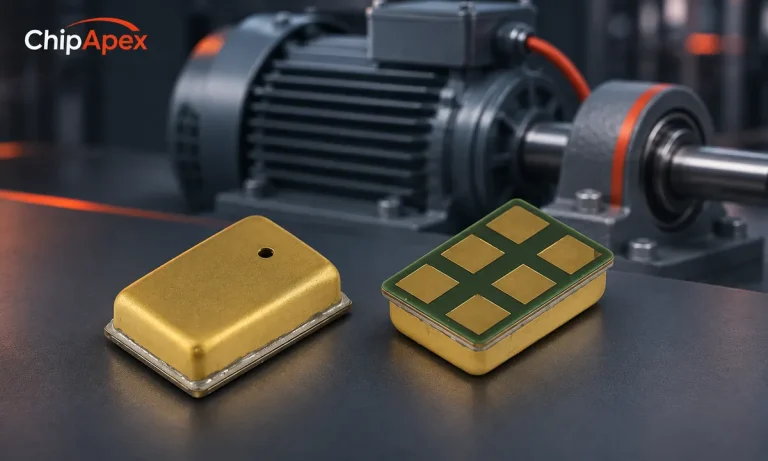
Choose a vibration sensor for machine monitoring. Compare sensing methods, bandwidth, noise and mounting, then define the signal-chain requirements.
Read More
Choose an AC to DC converter by input range, output demand, isolation, efficiency and thermal derating. Compare architectures and check installation needs.
Read More
Understand UART protocol framing, baud rate and electrical interfaces. Learn 8N1 timing, TX/RX wiring, buffering and practical troubleshooting steps.
Read More
Understand how a comparator switches at a voltage threshold, why hysteresis prevents chatter, and which output and input specs matter.
Read More
The activity of extra discounts on wholesale prices is in full swing…
Please fill in your contact information and we will send you the latest wholesale price list.