ChipApex | Global Electronic Components Supplier

SEARCH
Search Product
Search Post
— IC芯片 | 连接器 | 传感器 | 被动器件 —
Search productSearch post
— IC芯片 | 连接器 | 传感器 | 被动器件 —
Consult the customer manager about the wholesale price.
consultation hotline:86-132-6715-2157
email:[email protected]
Contact the product manager for consultation. One-stop consultation is available.
Do you want a lower wholesale price? Please send us your inquiry and we will reply immediately.
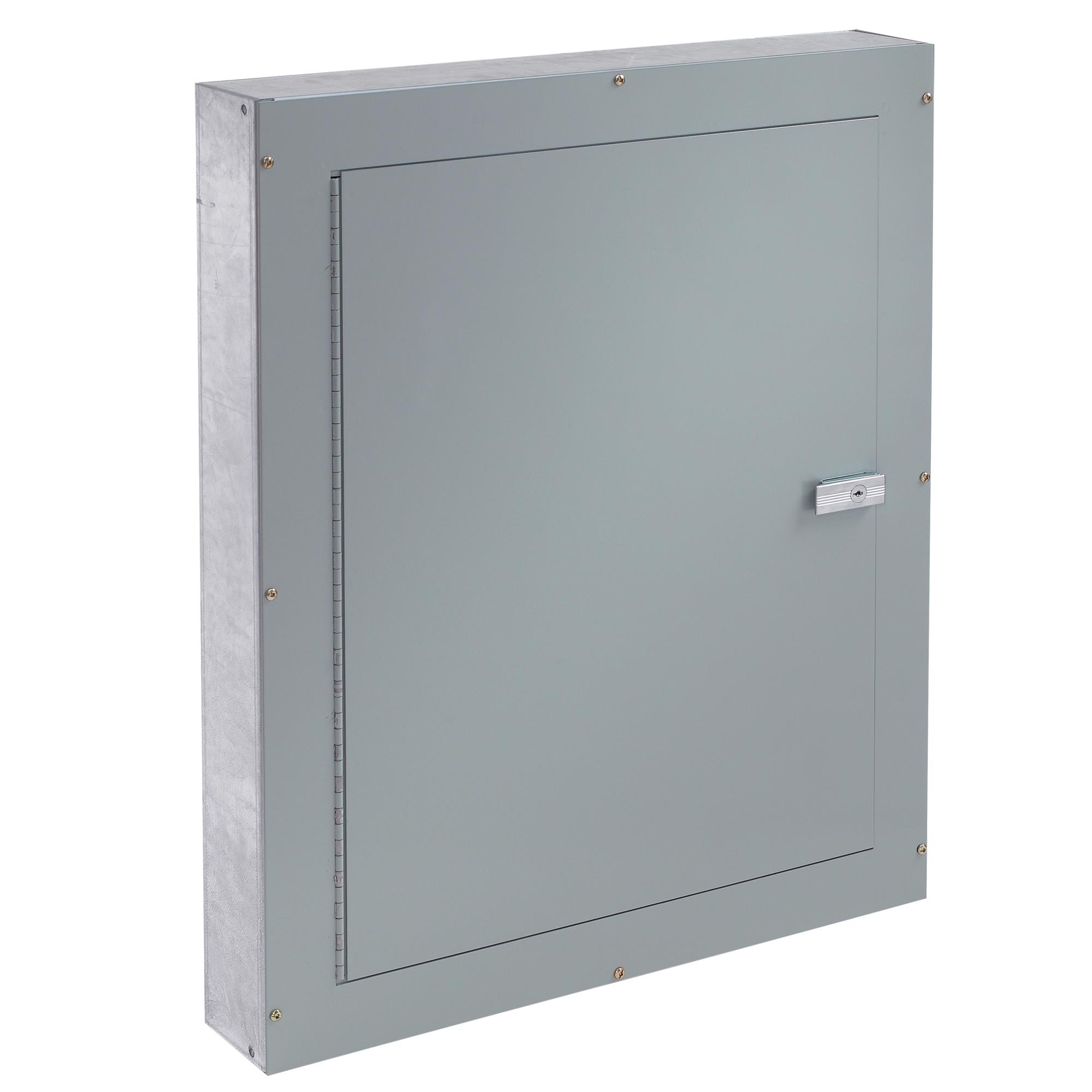
The ATC18124F is a flush-mount telephone cabinet manufactured by Hoffman Enclosures, Inc. It features a continuous hinge design and measures 18 inches in height, 12 inches in width, and 4 inches in depth. Constructed for telecommunications infrastructure, this enclosure provides physical protection for internal components while maintaining a low-profile aesthetic suitable for wall mounting.
Verify the specific finish and hardware configuration against project requirements before ordering. Confirm that the 18x12x4 inch footprint aligns with existing wall cutouts or mounting surfaces. Ensure compatibility with standard telephone rack accessories if modular expansion is planned.
Select this model when space constraints require a shallow 4-inch depth profile. The continuous hinge offers superior durability compared to standard hinges for high-frequency access scenarios. Consider stainless steel alternatives if the installation environment requires enhanced corrosion resistance beyond standard painted steel.
This unit belongs to the ATC series of telephone cabinets designed specifically for structured cabling environments. Unlike general-purpose NEMA enclosures, these units are dimensioned to accommodate standard telephone racks and patch panels efficiently within residential or light commercial building infrastructures.
Direct substitutes include other Hoffman ATC series models with identical 18x12x4 dimensions. Verify hinge type and mounting hole patterns when cross-referencing with competitor brands such as Panduit or CommScope to ensure mechanical interchangeability.
 ATC18124F

The Dutch government’s intervention in the control of Nexperia (Anshi Semiconductor) is triggering a chain reaction of turmoil in the global power semiconductor market.…
Read More
As 2025 draws to a close, the global semiconductor industry stands at a crossroads. Intertwined with escalating geopolitical tensions, supply chain disruptions, and groundbreaking…
Read More
Choose a DIP switch by contact type, coded positions, footprint and signal ratings. Check logic polarity, assembly conditions and PCB configuration behavior.
Read More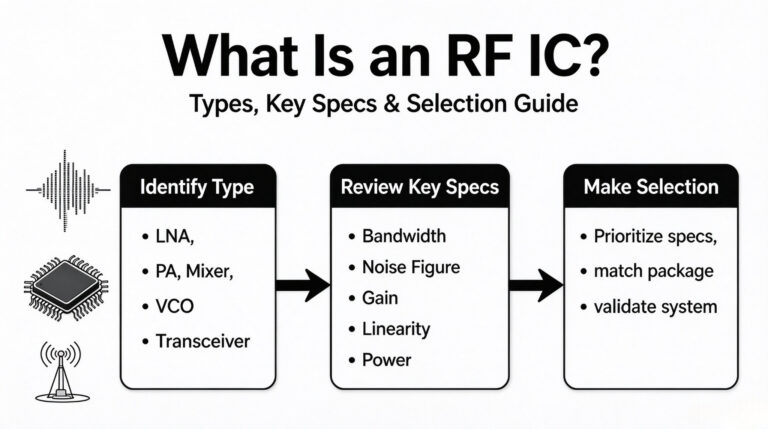
An RF IC, or radio-frequency integrated circuit, is a chip that processes wireless signals between the antenna and the baseband processor. Instead of building…
Read More
Choose LED drivers by current, string voltage, dimming and thermal limits. Understand constant-current operation and the checks needed for your load.
Read More
Compare Hall, shunt, current transformer and Rogowski sensing. Check AC/DC capability, accuracy, isolation, heat and response before selecting a sensor.
Read More
Choose an ADC converter by resolution, sample rate, noise and input design. Review practical tradeoffs and prepare component requirements for ChipApex.
Read More
Learn why PTC resistance rises with temperature, how it differs from NTC, and which ratings matter for sensing and protection.
Read More
Learn what an IMU measures, how accelerometers and gyroscopes work together, why orientation estimates drift, and what to compare.
Read More
Choose logic inverter ICs by thresholds, supply, output drive and delay. Compare standard and Schmitt-trigger inputs, power sequencing and replacement checks.
Read More
Learn what data acquisition means, from sensors and conditioning to sampling and storage. Review channel timing, wiring, calibration and data quality.
Read More
Choose a reed relay for signal switching. Understand hot and cold switching, leakage, contact resistance, isolation and measurement settling requirements.
Read More
The activity of extra discounts on wholesale prices is in full swing…
Please fill in your contact information and we will send you the latest wholesale price list.