 ChipApex | Global Electronic Components Supplier

SEARCH
Search Product
Search Post
— IC芯片 | 连接器 | 传感器 | 被动器件 —
Search productSearch post
— IC芯片 | 连接器 | 传感器 | 被动器件 —
Consult the customer manager about the wholesale price.
consultation hotline:86-132-6715-2157
email:[email protected]
Contact the product manager for consultation. One-stop consultation is available.
Do you want a lower wholesale price? Please send us your inquiry and we will reply immediately.
BD80FC0WEFJ-E2 is listed in the Voltage Regulators - Linear, Low Drop Out (LDO) Regulators range at ChipApex. The manufacturer field lists Rohm Semiconductor. Its product description is IC REG LINEAR 8V 1A 8-HTSOP-J. Review the specifications below when checking this part for your BOM.
The BD80FC0WEFJ-E2 is a fixed-output low-dropout (LDO) regulator manufactured by ROHM Semiconductor. It provides an 8 V output with a maximum continuous current of 1 A. The device operates within an input voltage range of 4 V to 26.5 V and features a typical dropout voltage of 300 mV. It utilizes an HTSOP-J8 surface-mount package and supports operation temperatures from -25°C to +85°C.
Verify the specific suffix E2 against official ROHM documentation to confirm manufacturing line compatibility and exact electrical characteristics. Confirm RoHS compliance status directly with the manufacturer or authorized distributors prior to procurement. Ensure the HTSOP-J8 package footprint matches your PCB design requirements.
Select this component when a fixed 8 V output at 1 A is required with low saturation voltage. Consider the HTSOP-J8 package for space-constrained surface-mount designs. Verify that the input voltage remains within the 4 V to 26.5 V range and that the operating temperature stays between -25°C and +85°C for reliable performance.
This part belongs to the BD80FC0 series of low-saturation regulators, which includes various fixed output voltages such as 3.0 V, 3.3 V, 5.0 V, 6.0 V, 7.0 V, 9.0 V, 10.0 V, 12.0 V, and 15.0 V. The series is available in multiple packages including HTSOP-J8, TO252-3, and TO252-5, offering flexibility for different power management applications.
The BD80FC0JEFJ-E2 is a recommended substitute with identical electric characteristics but produced on a different line. Other series members like BDJ2FC0WEFJ-E2 (12 V) or BDJ5FC0WEFJ-E2 (15 V) share similar packaging but differ in output voltage.
Explore related parts through Power Management (PMIC), Integrated Circuits (ICs), all product categories, ChipApex homepage.
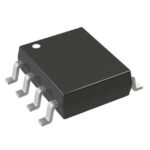 BD80FC0WEFJ-E2

BD80FC0WEFJ-E2 is listed in the Voltage Regulators - Linear, Low Drop Out (LDO) Regulators range at ChipApex. The manufacturer field lists Rohm Semiconductor. Its…
Read More
BD80FC0WEFJ-E2 is listed in the Voltage Regulators - Linear, Low Drop Out (LDO) Regulators range at ChipApex. The manufacturer field lists Rohm Semiconductor. Its…
Read More
BD80FC0WEFJ-E2 is listed in the Voltage Regulators - Linear, Low Drop Out (LDO) Regulators range at ChipApex. The manufacturer field lists Rohm Semiconductor. Its…
Read More
Understand how oscillators generate timing signals, how they differ from crystals, and which frequency, output and stability specs matter when choosing one.
Read More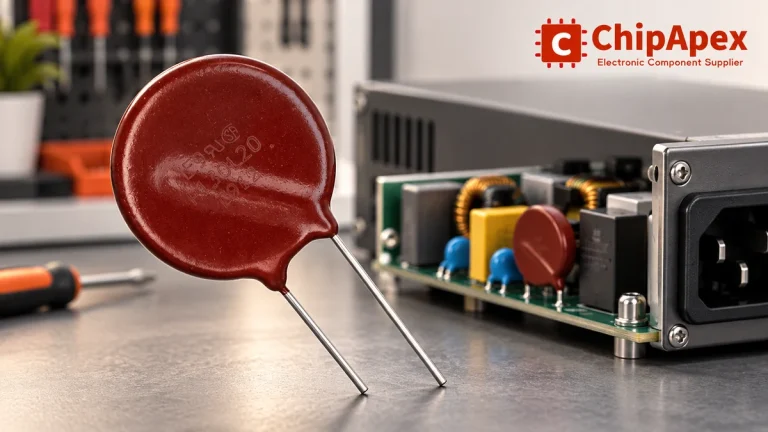
Select MOV varistors by continuous voltage, clamping behavior, surge waveform and repetition. Check thermal disconnection, fuse coordination and replacements.
Read MoreBD80FC0WEFJ-E2 is listed in the Voltage Regulators - Linear, Low Drop Out (LDO) Regulators range at ChipApex. The manufacturer field lists Rohm Semiconductor. Its…
Read More
BD80FC0WEFJ-E2 is listed in the Voltage Regulators - Linear, Low Drop Out (LDO) Regulators range at ChipApex. The manufacturer field lists Rohm Semiconductor. Its…
Read More
Compare thermistors, RTDs, thermocouples and temperature ICs. Learn how range, accuracy, response, interfaces and mounting affect component selection.
Read More
BD80FC0WEFJ-E2 is listed in the Voltage Regulators - Linear, Low Drop Out (LDO) Regulators range at ChipApex. The manufacturer field lists Rohm Semiconductor. Its…
Read More
Learn what a battery BMS does, how protection differs from charging, and which pack specifications to check when sourcing BMS components through ChipApex.
Read More
BD80FC0WEFJ-E2 is listed in the Voltage Regulators - Linear, Low Drop Out (LDO) Regulators range at ChipApex. The manufacturer field lists Rohm Semiconductor. Its…
Read More
Compare RC, crystal and MEMS oscillator circuits. Check ppm, jitter, load capacitance, startup margin and output compatibility before choosing a clock source.
Read More
The activity of extra discounts on wholesale prices is in full swing…
Please fill in your contact information and we will send you the latest wholesale price list.




