ChipApex | Global Electronic Components Supplier

SEARCH
Search Product
Search Post
— IC芯片 | 连接器 | 传感器 | 被动器件 —
Search productSearch post
— IC芯片 | 连接器 | 传感器 | 被动器件 —
Consult the customer manager about the wholesale price.
consultation hotline:86-132-6715-2157
email:[email protected]
Contact the product manager for consultation. One-stop consultation is available.
Do you want a lower wholesale price? Please send us your inquiry and we will reply immediately.
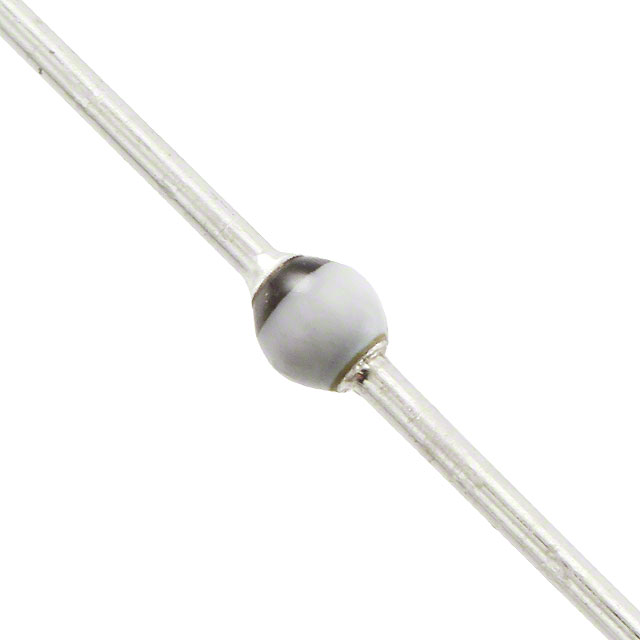
BZW03C27-TAP is listed in the Single Zener Diodes range at ChipApex. The manufacturer field lists Vishay General Semiconductor - Diodes Division. Its product description is DIODE ZENER 27V 1.85W SOD64. Review the specifications below when checking this part for your BOM.
The BZW03C27-TAP is a bidirectional TVS diode from Vishay General Semiconductor, designed for transient voltage suppression in electronic circuits. It features a DO-214AB (SMB) surface-mount package and offers a standoff voltage of 27V with a maximum clamping voltage of 44V at peak pulse current. The device provides robust protection against electrostatic discharge and other transient events, ensuring reliable performance in sensitive applications.
Verify the exact part number suffix TAP indicates tape-and-reel packaging when ordering. Confirm the manufacturer datasheet revision matches your design requirements. Ensure compatibility with your PCB footprint and reflow soldering profile. Check for any specific handling or storage conditions outlined in the official documentation before procurement.
Select this component based on its 27V standoff voltage suitability for your circuit's operating range. Consider the SMB package size for space constraints. Evaluate the peak pulse power rating against expected transient energy levels. Verify bidirectional operation is necessary for your AC signal lines compared to unidirectional alternatives.
This TVS diode belongs to Vishay's BZW03 series, which offers various standoff voltages in the SMB package. The series is widely used for general-purpose transient protection. The BZW03C27 variant specifically targets applications requiring protection around the 27V threshold level.
Check for direct cross-reference part numbers from other manufacturers offering identical electrical specifications and package dimensions. Ensure any substitute maintains the same bidirectional characteristic and peak pulse power rating. Verify pinout compatibility if physical interchangeability is required.
Explore related parts through Zener, Diodes, Discrete Semiconductor Products, all product categories.
 BZW03C27-TAP

Understand how oscillators generate timing signals, how they differ from crystals, and which frequency, output and stability specs matter when choosing one.
Read More
BZW03C27-TAP is listed in the Single Zener Diodes range at ChipApex. The manufacturer field lists Vishay General Semiconductor - Diodes Division. Its product description…
Read More
BZW03C27-TAP is listed in the Single Zener Diodes range at ChipApex. The manufacturer field lists Vishay General Semiconductor - Diodes Division. Its product description…
Read More
BZW03C27-TAP is listed in the Single Zener Diodes range at ChipApex. The manufacturer field lists Vishay General Semiconductor - Diodes Division. Its product description…
Read More
BZW03C27-TAP is listed in the Single Zener Diodes range at ChipApex. The manufacturer field lists Vishay General Semiconductor - Diodes Division. Its product description…
Read More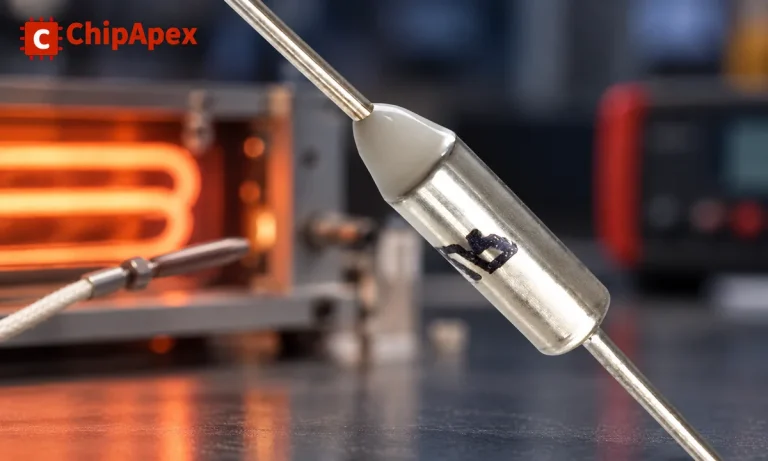
Understand thermal fuse operation, Tf, Th and Tm, electrical ratings and mounting. Check temperature limits and replacement requirements for your design.
Read More
BZW03C27-TAP is listed in the Single Zener Diodes range at ChipApex. The manufacturer field lists Vishay General Semiconductor - Diodes Division. Its product description…
Read More
BZW03C27-TAP is listed in the Single Zener Diodes range at ChipApex. The manufacturer field lists Vishay General Semiconductor - Diodes Division. Its product description…
Read More
BZW03C27-TAP is listed in the Single Zener Diodes range at ChipApex. The manufacturer field lists Vishay General Semiconductor - Diodes Division. Its product description…
Read More
See how a MEMS gyroscope measures angular rate, why its angle estimate drifts, and which range, noise, interface and temperature specs to compare.
Read More
BZW03C27-TAP is listed in the Single Zener Diodes range at ChipApex. The manufacturer field lists Vishay General Semiconductor - Diodes Division. Its product description…
Read More
Learn why PTC resistance rises with temperature, how it differs from NTC, and which ratings matter for sensing and protection.
Read More
The activity of extra discounts on wholesale prices is in full swing…
Please fill in your contact information and we will send you the latest wholesale price list.