ChipApex | Global Electronic Components Supplier

SEARCH
Search Product
Search Post
— IC芯片 | 连接器 | 传感器 | 被动器件 —
Search productSearch post
— IC芯片 | 连接器 | 传感器 | 被动器件 —
Consult the customer manager about the wholesale price.
consultation hotline:86-132-6715-2157
email:[email protected]
Contact the product manager for consultation. One-stop consultation is available.
Do you want a lower wholesale price? Please send us your inquiry and we will reply immediately.
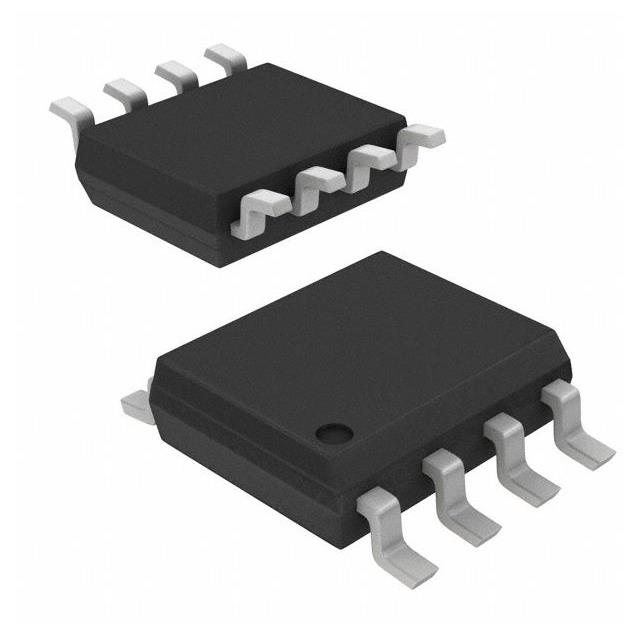
DI317-ADD is listed in the Voltage Regulators - Linear, Low Drop Out (LDO) Regulators range at ChipApex. The manufacturer field lists Diotec Semiconductor. Its product description is DI317-ADD. Review the specifications below when checking this part for your BOM.
The DI317-ADD is a positive adjustable voltage regulator manufactured by Diotec Semiconductor in an SO-8 package. It supports an output voltage range from approximately 1.25 V to 40 V with a maximum output current of 100 mA. The device operates within a junction temperature range of -40°C to +150°C and features a typical reference voltage of 1.25 V. Key electrical characteristics include a line regulation of 0.01% per volt, load regulation of 5 mV for outputs up to 5 V, and ripple rejection of 60 dB at 120 Hz without an adjustment capacitor.
Verify the specific ordering suffix when procuring the DI317-ADD. The standard version is designated for commercial and industrial grade applications. Suffixes such as -Q indicate AEC-Q101 compliance, while -AQ denotes parts currently undergoing automotive qualification. Confirm that the required reliability grade matches the intended application environment before finalizing orders.
Select the DI317-ADD for designs requiring a robust positive adjustable regulator with high input voltage support. Ensure the thermal resistance requirements are met, as the device relies on PCB copper pad area for heat dissipation. Verify that the output current does not exceed the internal limit of 100 mA and that the input-to-output differential voltage remains within the recommended operating conditions for optimal stability.
This component belongs to Diotec Semiconductor's lineup of positive adjustable voltage regulators. It serves as a versatile solution for stabilizing power rails in various electronic systems. The device is designed to replace traditional three-terminal adjustable regulators, offering comparable functionality within a compact surface-mount package suitable for modern printed circuit board layouts.
No public confirmed substitute part numbers are documented in the provided source material.
Explore related parts through Power Management (PMIC), Integrated Circuits (ICs), all product categories, ChipApex homepage.
 DI317-ADD
DI317-ADD is listed in the Voltage Regulators - Linear, Low Drop Out (LDO) Regulators range at ChipApex. The manufacturer field lists Diotec Semiconductor. Its…
Read More
Understand how a comparator switches at a voltage threshold, why hysteresis prevents chatter, and which output and input specs matter.
Read More
Learn what an integrated circuit is, how ICs work, the main types and the specs to check before choosing a part for your design…
Read More
DI317-ADD is listed in the Voltage Regulators - Linear, Low Drop Out (LDO) Regulators range at ChipApex. The manufacturer field lists Diotec Semiconductor. Its…
Read MoreDI317-ADD is listed in the Voltage Regulators - Linear, Low Drop Out (LDO) Regulators range at ChipApex. The manufacturer field lists Diotec Semiconductor. Its…
Read More
Choose logic inverter ICs by thresholds, supply, output drive and delay. Compare standard and Schmitt-trigger inputs, power sequencing and replacement checks.
Read More
DI317-ADD is listed in the Voltage Regulators - Linear, Low Drop Out (LDO) Regulators range at ChipApex. The manufacturer field lists Diotec Semiconductor. Its…
Read More
Understand tactile switches, PCB and keyboard differences, four-pin wiring, debounce, force, travel and replacement checks for reliable control inputs.
Read More
DI317-ADD is listed in the Voltage Regulators - Linear, Low Drop Out (LDO) Regulators range at ChipApex. The manufacturer field lists Diotec Semiconductor. Its…
Read More
DI317-ADD is listed in the Voltage Regulators - Linear, Low Drop Out (LDO) Regulators range at ChipApex. The manufacturer field lists Diotec Semiconductor. Its…
Read More
DI317-ADD is listed in the Voltage Regulators - Linear, Low Drop Out (LDO) Regulators range at ChipApex. The manufacturer field lists Diotec Semiconductor. Its…
Read More
See when an inductor behaves linearly, how DC bias and saturation reduce inductance, and which current and temperature curves to check.
Read More
The activity of extra discounts on wholesale prices is in full swing…
Please fill in your contact information and we will send you the latest wholesale price list.