 ChipApex | Global Electronic Components Supplier

SEARCH
Search Product
Search Post
— IC芯片 | 连接器 | 传感器 | 被动器件 —
Search productSearch post
— IC芯片 | 连接器 | 传感器 | 被动器件 —
Consult the customer manager about the wholesale price.
consultation hotline:86-132-6715-2157
email:[email protected]
Contact the product manager for consultation. One-stop consultation is available.
Do you want a lower wholesale price? Please send us your inquiry and we will reply immediately.
DS1305EN+ is listed in the Real Time Clock range at ChipApex. The manufacturer field lists Analog Devices Inc./Maxim Integrated. Its product description is IC RTC CLK/CALENDAR SPI 20TSSOP. Review the specifications below when checking this part for your BOM.
The DS1305EN+ is a serial alarm real-time clock (RTC) in a 20-pin TSSOP package, rated for industrial temperatures (-40°C to +85°C). It provides binary coded decimal (BCD) timekeeping including seconds, minutes, hours, date, month, day of week, and year with leap-year compensation through 2100. The device includes 96 bytes of battery-backed NV RAM and two programmable time-of-day alarms. It operates on a single supply voltage from 2.0V to 5.5V and supports both SPI (Modes 1 and 3) and standard 3-wire serial interfaces via the SERMODE pin.
Verify the ordering suffix 'EN+' confirms the -40°C to +85°C industrial temperature range and lead-free/RoHS compliance. Confirm the 20-pin TSSOP package matches the design footprint. Ensure the specific revision of the datasheet aligns with the manufactured lot, as electrical characteristics may vary slightly between revisions.
Select this component when an industrial temperature range is required alongside SPI or 3-wire connectivity. The DS1305EN+ differs from the commercial variant (DS1305E+) by its extended temperature rating. Ensure the system logic voltage is compatible with the VCCIF pin if interfacing with 3V logic while operating at higher primary supply voltages.
The DS1305 series is part of Analog Devices' (formerly Maxim Integrated) line of serial RTCs. The 'EN+' designation specifically identifies the industrial grade version in the 20-pin Thin Shrink Small Outline Package (TSSOP). This distinguishes it from the DIP package variants and the commercial temperature range versions within the same functional family.
Direct pin-compatible replacements include other DS1305 variants such as DS1305N (DIP, industrial) or DS1305E (TSSOP, commercial), provided the temperature requirements are met. Cross-family replacements require verification of interface compatibility and register mapping.
Explore related parts through Clock/Timing, Integrated Circuits (ICs), all product categories, ChipApex homepage.
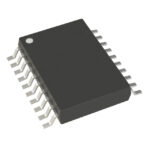 DS1305EN+
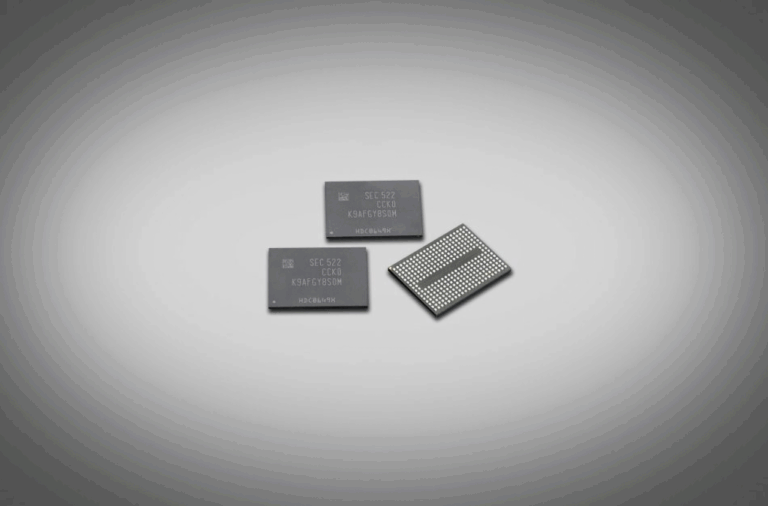
DS1305EN+ is listed in the Real Time Clock range at ChipApex. The manufacturer field lists Analog Devices Inc./Maxim Integrated. Its product description is IC…
Read More
Learn why PTC resistance rises with temperature, how it differs from NTC, and which ratings matter for sensing and protection.
Read More
DS1305EN+ is listed in the Real Time Clock range at ChipApex. The manufacturer field lists Analog Devices Inc./Maxim Integrated. Its product description is IC…
Read More
DS1305EN+ is listed in the Real Time Clock range at ChipApex. The manufacturer field lists Analog Devices Inc./Maxim Integrated. Its product description is IC…
Read More
DS1305EN+ is listed in the Real Time Clock range at ChipApex. The manufacturer field lists Analog Devices Inc./Maxim Integrated. Its product description is IC…
Read More
Understand how a comparator switches at a voltage threshold, why hysteresis prevents chatter, and which output and input specs matter.
Read More
Understand how oscillators generate timing signals, how they differ from crystals, and which frequency, output and stability specs matter when choosing one.
Read More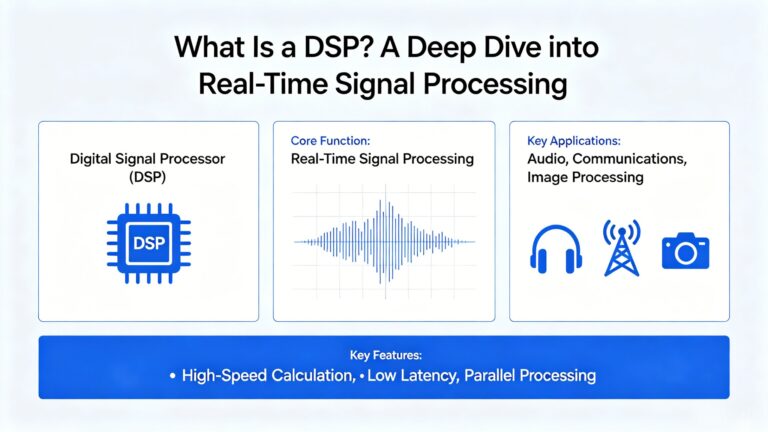
DS1305EN+ is listed in the Real Time Clock range at ChipApex. The manufacturer field lists Analog Devices Inc./Maxim Integrated. Its product description is IC…
Read More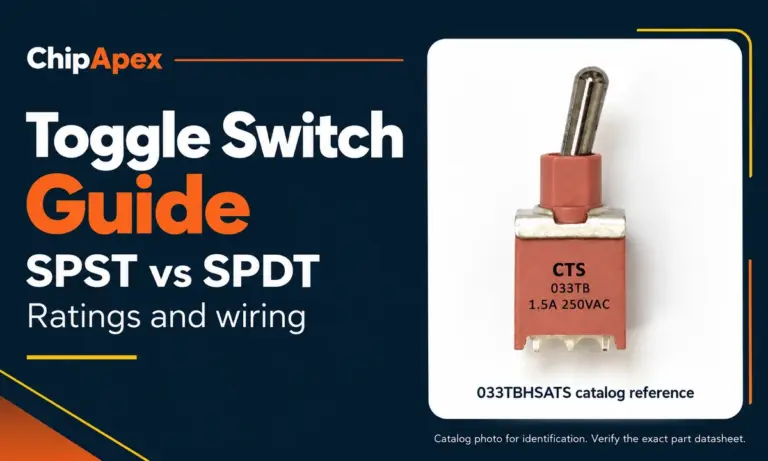
Compare SPST and SPDT toggle switches, understand AC/DC ratings, and follow wiring examples. Check contact action, mounting and parts in the ChipApex catalog.
Read More
Find out when a bare shock switch needs a pull resistor, when an MCU internal pull-up is enough, and why sensor modules and piezo…
Read More
Choose an AC to DC converter by input range, output demand, isolation, efficiency and thermal derating. Compare architectures and check installation needs.
Read More
See when an inductor behaves linearly, how DC bias and saturation reduce inductance, and which current and temperature curves to check.
Read More
The activity of extra discounts on wholesale prices is in full swing…
Please fill in your contact information and we will send you the latest wholesale price list.





