ChipApex | Global Electronic Components Supplier

SEARCH
Search Product
Search Post
— IC芯片 | 连接器 | 传感器 | 被动器件 —
Search productSearch post
— IC芯片 | 连接器 | 传感器 | 被动器件 —
Consult the customer manager about the wholesale price.
consultation hotline:86-132-6715-2157
email:[email protected]
Contact the product manager for consultation. One-stop consultation is available.
Do you want a lower wholesale price? Please send us your inquiry and we will reply immediately.
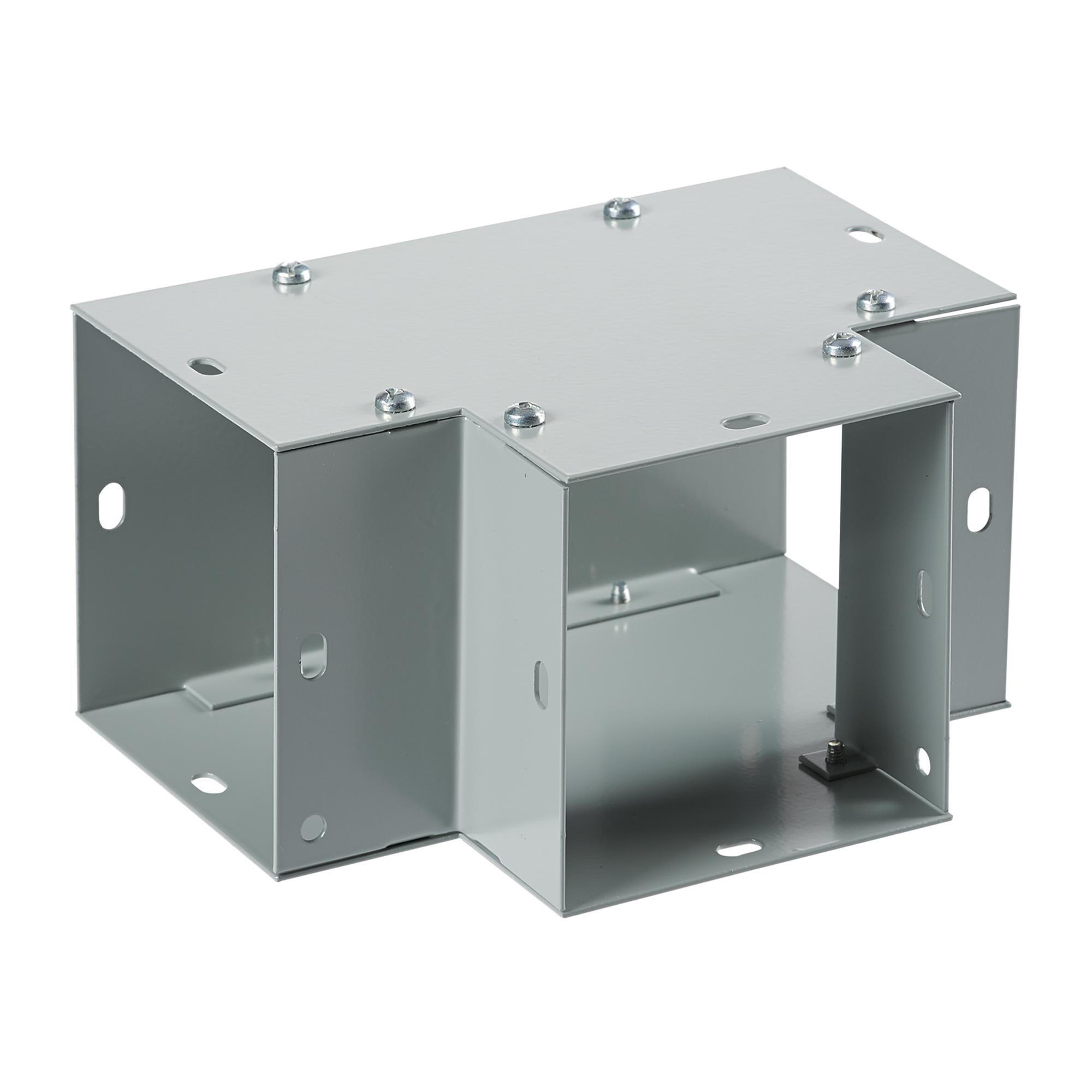
The Hoffman Enclosures Inc. F22GT is a Type 1 flush tee fitting designed for indoor wireway cable management systems. Constructed from 16-gauge steel, this component features a 90-degree bend angle and measures 2.5 inches in width. It is finished with an ANSI 61 gray polyester powder coating applied over a pretreated surface to ensure durability. The unit includes four screw holes for secure attachment and is intended for flush mounting against vertical or horizontal surfaces.
Verify the specific manufacturer part number F22GT against official nVent Hoffman documentation to confirm compatibility with existing 2.5-inch wireway infrastructure. Ensure the required Type 1 rating meets local environmental standards for indoor use. Confirm that the 16-gauge steel construction aligns with structural load requirements for the intended mounting location.
Select this component when a 90-degree transition is required for flush-mounted wireway installations. The Type 1 rating indicates suitability for indoor environments where protection against falling dirt is necessary but liquid ingress is not a primary concern. Verify that the 2.5-inch dimension matches the connected wireway sections to ensure proper fit and alignment during assembly.
This component belongs to the Hoffman wireway accessories series, specifically designed for cable management applications. It serves as a connector within larger electrical distribution networks, allowing for directional changes in conduit runs. The product is manufactured by Hoffman Enclosures, Inc., now operating under the nVent brand umbrella, ensuring consistency with other Hoffman enclosure hardware.
Public confirmed substitute part numbers are not available in the provided source material. Consult official nVent Hoffman catalogs for cross-referenced equivalents if direct replacement is required.
 F22GT
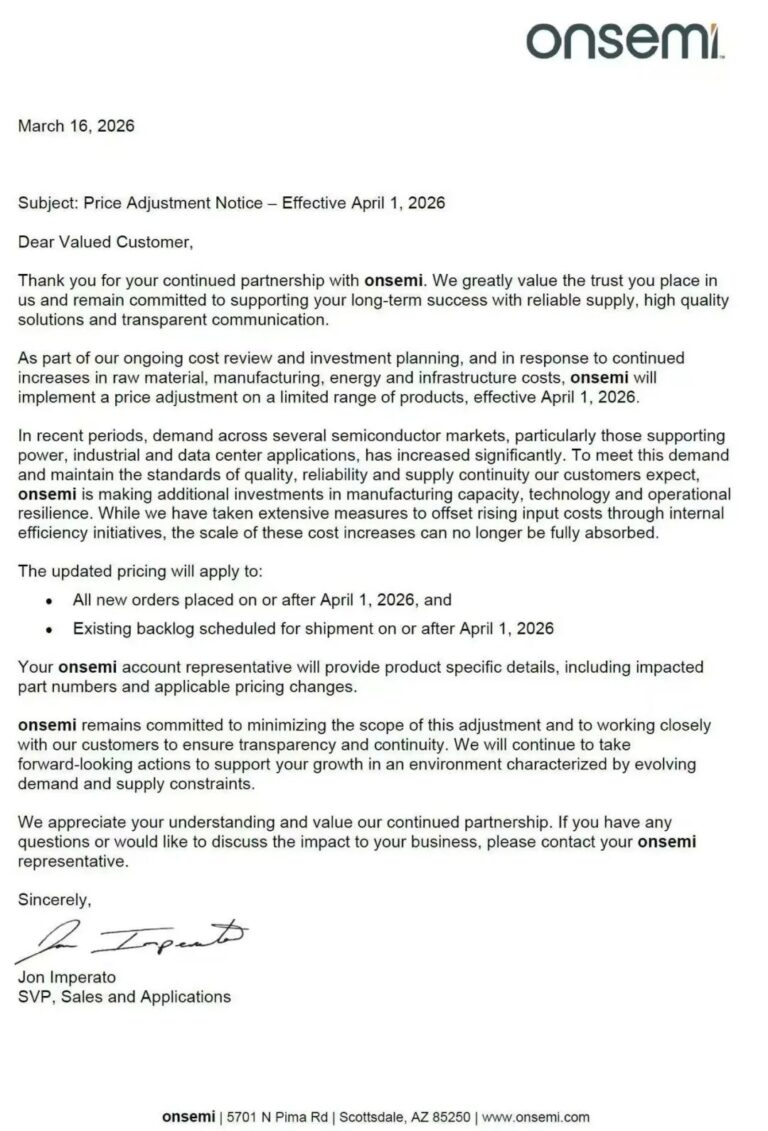
ON Semiconductor (onsemi), a global leader in intelligent power and sensing technologies, has announced plans to implement price adjustments for select product lines, effective…
Read More
In embedded design, the tug-of-war between cost and performance is constant. On one side, you have Microcontrollers (MCUs)—cheap, simple, and efficient. On the other,…
Read More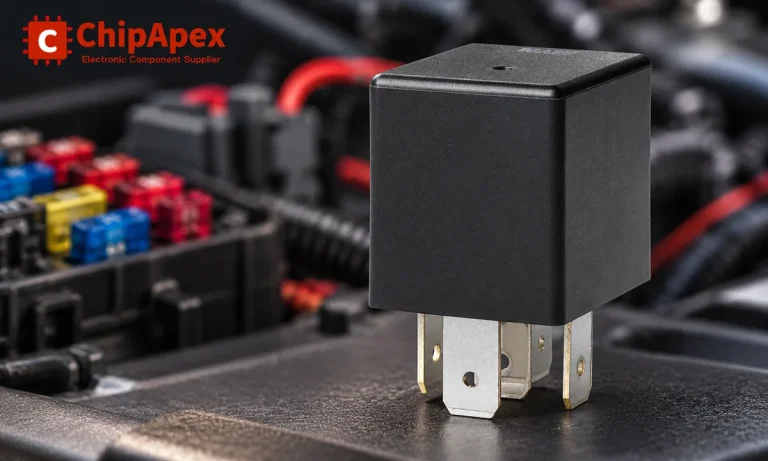
Learn the relay definition, coil and contact operation, NO and NC forms, load ratings and suppression choices. Compare mechanical, reed and solid-state types.
Read More
Find out when a bare shock switch needs a pull resistor, when an MCU internal pull-up is enough, and why sensor modules and piezo…
Read More
Tokyo / Munich / Tessenderlo, December 24, 2025As the global semiconductor industry enters the first year of the 2nm process era, international electronic component…
Read More
Choose a DIP switch by contact type, coded positions, footprint and signal ratings. Check logic polarity, assembly conditions and PCB configuration behavior.
Read More
Date: May 13, 2026 The global memory industry is facing an unprecedented supply crunch in legacy MLC NAND Flash. Leading manufacturers including Samsung Electronics…
Read More
If you’ve spent any time staring at a schematic, you’ve seen the triangle. Two inputs, one output, and a gain symbol that looks deceptively…
Read More
Learn how rectifiers convert AC to DC, compare half-wave and bridge circuits, and select voltage, current, recovery and thermal ratings for your design.
Read More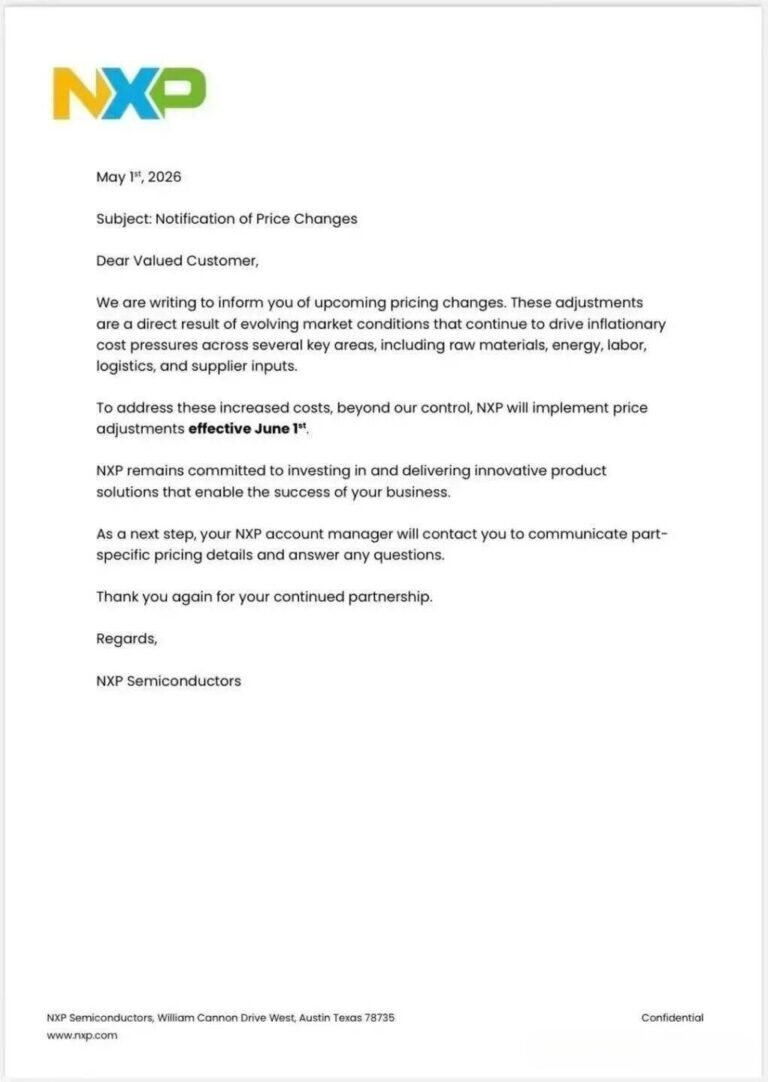
May 8, 2026 – Eindhoven, Netherlands NXP Semiconductors (NXPI), a global leader in automotive and industrial semiconductor solutions, has officially notified its worldwide channel…
Read More
Select a bridge rectifier by reverse voltage, capacitor charging current, startup surge and cooling. Work through a stated DC voltage and ripple example.
Read More
Choose an AC to DC converter by input range, output demand, isolation, efficiency and thermal derating. Compare architectures and check installation needs.
Read More
The activity of extra discounts on wholesale prices is in full swing…
Please fill in your contact information and we will send you the latest wholesale price list.