 ChipApex | Global Electronic Components Supplier

SEARCH
Search Product
Search Post
— IC芯片 | 连接器 | 传感器 | 被动器件 —
Search productSearch post
— IC芯片 | 连接器 | 传感器 | 被动器件 —
Consult the customer manager about the wholesale price.
consultation hotline:86-132-6715-2157
email:[email protected]
Contact the product manager for consultation. One-stop consultation is available.
Do you want a lower wholesale price? Please send us your inquiry and we will reply immediately.
LAN9253T-V/R4X is listed in the Controllers range at ChipApex. The manufacturer field lists Microchip Technology. Its product description is 2/3-PORT ETHERCAT SLAVE CTLR. Review the specifications below when checking this part for your BOM.
The LAN9253T-V/R4X is a 2/3-port EtherCAT slave controller featuring dual integrated Ethernet PHYs, each providing a full-duplex 100BASE-TX transceiver for 100 Mbps operation. It includes an EtherCAT slave controller with 8KB dual-ported RAM (DPRAM), eight SyncManagers, and eight Fieldbus Memory Management Units (FMMU). The device supports HP Auto-MDIX, a 64-bit distributed clock for high-precision synchronization, and an I2C master EEPROM controller. It operates at industrial temperatures (-40°C to +85°C) with a single 3.3V supply.
Verify the specific suffix R4X indicates tape and reel packaging when ordering. Confirm the -V suffix corresponds to the required industrial temperature range of -40°C to +85°C. Ensure compatibility with existing design infrastructure before procurement. Check current availability as lead times may vary based on production schedules.
Select this component for designs requiring integrated dual-port Ethernet connectivity without external PHYs. It is suitable for applications needing robust EtherCAT slave functionality with minimal external components. Consider the 64-pin QFN package constraints for PCB layout. Evaluate power consumption requirements against the single 3.3V supply capability.
This part belongs to Microchip's LAN9253 family of EtherCAT slave controllers. It serves as a cost-effective solution for integrating EtherCAT capabilities into industrial devices. The device simplifies network topology by supporting star or tree configurations through its third MII port option.
The FCE1353 from Fangxin Semiconductor is documented as a pin-to-pin compatible alternative. Verify software stack compatibility if migrating to the FCE1353. No other direct substitutes are confirmed in public documentation.
Explore related parts through Interface, Integrated Circuits (ICs), all product categories, ChipApex homepage.
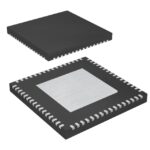 LAN9253T-V/R4X
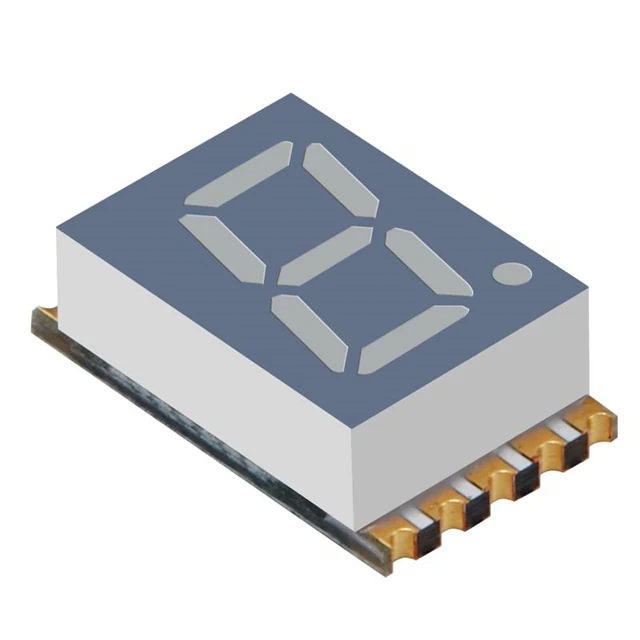
Identify common-anode and common-cathode seven-segment displays, calculate segment resistors and check driver current and four-digit multiplex timing.
Read More
Compare Hall, shunt, current transformer and Rogowski sensing. Check AC/DC capability, accuracy, isolation, heat and response before selecting a sensor.
Read More
Learn how a TRIAC switches AC loads. Understand triggering, latching, holding current, phase control and thermal limits before choosing a component.
Read More
Choose a solid-state relay by AC or DC load, leakage, switching mode and heat. Review practical SSR limits and prepare component requirements for ChipApex.
Read More
Choose an AC to DC converter by input range, output demand, isolation, efficiency and thermal derating. Compare architectures and check installation needs.
Read More
Select a bridge rectifier by reverse voltage, capacitor charging current, startup surge and cooling. Work through a stated DC voltage and ripple example.
Read More
Understand how a comparator switches at a voltage threshold, why hysteresis prevents chatter, and which output and input specs matter.
Read More
Learn what data acquisition means, from sensors and conditioning to sampling and storage. Review channel timing, wiring, calibration and data quality.
Read More
Understand load cell sensor output, bridge wiring and calibration. Learn how mV/V sensitivity, mechanics and ADC noise affect measurement accuracy.
Read More
Compare RC, crystal and MEMS oscillator circuits. Check ppm, jitter, load capacitance, startup margin and output compatibility before choosing a clock source.
Read More
LAN9253T-V/R4X is listed in the Controllers range at ChipApex. The manufacturer field lists Microchip Technology. Its product description is 2/3-PORT ETHERCAT SLAVE CTLR. Review…
Read More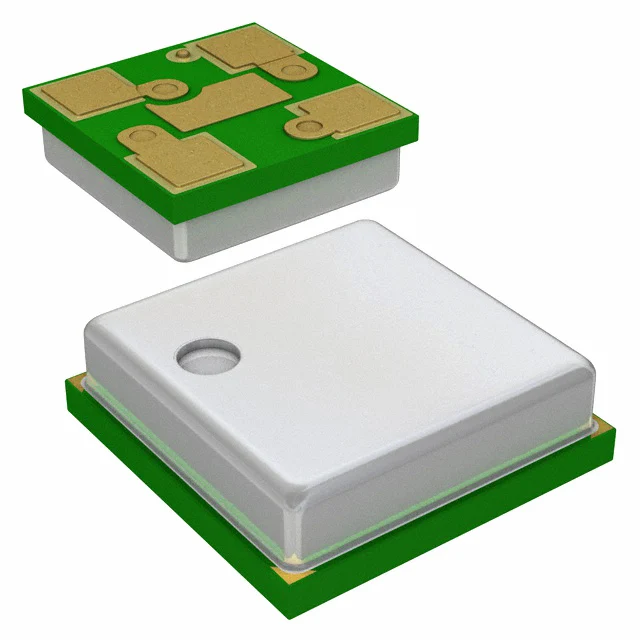
Interpret MAP sensor readings using local atmospheric pressure, convert a ratiometric signal to kPa and distinguish a pressure change from a signal fault.
Read More
The activity of extra discounts on wholesale prices is in full swing…
Please fill in your contact information and we will send you the latest wholesale price list.





