 ChipApex | Global Electronic Components Supplier

SEARCH
Search Product
Search Post
— IC芯片 | 连接器 | 传感器 | 被动器件 —
Search productSearch post
— IC芯片 | 连接器 | 传感器 | 被动器件 —
Consult the customer manager about the wholesale price.
consultation hotline:86-132-6715-2157
email:[email protected]
Contact the product manager for consultation. One-stop consultation is available.
Do you want a lower wholesale price? Please send us your inquiry and we will reply immediately.
LM2597HVM-ADJ/NOPB is listed in the Voltage Regulators - DC DC Switching Regulators range at ChipApex. The manufacturer field lists Texas Instruments. Its product description is IC REG BUCK ADJ 500MA 8SOIC. Review the specifications below when checking this part for your BOM.
The LM2597HVM-ADJ/NOPB is a SIMPLE SWITCHER power converter from Texas Instruments, utilizing a buck topology. It operates with an input voltage range of 4.5 V to 60 V and provides an adjustable output voltage between 1.2 V and 57 V. The device delivers a maximum output current of 500 mA at a fixed switching frequency of 150 kHz. It features a low quiescent current of 5 mA and supports operation within a temperature range of -40°C to +125°C. Packaged in an SOIC-8 surface-mount format, it includes integrated shutdown functionality for power management.
Verify the specific suffix 'NOPB' confirms lead-free and RoHS compliance status as per the manufacturer's latest documentation. Ensure the SOIC-8 package dimensions match your PCB footprint requirements. Confirm that the adjustable version meets your specific voltage regulation needs compared to fixed-output variants within the same series.
Select this component when an input voltage up to 60 V is required with a moderate 500 mA load. The adjustable output allows flexibility for various rail voltages. Consider the SOIC-8 package for space-constrained designs. Evaluate the 150 kHz frequency against EMI constraints and inductor size requirements for the target application.
This part belongs to the LM2597HV series, designed for high-voltage step-down applications. It is distinct from the standard LM2597 which typically has a lower maximum input voltage rating. The 'M' suffix indicates the SOIC-8 package variant, while 'ADJ' specifies the adjustable output configuration. It is part of Texas Instruments' SIMPLE SWITCHER family known for minimal external component count.
LM2597HVM-ADJ/NOPB is the direct equivalent. LM2597HVMX-ADJ/NOPB may differ only in reel packaging. Fixed voltage versions like LM2597HVM-5.0/NOPB are functionally similar but lack adjustability.
Explore related parts through Power Management (PMIC), Integrated Circuits (ICs), all product categories, ChipApex homepage.
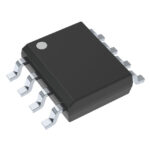 LM2597HVM-ADJ/NOPB

Choose a DIP switch by contact type, coded positions, footprint and signal ratings. Check logic polarity, assembly conditions and PCB configuration behavior.
Read More
LM2597HVM-ADJ/NOPB is listed in the Voltage Regulators - DC DC Switching Regulators range at ChipApex. The manufacturer field lists Texas Instruments. Its product description…
Read More
LM2597HVM-ADJ/NOPB is listed in the Voltage Regulators - DC DC Switching Regulators range at ChipApex. The manufacturer field lists Texas Instruments. Its product description…
Read More
See when an inductor behaves linearly, how DC bias and saturation reduce inductance, and which current and temperature curves to check.
Read More
LM2597HVM-ADJ/NOPB is listed in the Voltage Regulators - DC DC Switching Regulators range at ChipApex. The manufacturer field lists Texas Instruments. Its product description…
Read More
LM2597HVM-ADJ/NOPB is listed in the Voltage Regulators - DC DC Switching Regulators range at ChipApex. The manufacturer field lists Texas Instruments. Its product description…
Read More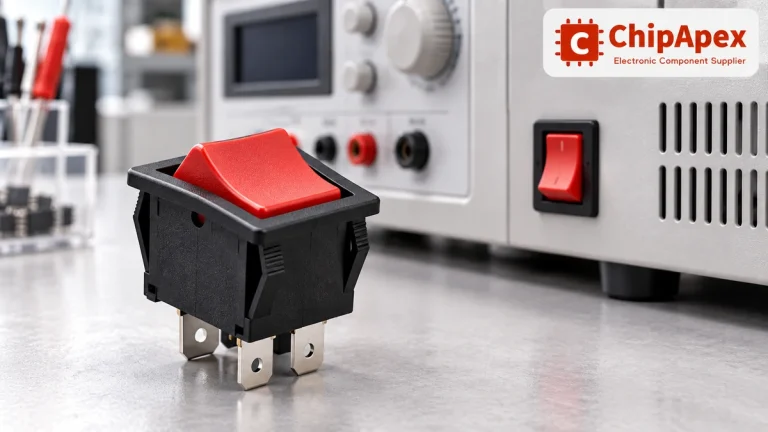
Choose a rocker switch by AC/DC ratings, contact arrangement, illumination, panel fit and sealing. Get practical checks for engineering and component sourcing.
Read More
LM2597HVM-ADJ/NOPB is listed in the Voltage Regulators - DC DC Switching Regulators range at ChipApex. The manufacturer field lists Texas Instruments. Its product description…
Read More
LM2597HVM-ADJ/NOPB is listed in the Voltage Regulators - DC DC Switching Regulators range at ChipApex. The manufacturer field lists Texas Instruments. Its product description…
Read More
LM2597HVM-ADJ/NOPB is listed in the Voltage Regulators - DC DC Switching Regulators range at ChipApex. The manufacturer field lists Texas Instruments. Its product description…
Read More
Choose an AC to DC converter by input range, output demand, isolation, efficiency and thermal derating. Compare architectures and check installation needs.
Read More
Learn why PTC resistance rises with temperature, how it differs from NTC, and which ratings matter for sensing and protection.
Read More
The activity of extra discounts on wholesale prices is in full swing…
Please fill in your contact information and we will send you the latest wholesale price list.





