 ChipApex | Global Electronic Components Supplier

SEARCH
Search Product
Search Post
— IC芯片 | 连接器 | 传感器 | 被动器件 —
Search productSearch post
— IC芯片 | 连接器 | 传感器 | 被动器件 —
Consult the customer manager about the wholesale price.
consultation hotline:86-132-6715-2157
email:[email protected]
Contact the product manager for consultation. One-stop consultation is available.
Do you want a lower wholesale price? Please send us your inquiry and we will reply immediately.
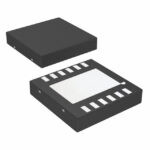
LM2623LD is listed in the Voltage Regulators - DC DC Switching Regulators range at ChipApex. The manufacturer field lists Texas Instruments. Its product description is IC REG BOOST ADJ 2.2A 14WSON. Review the specifications below when checking this part for your BOM.
The LM2623LD/NOPB is a general-purpose gated oscillator DC/DC boost converter manufactured by Texas Instruments. It operates with an input voltage range from 800 mV to 14 V and delivers up to 2.85 A output current. The device supports adjustable switching frequencies between 300 kHz and 2 MHz, enabling flexible design optimization for efficiency and component size. It features a shutdown function and low operating supply current of 80 uA. The regulator is housed in a WSON-14 package and functions within a temperature range of -40°C to +85°C.
Verify the specific suffix (e.g., NOPB) against the manufacturer's official datasheet to confirm RoHS compliance and lead-free status. Ensure the WSON-14 package variant matches your PCB footprint requirements. Cross-reference the part number with authorized distributors to confirm current availability and authenticity before procurement.
Select this component when a boost topology is required for inputs as low as 800 mV. Consider the thermal performance of the WSON-14 package for your enclosure design. Evaluate the need for external gating signals if utilizing the gated oscillator mode versus continuous operation. Verify that the required output voltage falls within the 1.24 V to 14 V range.
The LM2623 belongs to Texas Instruments' family of switch-mode power regulators designed for space-constrained applications. It integrates the main switch and control logic into a compact form factor. This series targets designs where efficiency and small footprint are critical, distinguishing it from linear regulators through its switching operation.
Check for LM2623 variants with different package options or temperature ratings. Confirm compatibility with existing gate drive circuits if substituting with similar gated oscillator controllers.
Explore related parts through Power Management (PMIC), Integrated Circuits (ICs), all product categories, ChipApex homepage.
 LM2623LD

Learn what an IMU measures, how accelerometers and gyroscopes work together, why orientation estimates drift, and what to compare.
Read More
Learn how a pressure transducer converts pressure into voltage, current, or digital output, and compare pressure references and key selection specs.
Read More
LM2623LD is listed in the Voltage Regulators - DC DC Switching Regulators range at ChipApex. The manufacturer field lists Texas Instruments. Its product description…
Read More
Compare Pt100 and Pt1000 RTDs, two-, three- and four-wire connections, excitation and self-heating. Build an error budget from element to reported temperature.
Read More
LM2623LD is listed in the Voltage Regulators - DC DC Switching Regulators range at ChipApex. The manufacturer field lists Texas Instruments. Its product description…
Read More
LM2623LD is listed in the Voltage Regulators - DC DC Switching Regulators range at ChipApex. The manufacturer field lists Texas Instruments. Its product description…
Read More
LM2623LD is listed in the Voltage Regulators - DC DC Switching Regulators range at ChipApex. The manufacturer field lists Texas Instruments. Its product description…
Read More
Learn why PTC resistance rises with temperature, how it differs from NTC, and which ratings matter for sensing and protection.
Read More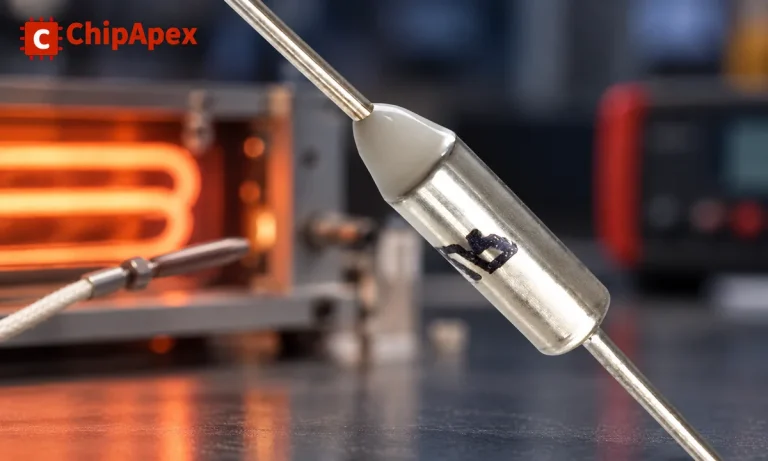
Understand thermal fuse operation, Tf, Th and Tm, electrical ratings and mounting. Check temperature limits and replacement requirements for your design.
Read More
LM2623LD is listed in the Voltage Regulators - DC DC Switching Regulators range at ChipApex. The manufacturer field lists Texas Instruments. Its product description…
Read More
LM2623LD is listed in the Voltage Regulators - DC DC Switching Regulators range at ChipApex. The manufacturer field lists Texas Instruments. Its product description…
Read More
See when an inductor behaves linearly, how DC bias and saturation reduce inductance, and which current and temperature curves to check.
Read More
The activity of extra discounts on wholesale prices is in full swing…
Please fill in your contact information and we will send you the latest wholesale price list.





