 ChipApex | Global Electronic Components Supplier

SEARCH
Search Product
Search Post
— IC芯片 | 连接器 | 传感器 | 被动器件 —
Search productSearch post
— IC芯片 | 连接器 | 传感器 | 被动器件 —
Consult the customer manager about the wholesale price.
consultation hotline:86-132-6715-2157
email:[email protected]
Contact the product manager for consultation. One-stop consultation is available.
Do you want a lower wholesale price? Please send us your inquiry and we will reply immediately.
LM2695SD/NOPB is listed in the Voltage Regulators - DC DC Switching Regulators range at ChipApex. The manufacturer field lists National Semiconductor. Its product description is IC REG BUCK ADJ 1.25A 10WSON. Review the specifications below when checking this part for your BOM.
The LM2695SD/NOPB is a high-voltage step-down switching regulator manufactured by Texas Instruments, formerly National Semiconductor. It operates with an input voltage range up to 30V and delivers a maximum output current of 1.25A. The device utilizes a 10-WSON package and supports an operating temperature range from -40°C to 125°C. It integrates synchronous rectification for improved efficiency and includes protection features such as thermal shutdown and current limit.
Verify the manufacturer designation, as Texas Instruments acquired National Semiconductor. Confirm the specific suffix 'NOPB' indicates lead-free and RoHS compliance. Ensure the package type matches the required PCB footprint. Check for any recent lifecycle notices or obsolescence warnings directly from the official datasheet before finalizing procurement plans.
Select this component when a compact solution is needed for high-input voltage buck conversion. The 1.25A current rating suits moderate load requirements. Consider the 10-WSON package size constraints against available board space. Evaluate thermal performance under maximum load conditions given the small form factor.
This part belongs to the LM269x family of simple switcher regulators. It shares design similarities with other members like the LM2694 but offers higher current capability. The family is known for minimal external component count and ease of implementation in space-constrained designs.
Direct substitutes may include LM2695SDX/NOPB or LM2695SD-ADJ/NOPB depending on fixed or adjustable output needs. Verify pin compatibility and electrical specifications before substitution.
Explore related parts through Power Management (PMIC), Integrated Circuits (ICs), all product categories, ChipApex homepage.
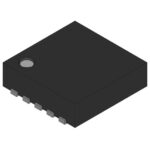 LM2695SD/NOPB

Understand tactile switches, PCB and keyboard differences, four-pin wiring, debounce, force, travel and replacement checks for reliable control inputs.
Read More
Choose an AC to DC converter by input range, output demand, isolation, efficiency and thermal derating. Compare architectures and check installation needs.
Read More
LM2695SD/NOPB is listed in the Voltage Regulators - DC DC Switching Regulators range at ChipApex. The manufacturer field lists National Semiconductor. Its product description…
Read More
LM2695SD/NOPB is listed in the Voltage Regulators - DC DC Switching Regulators range at ChipApex. The manufacturer field lists National Semiconductor. Its product description…
Read More
LM2695SD/NOPB is listed in the Voltage Regulators - DC DC Switching Regulators range at ChipApex. The manufacturer field lists National Semiconductor. Its product description…
Read More
LM2695SD/NOPB is listed in the Voltage Regulators - DC DC Switching Regulators range at ChipApex. The manufacturer field lists National Semiconductor. Its product description…
Read More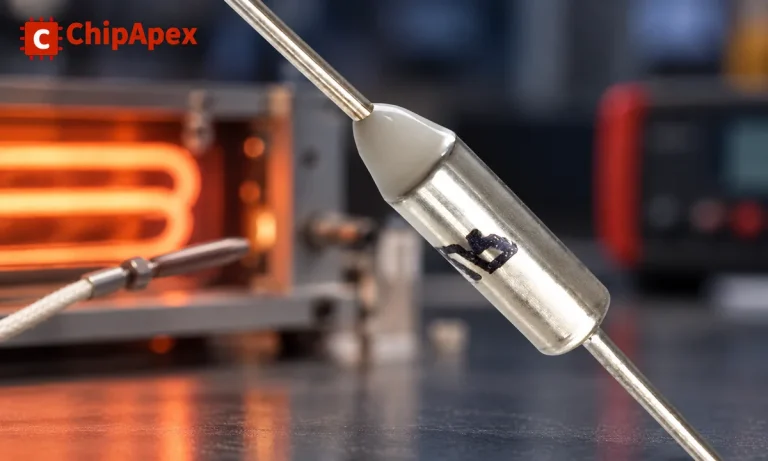
Understand thermal fuse operation, Tf, Th and Tm, electrical ratings and mounting. Check temperature limits and replacement requirements for your design.
Read More
Choose a DIP switch by contact type, coded positions, footprint and signal ratings. Check logic polarity, assembly conditions and PCB configuration behavior.
Read More
Learn the relay definition, coil and contact operation, NO and NC forms, load ratings and suppression choices. Compare mechanical, reed and solid-state types.
Read More
LM2695SD/NOPB is listed in the Voltage Regulators - DC DC Switching Regulators range at ChipApex. The manufacturer field lists National Semiconductor. Its product description…
Read More
LM2695SD/NOPB is listed in the Voltage Regulators - DC DC Switching Regulators range at ChipApex. The manufacturer field lists National Semiconductor. Its product description…
Read More
Compare Pt100 and Pt1000 RTDs, two-, three- and four-wire connections, excitation and self-heating. Build an error budget from element to reported temperature.
Read More
The activity of extra discounts on wholesale prices is in full swing…
Please fill in your contact information and we will send you the latest wholesale price list.





