ChipApex | Global Electronic Components Supplier

SEARCH
Search Product
Search Post
— IC芯片 | 连接器 | 传感器 | 被动器件 —
Search productSearch post
— IC芯片 | 连接器 | 传感器 | 被动器件 —
Consult the customer manager about the wholesale price.
consultation hotline:86-132-6715-2157
email:[email protected]
Contact the product manager for consultation. One-stop consultation is available.
Do you want a lower wholesale price? Please send us your inquiry and we will reply immediately.
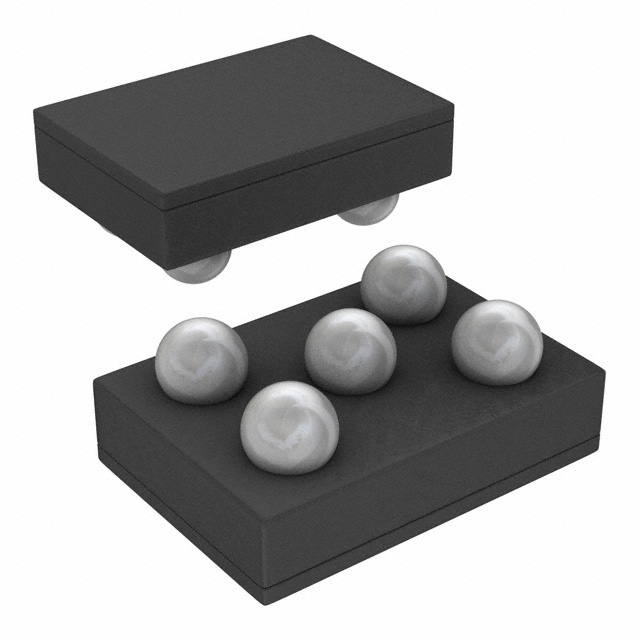
LM3671QTLX-1.8/NOPB is listed in the Voltage Regulators - DC DC Switching Regulators range at ChipApex. The manufacturer field lists Texas Instruments. Its product description is IC REG BUCK 1.8V 600MA 5DSBGA. Review the specifications below when checking this part for your BOM.
The LM3671QTLX-1.8/NOPB is a fixed-output step-down DC-DC converter from Texas Instruments, designed for automotive applications. It provides a stable 1.8V output with a maximum load current of 600mA. The device operates within an input voltage range of 2.7V to 5.5V and features a switching frequency of 2MHz. It utilizes synchronous rectification for high efficiency and includes integrated overcurrent protection. The component is housed in a DSBGA-5 package (1.41x1.08mm) and supports an operating temperature range of -40°C to +85°C.
Verify the specific suffix 'Q' indicates automotive qualification status against the manufacturer's official documentation. Confirm that the 'TLX' designation corresponds to the correct DSBGA-5 tape and reel packaging configuration. Ensure compatibility with the required 1.8V fixed output specification before finalizing procurement orders.
Select this component when designing for automotive environments requiring AEC-Q100 compliance. It is suitable for space-constrained layouts due to its small DSBGA footprint. Choose this part if a fixed 1.8V rail is needed with up to 600mA capacity from a 2.7V-5.5V source, prioritizing high-frequency operation for smaller passive components.
This part belongs to the LM3671 family of high-efficiency step-down converters. While other variants like the LM3671MF series use SOT-23 packages, this specific model utilizes a DSBGA-5 package for compactness. The 'Q' prefix distinguishes it as an automotive-grade device compared to standard commercial versions.
LM3671TL-1.8/NOPB: Commercial grade equivalent with identical electrical specifications but without automotive qualification.
Explore related parts through Power Management (PMIC), Integrated Circuits (ICs), all product categories, ChipApex homepage.
 LM3671QTLX-1.8/NOPB

LM3671QTLX-1.8/NOPB is listed in the Voltage Regulators - DC DC Switching Regulators range at ChipApex. The manufacturer field lists Texas Instruments. Its product description…
Read More
LM3671QTLX-1.8/NOPB is listed in the Voltage Regulators - DC DC Switching Regulators range at ChipApex. The manufacturer field lists Texas Instruments. Its product description…
Read More
LM3671QTLX-1.8/NOPB is listed in the Voltage Regulators - DC DC Switching Regulators range at ChipApex. The manufacturer field lists Texas Instruments. Its product description…
Read More
LM3671QTLX-1.8/NOPB is listed in the Voltage Regulators - DC DC Switching Regulators range at ChipApex. The manufacturer field lists Texas Instruments. Its product description…
Read More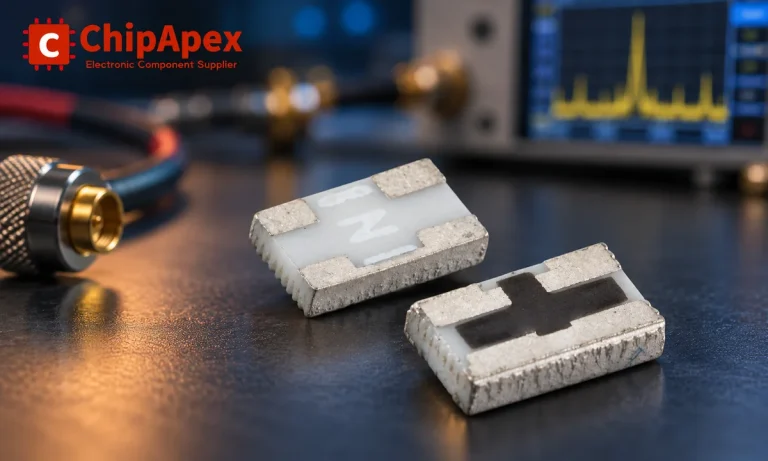
Understand RF attenuator dB values, fixed and programmable types, impedance, power limits and noise tradeoffs before choosing parts for an RF signal path.
Read More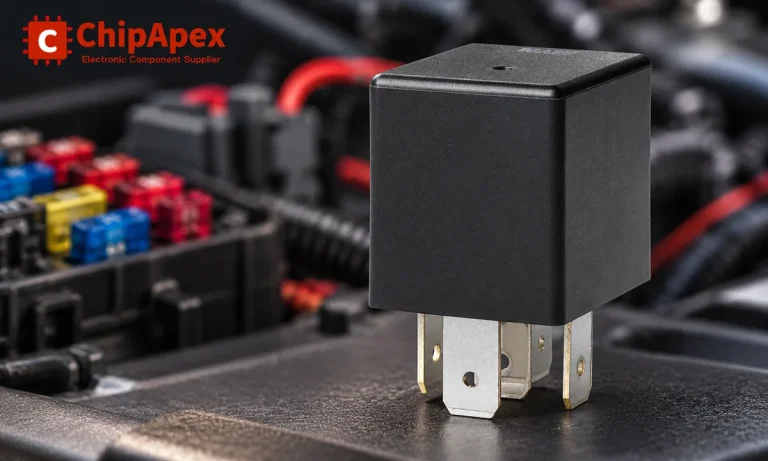
Learn the relay definition, coil and contact operation, NO and NC forms, load ratings and suppression choices. Compare mechanical, reed and solid-state types.
Read More
LM3671QTLX-1.8/NOPB is listed in the Voltage Regulators - DC DC Switching Regulators range at ChipApex. The manufacturer field lists Texas Instruments. Its product description…
Read More
See when an inductor behaves linearly, how DC bias and saturation reduce inductance, and which current and temperature curves to check.
Read More
LM3671QTLX-1.8/NOPB is listed in the Voltage Regulators - DC DC Switching Regulators range at ChipApex. The manufacturer field lists Texas Instruments. Its product description…
Read More
LM3671QTLX-1.8/NOPB is listed in the Voltage Regulators - DC DC Switching Regulators range at ChipApex. The manufacturer field lists Texas Instruments. Its product description…
Read More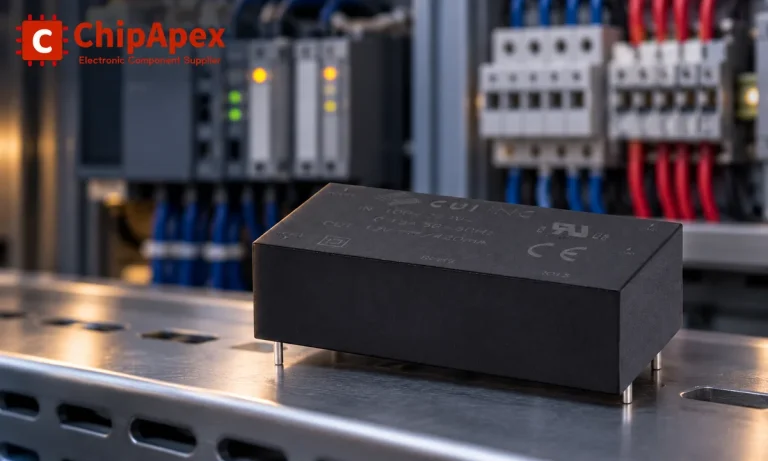
Choose an AC to DC converter by input range, output demand, isolation, efficiency and thermal derating. Compare architectures and check installation needs.
Read More
Learn why PTC resistance rises with temperature, how it differs from NTC, and which ratings matter for sensing and protection.
Read More
The activity of extra discounts on wholesale prices is in full swing…
Please fill in your contact information and we will send you the latest wholesale price list.