 ChipApex | Global Electronic Components Supplier

SEARCH
Search Product
Search Post
— IC芯片 | 连接器 | 传感器 | 被动器件 —
Search productSearch post
— IC芯片 | 连接器 | 传感器 | 被动器件 —
Consult the customer manager about the wholesale price.
consultation hotline:86-132-6715-2157
email:[email protected]
Contact the product manager for consultation. One-stop consultation is available.
Do you want a lower wholesale price? Please send us your inquiry and we will reply immediately.
LM46001PWP is listed in the Voltage Regulators - DC DC Switching Regulators range at ChipApex. The manufacturer field lists Texas Instruments. Its product description is IC REG BUCK ADJ 1A 16HTSSOP. Review the specifications below when checking this part for your BOM.
The LM46001PWP is a synchronous step-down switching voltage regulator manufactured by Texas Instruments. It operates with an input voltage range of 3.5 V to 60 V and provides a positive adjustable output voltage from 1 V to 28 V. The device supports a continuous output current of 1 A. Key electrical parameters include a quiescent current of 24 uA and a switch frequency range of 200 kHz to 2.2 MHz. It functions within a junction temperature range of -40°C to +125°C and utilizes a 16-PowerTSSOP package.
Verify the specific suffix against official datasheets, as variations may indicate different packaging or qualification levels. Confirm availability status directly with authorized distributors, as lead times and stock levels fluctuate. Ensure compliance with RoHS directives and moisture sensitivity classifications relevant to your assembly process before finalizing orders.
Select this component when a wide input voltage range up to 60 V is required alongside a 1 A output capacity. Consider the adjustable output feature for custom voltage rails. Evaluate the 16-PowerTSSOP package for thermal management needs. Compare against lower-current variants if load requirements are below 1 A.
This part belongs to the Simple Switcher family of DC-DC converters. It shares architectural similarities with other members like the LM46000 and LM46001-Q1, differing primarily in output current ratings and automotive qualification status. The non-automotive designation distinguishes it from the Q1 series variants intended for stricter automotive reliability standards.
LM46001QPWPRQ1: Automotive qualified version with similar specifications but higher reliability standards.
Explore related parts through Power Management (PMIC), Integrated Circuits (ICs), all product categories, ChipApex homepage.
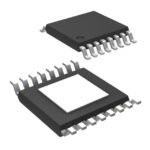 LM46001PWP

LM46001PWP is listed in the Voltage Regulators - DC DC Switching Regulators range at ChipApex. The manufacturer field lists Texas Instruments. Its product description…
Read More
LM46001PWP is listed in the Voltage Regulators - DC DC Switching Regulators range at ChipApex. The manufacturer field lists Texas Instruments. Its product description…
Read More
LM46001PWP is listed in the Voltage Regulators - DC DC Switching Regulators range at ChipApex. The manufacturer field lists Texas Instruments. Its product description…
Read More
LM46001PWP is listed in the Voltage Regulators - DC DC Switching Regulators range at ChipApex. The manufacturer field lists Texas Instruments. Its product description…
Read More
LM46001PWP is listed in the Voltage Regulators - DC DC Switching Regulators range at ChipApex. The manufacturer field lists Texas Instruments. Its product description…
Read More
LM46001PWP is listed in the Voltage Regulators - DC DC Switching Regulators range at ChipApex. The manufacturer field lists Texas Instruments. Its product description…
Read More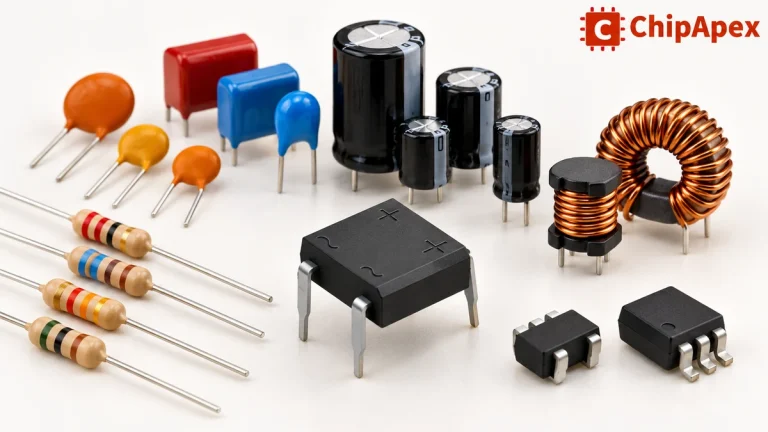
Explore electronic component types, functions, packages and datasheets. Learn selection, replacement and BOM checks before ordering parts for your PCB.
Read More
LM46001PWP is listed in the Voltage Regulators - DC DC Switching Regulators range at ChipApex. The manufacturer field lists Texas Instruments. Its product description…
Read More
Learn how rectifiers convert AC to DC, compare half-wave and bridge circuits, and select voltage, current, recovery and thermal ratings for your design.
Read MoreLM46001PWP is listed in the Voltage Regulators - DC DC Switching Regulators range at ChipApex. The manufacturer field lists Texas Instruments. Its product description…
Read More
LM46001PWP is listed in the Voltage Regulators - DC DC Switching Regulators range at ChipApex. The manufacturer field lists Texas Instruments. Its product description…
Read More
Learn why PTC resistance rises with temperature, how it differs from NTC, and which ratings matter for sensing and protection.
Read More
The activity of extra discounts on wholesale prices is in full swing…
Please fill in your contact information and we will send you the latest wholesale price list.





