 ChipApex | Global Electronic Components Supplier

SEARCH
Search Product
Search Post
— IC芯片 | 连接器 | 传感器 | 被动器件 —
Search productSearch post
— IC芯片 | 连接器 | 传感器 | 被动器件 —
Consult the customer manager about the wholesale price.
consultation hotline:86-132-6715-2157
email:[email protected]
Contact the product manager for consultation. One-stop consultation is available.
Do you want a lower wholesale price? Please send us your inquiry and we will reply immediately.
LM5169FNGUR is listed in the Voltage Regulators - DC DC Switching Regulators range at ChipApex. The manufacturer field lists Texas Instruments. Its product description is 6V TO 120V WIDE VIN, 650-MA DC/D. Review the specifications below when checking this part for your BOM.
The LM5169FNGUR is a synchronous buck DC/DC converter manufactured by Texas Instruments, housed in an 8-pin WSON package. It supports an input voltage range of 6 V to 120 V and delivers up to 650 mA of output current. The device features adjustable output voltages from 1.2 V to 90 V with a fixed minimum reference of 1.2 V. Operating at a switching frequency of 1 MHz, it maintains a typical quiescent current of 3 µA. The component functions within a junction temperature range of -40°C to +150°C.
Verify the specific suffix 'FNGUR' against the manufacturer datasheet to confirm the exact package variant and tape-and-reel specifications. Ensure the ordering part number matches the required thermal pad configuration and moisture sensitivity level. Cross-reference the RoHS compliance status and lead times directly with authorized distributors before finalizing procurement orders.
Select this component when designing circuits requiring wide input voltage ranges up to 120 V with compact footprint constraints. The integrated synchronous rectifiers offer higher efficiency compared to diode-based solutions. Consider the 1 MHz switching frequency for optimizing external inductor and capacitor sizes while maintaining stable regulation under varying load conditions.
This device belongs to the LM516x family of high-voltage synchronous buck converters designed for robust performance in demanding environments. It shares architectural similarities with the LM5168 but offers distinct output current capabilities and packaging options. The series is engineered for applications requiring reliable power management across extended temperature ranges.
LM5168FNGUR: Similar topology and input range; verify output current differences (300 mA vs 650 mA) and pin compatibility.
Yes, the device supports Fly-Buck topology, which allows for isolated output generation using an auxiliary winding on the inductor.
The minimum adjustable output voltage is 1.2 V, determined by the internal reference voltage.
Explore related parts through Power Management (PMIC), Integrated Circuits (ICs), all product categories, ChipApex homepage.
 LM5169FNGUR
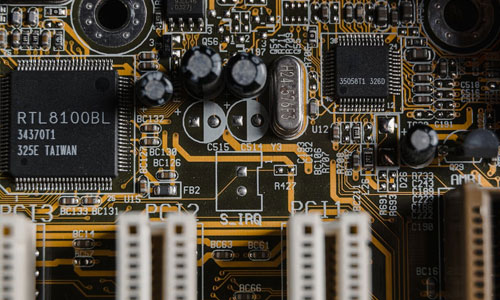
LM5169FNGUR is listed in the Voltage Regulators - DC DC Switching Regulators range at ChipApex. The manufacturer field lists Texas Instruments. Its product description…
Read More
LM5169FNGUR is listed in the Voltage Regulators - DC DC Switching Regulators range at ChipApex. The manufacturer field lists Texas Instruments. Its product description…
Read More
Learn why PTC resistance rises with temperature, how it differs from NTC, and which ratings matter for sensing and protection.
Read More
LM5169FNGUR is listed in the Voltage Regulators - DC DC Switching Regulators range at ChipApex. The manufacturer field lists Texas Instruments. Its product description…
Read More
LM5169FNGUR is listed in the Voltage Regulators - DC DC Switching Regulators range at ChipApex. The manufacturer field lists Texas Instruments. Its product description…
Read More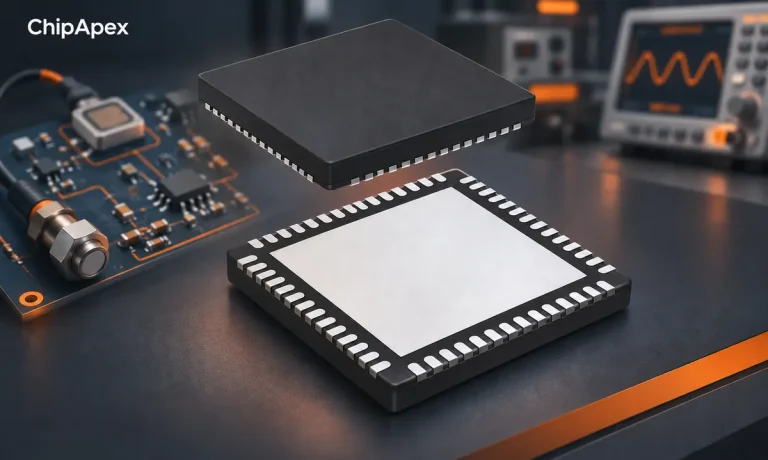
Learn how an analog front end conditions sensor signals. Compare gain, noise, filtering, ADC settling and integration options before selecting components.
Read More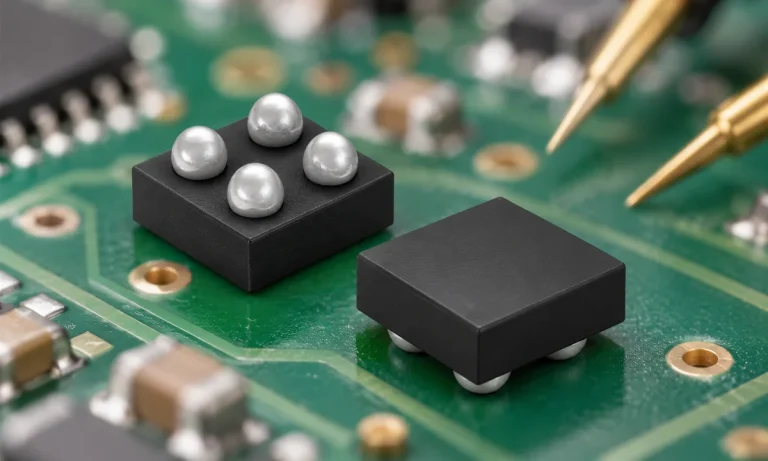
Understand how a comparator switches at a voltage threshold, why hysteresis prevents chatter, and which output and input specs matter.
Read More
Understand load cell sensor output, bridge wiring and calibration. Learn how mV/V sensitivity, mechanics and ADC noise affect measurement accuracy.
Read More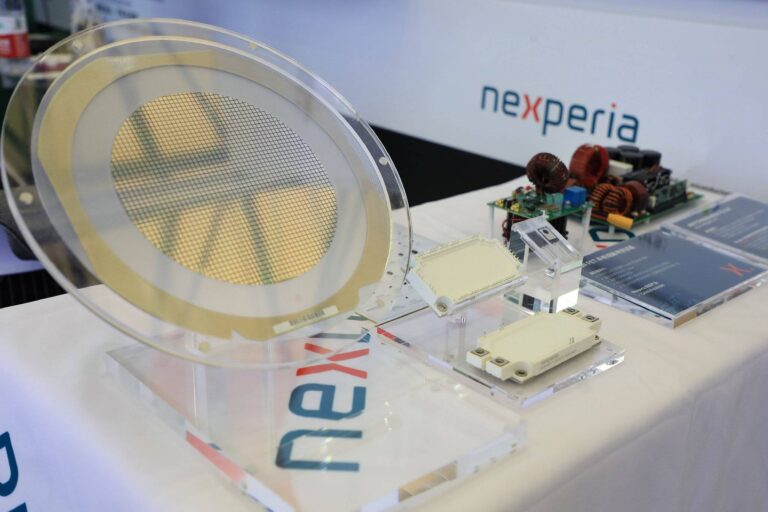
LM5169FNGUR is listed in the Voltage Regulators - DC DC Switching Regulators range at ChipApex. The manufacturer field lists Texas Instruments. Its product description…
Read More
Understand UART protocol framing, baud rate and electrical interfaces. Learn 8N1 timing, TX/RX wiring, buffering and practical troubleshooting steps.
Read More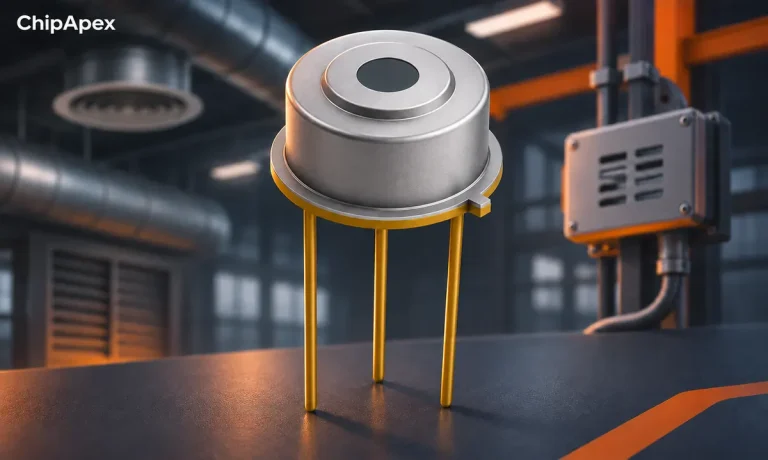
Compare gas sensor technologies, cross-sensitivity and calibration needs. Define the gas, range and environment before choosing a sensing component.
Read More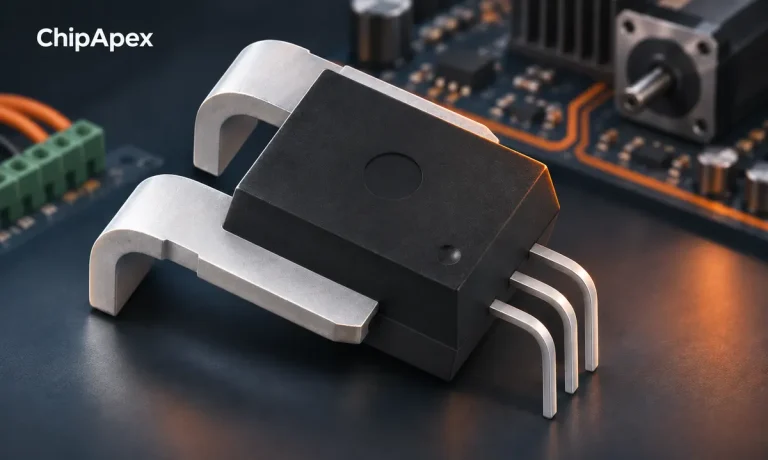
Compare Hall, shunt, current transformer and Rogowski sensing. Check AC/DC capability, accuracy, isolation, heat and response before selecting a sensor.
Read More
The activity of extra discounts on wholesale prices is in full swing…
Please fill in your contact information and we will send you the latest wholesale price list.






