ChipApex | Global Electronic Components Supplier

SEARCH
Search Product
Search Post
— IC芯片 | 连接器 | 传感器 | 被动器件 —
Search productSearch post
— IC芯片 | 连接器 | 传感器 | 被动器件 —
Consult the customer manager about the wholesale price.
consultation hotline:86-132-6715-2157
email:[email protected]
Contact the product manager for consultation. One-stop consultation is available.
Do you want a lower wholesale price? Please send us your inquiry and we will reply immediately.
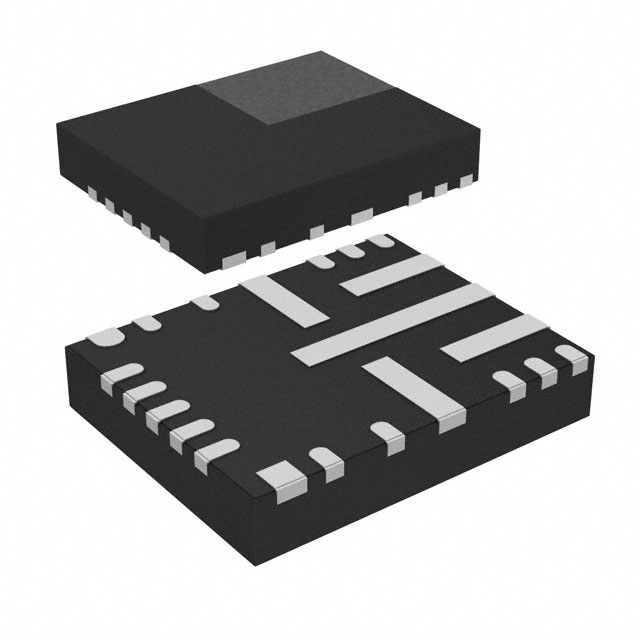
LM53635AQRNLTQ1 is listed in the Voltage Regulators - DC DC Switching Regulators range at ChipApex. The manufacturer field lists Texas Instruments. Its product description is IC REG BUCK ADJ 3.5A 22VQFN. Review the specifications below when checking this part for your BOM.
The LM53635AQRNLTQ1 is a synchronous step-down DC/DC converter from Texas Instruments, designed for automotive applications. It operates with an input voltage range of 3.9 V to 36 V and delivers up to 3.5 A of output current. The device features a fixed 5 V output and integrates a 2.1 MHz switching frequency. It utilizes a VQFN-HR-22 package and supports junction temperatures from -40°C to +150°C. Key electrical parameters include a quiescent current of 6 uA and an operating supply current of 18 uA. The component holds AEC-Q100 qualification.
Verify the specific suffix against official datasheets to confirm pinout and thermal characteristics. Ensure compatibility with AEC-Q100 requirements for your target application. Check for moisture sensitivity level (MSL) ratings prior to PCB assembly to prevent damage during reflow soldering processes.
Select this component when a fixed 5 V output is required at 3.5 A in automotive environments. The 2.1 MHz frequency allows for smaller passive components compared to lower-frequency alternatives. Consider the VQFN-HR-22 package for thermal performance and space-constrained designs requiring wettable flank visibility.
This part belongs to the LM53635-Q1 family of high-efficiency synchronous buck converters. It shares the same core architecture as variants like LM536353QRNLTQ1 but differs in fixed output voltage settings. The family targets robust power management solutions for demanding automotive electronic loads.
LM536353QRNLTQ1 offers similar electrical specifications but provides a fixed 3.3 V output instead of 5 V. Verify that the load requirements align with the available fixed voltage options within the series before substituting.
Explore related parts through Power Management (PMIC), Integrated Circuits (ICs), all product categories, ChipApex homepage.
 LM53635AQRNLTQ1
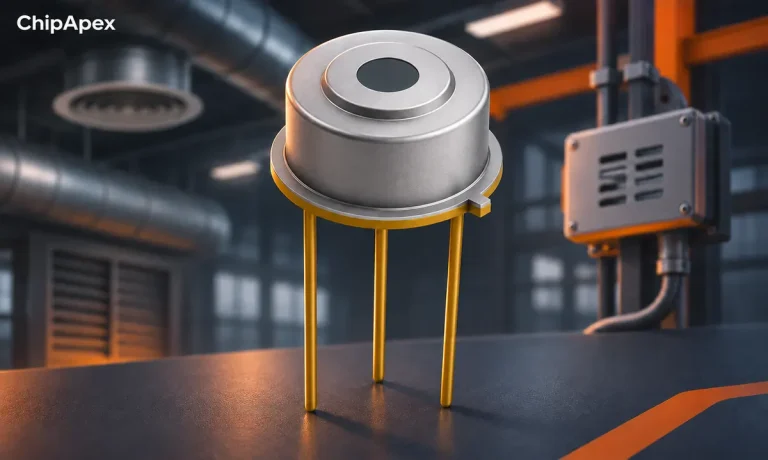
Compare gas sensor technologies, cross-sensitivity and calibration needs. Define the gas, range and environment before choosing a sensing component.
Read More
Compare thermistors, RTDs, thermocouples and temperature ICs. Learn how range, accuracy, response, interfaces and mounting affect component selection.
Read More
Compare Pt100 and Pt1000 RTDs, two-, three- and four-wire connections, excitation and self-heating. Build an error budget from element to reported temperature.
Read More
LM53635AQRNLTQ1 is listed in the Voltage Regulators - DC DC Switching Regulators range at ChipApex. The manufacturer field lists Texas Instruments. Its product description…
Read More
Understand tactile switches, PCB and keyboard differences, four-pin wiring, debounce, force, travel and replacement checks for reliable control inputs.
Read More
Learn what a battery BMS does, how protection differs from charging, and which pack specifications to check when sourcing BMS components through ChipApex.
Read More
LM53635AQRNLTQ1 is listed in the Voltage Regulators - DC DC Switching Regulators range at ChipApex. The manufacturer field lists Texas Instruments. Its product description…
Read More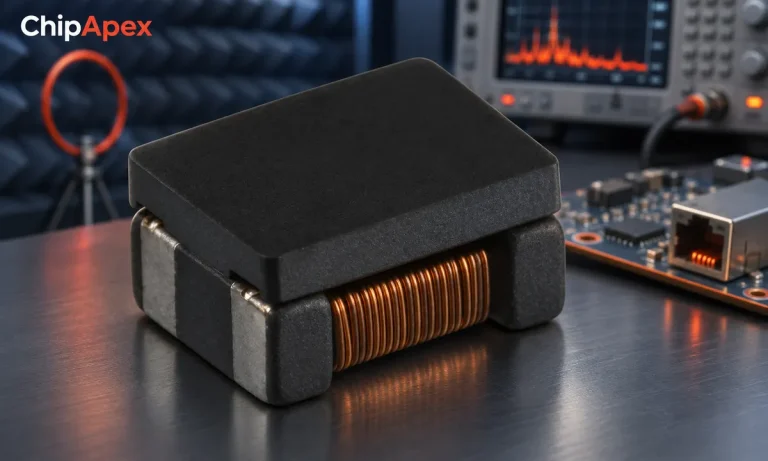
Select a common mode choke using noise frequency, current, insulation and signal integrity. Understand impedance curves, layout and filter limitations.
Read More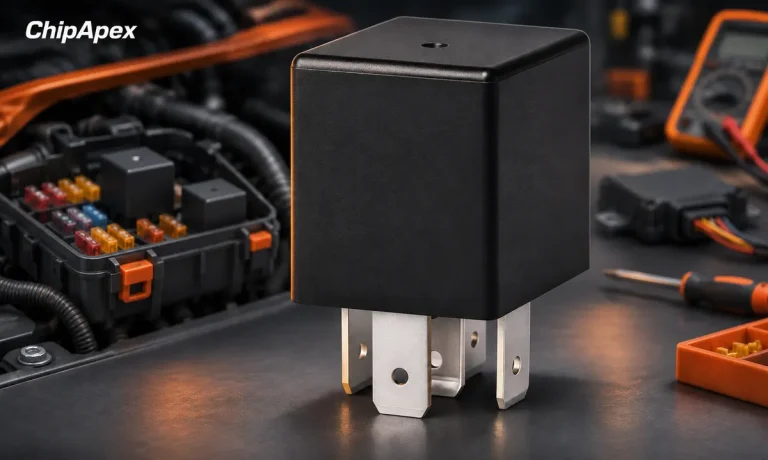
Understand automotive relay terminals, coil suppression and load ratings. Check inrush, socket compatibility and temperature before selecting a replacement.
Read More
Choose an AC to DC converter by input range, output demand, isolation, efficiency and thermal derating. Compare architectures and check installation needs.
Read More
Understand how a comparator switches at a voltage threshold, why hysteresis prevents chatter, and which output and input specs matter.
Read More
Understand UART protocol framing, baud rate and electrical interfaces. Learn 8N1 timing, TX/RX wiring, buffering and practical troubleshooting steps.
Read More
The activity of extra discounts on wholesale prices is in full swing…
Please fill in your contact information and we will send you the latest wholesale price list.