 ChipApex | Global Electronic Components Supplier

SEARCH
Search Product
Search Post
— IC芯片 | 连接器 | 传感器 | 被动器件 —
Search productSearch post
— IC芯片 | 连接器 | 传感器 | 被动器件 —
Consult the customer manager about the wholesale price.
consultation hotline:86-132-6715-2157
email:[email protected]
Contact the product manager for consultation. One-stop consultation is available.
Do you want a lower wholesale price? Please send us your inquiry and we will reply immediately.
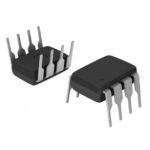
LOC117 is listed in the Transistor, Photovoltaic Output Optoisolators range at ChipApex. The manufacturer field lists Littelfuse Inc.. Its product description is OPTOISO 3.75KV 1CH PHVOLT 8-DIP. Review the specifications below when checking this part for your BOM.
The Littelfuse LOC117 is a single-channel linear optocoupler housed in a DIP-8 through-hole package. It features an infrared LED optically coupled with two photodiodes, providing 3750Vrms isolation voltage. The device exhibits a typical Total Harmonic Distortion (THD) of -87dB and a servo linearity of 0.01%. It offers a broadband response exceeding 200 kHz, high gain stability, low input-to-output capacitance, and low power consumption. The component is compatible with VDE standards.
Verify the specific ordering suffix against the official Littelfuse datasheet to ensure the correct package type and tape/reel configuration. Confirm that the component meets all required VDE compliance standards for your specific application environment. Cross-reference the pinout diagram with your PCB layout to prevent installation errors during assembly.
Select this component when high linearity and low harmonic distortion are critical for signal integrity. The dual photodiode architecture makes it suitable for feedback control loops where gain stability is paramount. Ensure the isolation voltage rating of 3750Vrms aligns with the safety requirements of the circuit being designed.
The LOC117 belongs to the Linear Optocouplers series by Littelfuse. This series is characterized by devices that use an infrared LED coupled with two photodiodes to achieve high-performance analog signal isolation. The design focuses on maintaining signal fidelity over electrical isolation barriers.
No public confirmed substitute part numbers are available in the provided documentation. Consult Littelfuse technical support for direct replacements if this specific model is unavailable.
Explore related parts through Optocouplers, Optoisolators, Isolators, all product categories, ChipApex homepage.
 LOC117

LOC117 is listed in the Transistor, Photovoltaic Output Optoisolators range at ChipApex. The manufacturer field lists Littelfuse Inc.. Its product description is OPTOISO 3.75KV…
Read More
LOC117 is listed in the Transistor, Photovoltaic Output Optoisolators range at ChipApex. The manufacturer field lists Littelfuse Inc.. Its product description is OPTOISO 3.75KV…
Read MoreLOC117 is listed in the Transistor, Photovoltaic Output Optoisolators range at ChipApex. The manufacturer field lists Littelfuse Inc.. Its product description is OPTOISO 3.75KV…
Read More
LOC117 is listed in the Transistor, Photovoltaic Output Optoisolators range at ChipApex. The manufacturer field lists Littelfuse Inc.. Its product description is OPTOISO 3.75KV…
Read More
Select a bridge rectifier by reverse voltage, capacitor charging current, startup surge and cooling. Work through a stated DC voltage and ripple example.
Read More
LOC117 is listed in the Transistor, Photovoltaic Output Optoisolators range at ChipApex. The manufacturer field lists Littelfuse Inc.. Its product description is OPTOISO 3.75KV…
Read More
LOC117 is listed in the Transistor, Photovoltaic Output Optoisolators range at ChipApex. The manufacturer field lists Littelfuse Inc.. Its product description is OPTOISO 3.75KV…
Read More
LOC117 is listed in the Transistor, Photovoltaic Output Optoisolators range at ChipApex. The manufacturer field lists Littelfuse Inc.. Its product description is OPTOISO 3.75KV…
Read More
LOC117 is listed in the Transistor, Photovoltaic Output Optoisolators range at ChipApex. The manufacturer field lists Littelfuse Inc.. Its product description is OPTOISO 3.75KV…
Read More
Learn how a diode conducts, how to identify anode and cathode, and when to choose rectifier, TVS, Zener or photodiode types for a circuit.
Read More
LOC117 is listed in the Transistor, Photovoltaic Output Optoisolators range at ChipApex. The manufacturer field lists Littelfuse Inc.. Its product description is OPTOISO 3.75KV…
Read More
Find out when a bare shock switch needs a pull resistor, when an MCU internal pull-up is enough, and why sensor modules and piezo…
Read More
The activity of extra discounts on wholesale prices is in full swing…
Please fill in your contact information and we will send you the latest wholesale price list.







